Application Selection of Lab Film Applicator in Optical inspection of Transparent Film Preparative
introduction
Optically transparent adhesive films are widely used in modern optoelectronics, display devices, solar cells and other fields. In order to prepare high-quality optically transparent adhesive films, coating technology has become one of the important preparation methods. In laboratory-scale research and development, choosing the right coating testing machine is crucial. This article will discuss in detail the application selection of laboratory coating testing machines in the preparation of optically transparent adhesive films.
1. The importance of optically transparent adhesive films
Optically transparent adhesive films have excellent light transmittance, anti-reflection and optical uniformity, and are an important component of many optical devices and electronic products. Its performance directly affects the optical performance and stability of related products. Therefore, the preparation of high-quality optically transparent adhesive films is of great significance for research and applications in related fields.
2. Basic principles of laboratory coating testing machine
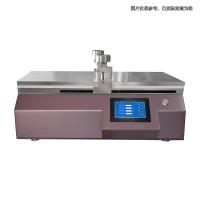
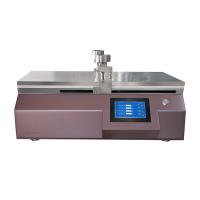
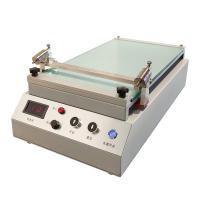
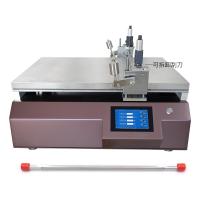
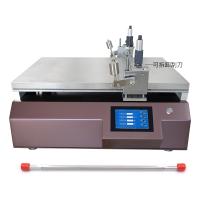
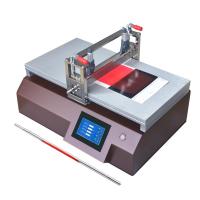
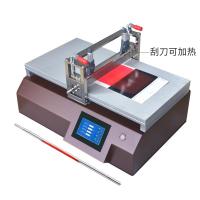
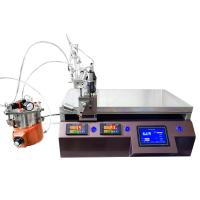
The laboratory coating testing machine is a special equipment used to conduct coating experiments on small-size samples to simulate the coating process in industrial production. Its main principles include coating head design, coating speed control, coating thickness adjustment, etc. By adjusting different parameters, precise control of the coating process can be achieved.
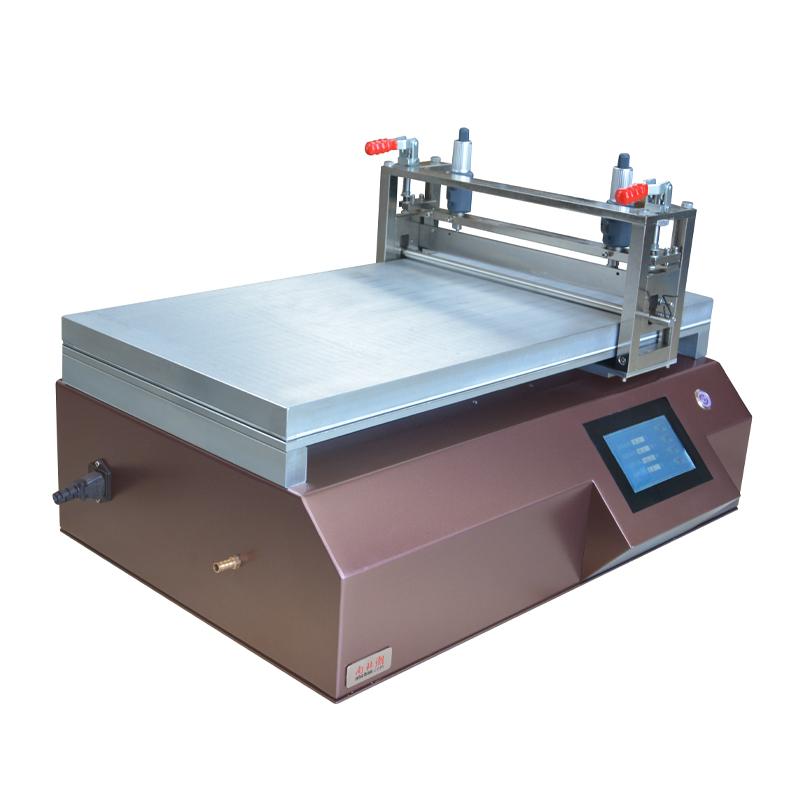
3. Application selection of laboratory coating testing machine in the preparation of optically transparent adhesive films
3.1. Consider the characteristics of the coating material
The preparation of optically transparent adhesive films usually uses specific coating materials, such as polymer solutions, nanomaterial solutions, etc. When selecting, you need to consider whether the coating testing machine can adapt to the viscosity, fluidity and other characteristics of the selected material, and can achieve precise control of the material.
3.2. Consider coating thickness requirements
The thickness of optically transparent adhesive films usually ranges from tens of nanometers to several microns, requiring a coating testing machine that can accurately control the coating thickness. Therefore, it is necessary to choose a coating testing machine with high-precision coating thickness control function when selecting a model.
3.3. Consider the adjustment range of coating speed
The coating speed has a great influence on the preparation of optically transparent adhesive films. A coating speed that is too fast or too slow will affect the coating quality. Therefore, it is necessary to choose a coating testing machine with a wide coating speed adjustment range to meet different material and process requirements.
3.4. Consider equipment stability and reliability
In laboratory research and development, equipment stability and reliability are crucial. Choosing a coating testing machine with high stability, easy operation, and low maintenance cost can improve experimental efficiency and data accuracy.
4. The specific application significance of laboratory coating testing machine in the preparation of optically transparent adhesive films
4.1. Ensure coating uniformity
Through precise control of the laboratory coating testing machine, the coating uniformity of optically transparent adhesive films can be adjusted to ensure uniform and stable optical properties on the film surface.
4.2. Improve research efficiency
The laboratory coating testing machine can realize automated control of the coating process, improve sample preparation efficiency, shorten the research cycle, and provide convenience for related research.
4.3. Optimize the coating process
Through precise adjustment and control of coating parameters, laboratory coating testing machines can help researchers optimize the coating process and improve the preparation quality and stability of optically transparent adhesive films.
Summarize
Laboratory coating testing machines play an important role in the preparation of optically transparent adhesive films. Its selection needs to consider factors such as coating material characteristics, coating thickness requirements, coating speed adjustment range, and equipment stability. Choosing a suitable coating testing machine can improve experimental efficiency, optimize the coating process, and provide strong support for the research and development of optically transparent adhesive films.


- 1Lab Film Applicator Application Case of applying water-based paints on paper [with experimental video]
- 2Experimental Application Technology of Resin Film Prepared by Spreader
- 3Application and advantage analysis of Lab Film Applicator in solder paste film
- 4Research and Application of Waterproof Membrane Lab Film Applicator
- 5Continuous hot-melt adhesive Automatic Film Applicator film accuracy improvement practice
- 6Analysis of Hot-melt adhesive Automatic Film Applicator Technology: Principle, Structure, Operation and Application
- 7Preparation of Conductive Films on Nonwoven Fabrics by Small Coating Testing Machine
- 8Instructions for use of Kimpt small automatic coating machine
- 9Application of Spreader Testing Machine in Paper Spreader Production