Damp heat testing chamber and low-Temperature Test Chamber
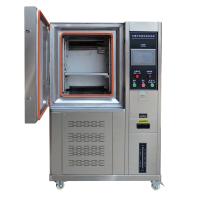
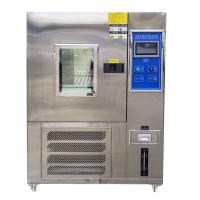
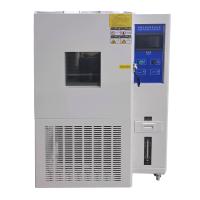
There are obvious differences in the testing environment and application between damp heat Test Chambers and low Temperature Test Chambers. This article will analyze the differences between them and compare them from three aspects: test overview, test application and Test Chamber description.
Trial overview
The heat and humidity Test Chamber is a temperature/humidity combined cycle test designed to reveal defects caused by the "breathing" effect of the test sample. Compared with other heat and humidity cycle tests, the heat and humidity Test Chamber has improved the severity of the test, which is mainly reflected in the following aspects:
Increased frequency and amplitude of temperature changes: In a given period of time, the heat and humidity Test Chamber will produce more temperature changes or "breathing" effects, with a wider range of temperature cycle changes and a higher rate of change.
Including low temperature changes: Unlike other heat and humidity cycle tests, the heat and humidity Test Chamber also contains multiple temperature changes below 0°C to simulate more extreme environmental conditions.
Icing effect: Accelerated "breathing" and the icing effect of moisture in the gaps of the test sample are the basic characteristics of the hygrothermal Test Chamber, but the icing effect will only appear when the gap is large enough so that the attached moisture can penetrate.
The low-Temperature Test Chamber is mainly used to test the performance of test samples in low-temperature environments, and the humidity factor is not included in the test process. Its temperature range is usually fixed at low temperatures and is designed to simulate conditions in a cooling environment.
Application of Test Chamber
The heat and humidity Test Chamber is suitable for test samples that need to consider "breathing" and icing effects, as well as component test samples that are suitable for the temperature change rate of the Test Chamber. For solid test samples, especially plastic-encapsulated test samples, if the absorption or diffusion of water vapor is the dominant effect, the constant damp heat test is recommended. For larger test samples, such as equipment or components that need to remain thermally stable during various stages of the cycle, a low-Temperature Test Chamber should be used.
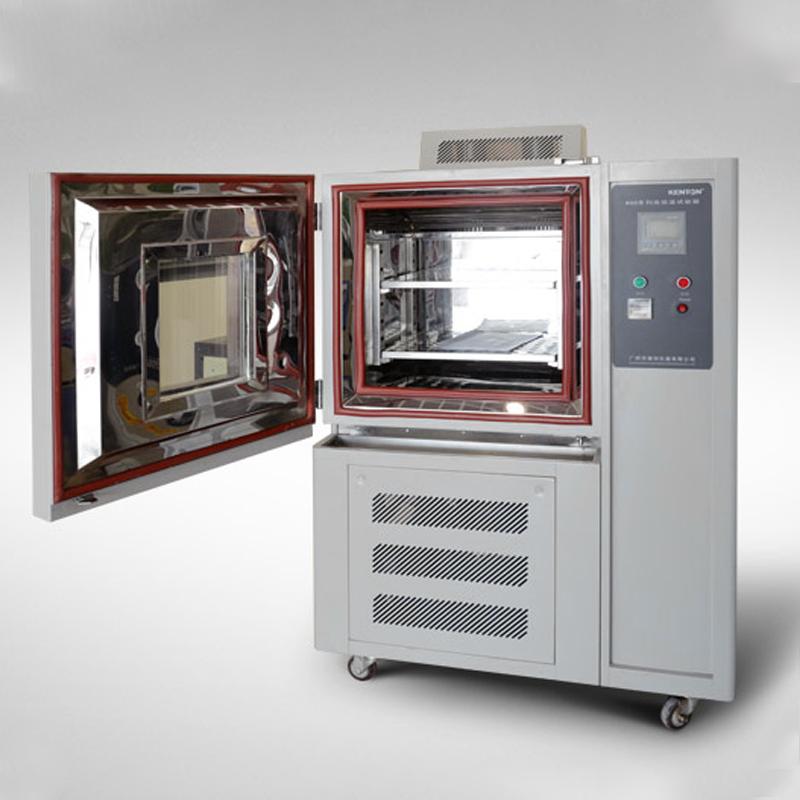
Test chamber design differences
There are also differences in design and requirements between damp heat Test Chambers and low Temperature Test Chambers:
Damp heat Test Chamber: Within 1.5 hours to 2.5 hours, the temperature can rise or fall between 25â ± 2K and 65â ± 2K. The relative humidity is maintained at (93 ± 3)% during constant temperature or warming periods, and between 80% and 96% during cooling periods. The test sample shall not be affected by thermal radiation generated by the condition control in the Test Chamber during the test process. The heat and humidity Test Chamber also needs to ensure that the thermal time constant on the surface of the test specimen does not cause excessive condensation.
Low Temperature Test Chamber: The temperature can be maintained at -10â ± 2K, and it is required to ensure uniform temperature at all points in the working space. The heat capacity of the test sample should not significantly affect the conditions inside the chamber. When conducting low-temperature tests, if a damp heat Test Chamber is used, it must also ensure that it meets the requirements of the damp heat Test Chamber and that the temperature can be reduced from 25°C ± 2K to -10°C ± 2K in no more than 30 minutes.
Humidity and heat Test Chambers and low Temperature Test Chambers have different characteristics and requirements in terms of testing environment and applications. The heat and humidity Test Chamber is suitable for test samples that require high frequency of humidity and temperature changes, while the low-Temperature Test Chamber is mainly used to test the performance of test samples in low-temperature environments. When selecting a test method, appropriate considerations need to be made based on the characteristics of the test sample and the type of failure mechanism to ensure the accuracy and reliability of the test results.




- 1GB/T 10586-2006 Detailed explanation: Core technical indicators and acceptance specifications for damp heat Test Chamber
- 2Humidity cabinet test equipment
- 3Application of Constant Temperature and Humidity Chamber in Lithium Battery
- 4Humidity chamber FAQ and its solution
- 5Humidity chamber FAQ, calibration method, precautions
- 6Humidity chamber FAQ calibration method
- 7Humidity chamber FAQ and correct calibration method
- 8Application of Humidity Chamber in Polymer and composite industry
- 9Application of Humidity Chamber in Photovoltaic industry