Principle and Application of Pressure Viscometer
With the continuous development of industrial technology and the expansion of application fields, the measurement of viscosity has become an indispensable and important parameter in many industrial production and scientific research fields. Among various viscosity measuring instruments, the pressure viscometer has become one of the commonly used viscosity measuring equipment in industry and scientific research fields due to its high accuracy, wide applicability and easy operation. This article will delve into the principles, applications and future development trends of pressure viscometers.
Principle analysis
A pressure viscometer is an instrument that determines the viscosity of a liquid by applying a certain pressure and measuring the resistance produced when it flows. Its main principle is based on Stokes' law, that is, the viscosity resistance inside the fluid is related to factors such as the density, viscosity, flow rate and shape of the object.
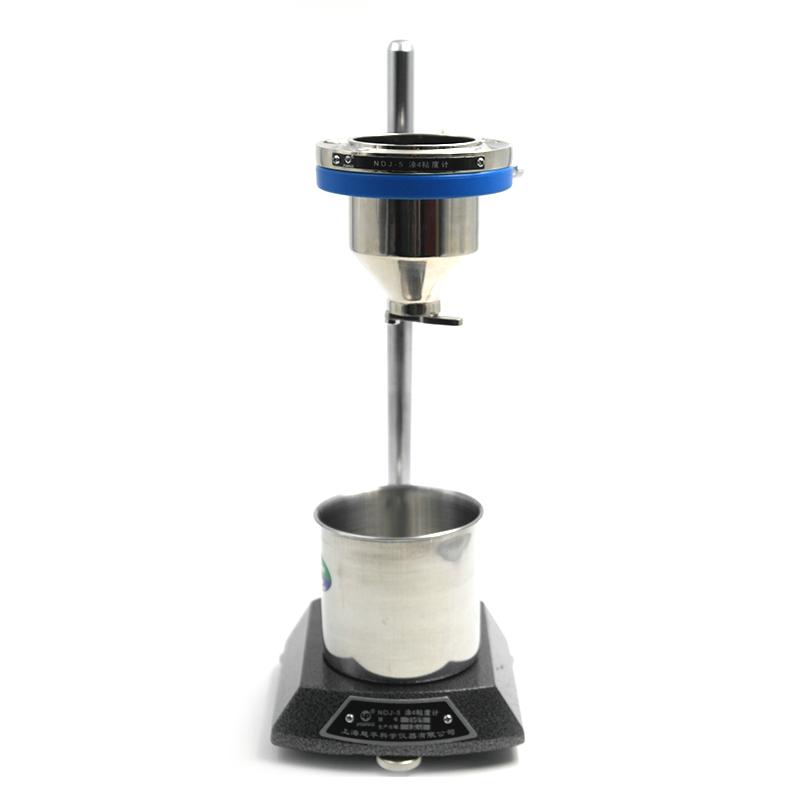
In a pressure viscometer, a certain pressure is usually applied through the device to press the liquid to be measured into a pipe or hole of a certain specification, and the resistance generated when the fluid passes through the pipe or hole is measured to calculate the viscosity of the liquid. Common pressure viscometers include round tube pressure viscometers and rotary pressure viscometers.
Application areas
Pressure viscometers are widely used in various fields. First of all, in the chemical industry, the viscosity of various liquid chemicals is an important parameter that affects the production process and product quality. The pressure viscometer can quickly and accurately measure the viscosity of liquids, providing important data support for the optimization and control of the production process. Secondly, pressure viscometer also has important applications in the petrochemical industry. The viscosity of products such as petroleum and lubricants is one of the important indicators of their quality, and the pressure viscometer can accurately measure the viscosity of these liquid products to ensure product quality stability and consistency. In addition, pressure viscometers also have important applications in food, medicine, coatings, textiles and other industries, providing reliable viscosity testing methods for the production and quality control of various liquid products.
With the continuous advancement of science and technology, pressure viscometers are also constantly undergoing technological innovation and improvement. In the future, with the development of sensor technology and miniaturization technology, pressure viscometers will become smaller and lighter, have higher accuracy, and will also have stronger automation and intelligent functions.
First, the application of sensor technology will greatly improve the accuracy and sensitivity of measuring instruments, allowing them to more accurately measure the viscosity of various liquid products. Secondly, the development of miniaturization technology will make the pressure viscometer smaller, easier to carry and use, and suitable for more occasions and environments. In addition, with the application of technologies such as the Internet of Things and big data, pressure viscometers will realize remote monitoring and data sharing, making the viscosity testing process more convenient and efficient. At the same time, combined with technologies such as artificial intelligence and machine learning, automatic analysis and prediction of viscosity test data can also be realized, providing more intelligent solutions for production and quality control.
Conclusion
As an important equipment for measuring liquid viscosity, pressure viscometer plays an irreplaceable role in industrial production and scientific research. By in-depth understanding of its principles, strengthening technological innovation, and continuously improving measurement accuracy and intelligence, we can better meet the needs of viscosity measurement in all walks of life and promote the development and innovation of industrial production. It is believed that in the near future, with the continuous advancement of science and technology, pressure viscometer will play a more important role in a wider range of fields and contribute to the advancement of science and technology and the development of human society.