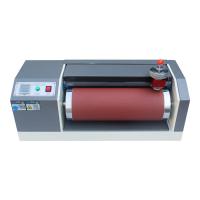
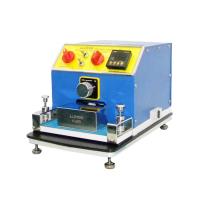
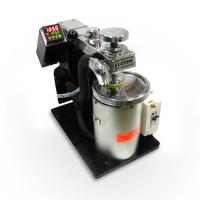
Introduction to the principle and application of low temperature wear resistance Tester
With the wide application of engineering materials and the diversification of working environments, the requirements for the wear resistance of materials are also increasing. Especially in low-temperature environments, some engineering materials may face more severe wear-resistant conditions. The low-temperature wear-resistant Tester plays a vital role as a piece of equipment specifically used to evaluate the wear-resistant properties of materials under low-temperature conditions. This article will deeply explore the principles, applications and future development trends of low-temperature wear resistance Testers.
Principle analysis
The low temperature wear resistance Tester is an experimental equipment used to simulate the wear resistance of materials in low temperature environments. Its main principle is to evaluate the wear resistance of materials by simulating the friction and wear processes under actual working conditions. Usually, a low-temperature wear-resistant Tester includes a sample device, a friction mechanism, a load system, a temperature control system and other components. By controlling the contact pressure, friction force, temperature and other parameters between the sample and the friction material, it simulates the behavior of the material in a low-temperature environment. Wear resistance performance test according to the actual working conditions.

Application areas
Low temperature wear resistance Testers are widely used in many fields. First of all, in the aerospace field, parts of aerospace engines and spacecraft often need to work in extremely low temperature environments, so the wear resistance of materials is required to be high. By using a low-temperature wear Tester, the friction and wear properties of materials in low-temperature environments can be evaluated, providing reliable material selection and design basis for aerospace engineering. Secondly, in the field of automobile manufacturing, automobile parts such as engines and transmission systems often need to work in cold winter environments, so the requirements for low-temperature wear resistance of materials are also very high. By using a low-temperature wear Tester, the wear resistance of automobile parts can be evaluated and the reliability and safety of the automobile can be improved. In addition, in the fields of military industry, electronics, shipbuilding and other fields, there is also an important demand for the low-temperature wear resistance of materials. By using a low-temperature wear Tester, the friction and wear properties of materials in low-temperature environments can be evaluated, providing reliable material performance data and technical support for various engineering applications.
With the continuous advancement of science and technology, low-temperature wear resistance Testers are also constantly undergoing technological innovation and improvement. In the future, with the development of materials science, sensor technology and other fields, low-temperature wear-resistant Testers will become more and more sophisticated and intelligent. By using advanced sensor technology and data processing algorithms, rapid and accurate monitoring and control of test parameters can be achieved, improving the accuracy and repeatability of the test. In addition, with the development of intelligent manufacturing technology, low-temperature wear-resistant Testers will also achieve a higher level of automation and intelligence. By using advanced control systems and remote monitoring technology, remote monitoring and data management of the test process can be achieved, improving test efficiency and data reliability.
Conclusion
As an important equipment for evaluating the wear resistance of materials in low temperature environments, the low-temperature wear-resistant Tester plays an irreplaceable role in aerospace, automobile manufacturing, military industry and other fields. By in-depth understanding of its principles, strengthening technological innovation, and continuously improving the accuracy and repeatability of tests, we can better meet the performance evaluation needs of engineering materials in low-temperature environments and promote the development and progress of related fields. It is believed that in the near future, with the continuous advancement of science and technology, low-temperature wear-resistant Testers will play a more important role in the fields of materials science and engineering, providing strong support for promoting material technology innovation and application.
-
![NBC-5611 DIN Wear testing machine]() NBC-5611 DIN Wear testing machine$ 1069.00
NBC-5611 DIN Wear testing machine$ 1069.00 -
![LLOYDS URT 101 Wear Tester]()
-
![LLOYDS R202 Wear Tester]()