The basic principle and application of UV aging Test Chamber
As a device used to simulate the impact of ultraviolet radiation on materials in the natural environment, the UV aging Test Chamber has important application value in fields such as materials science and product research and development. This article will introduce the principle, working method, application and significance of the UV aging Test Chamber, and discuss its important role in scientific research and engineering practice as well as future development trends.
Fundamental
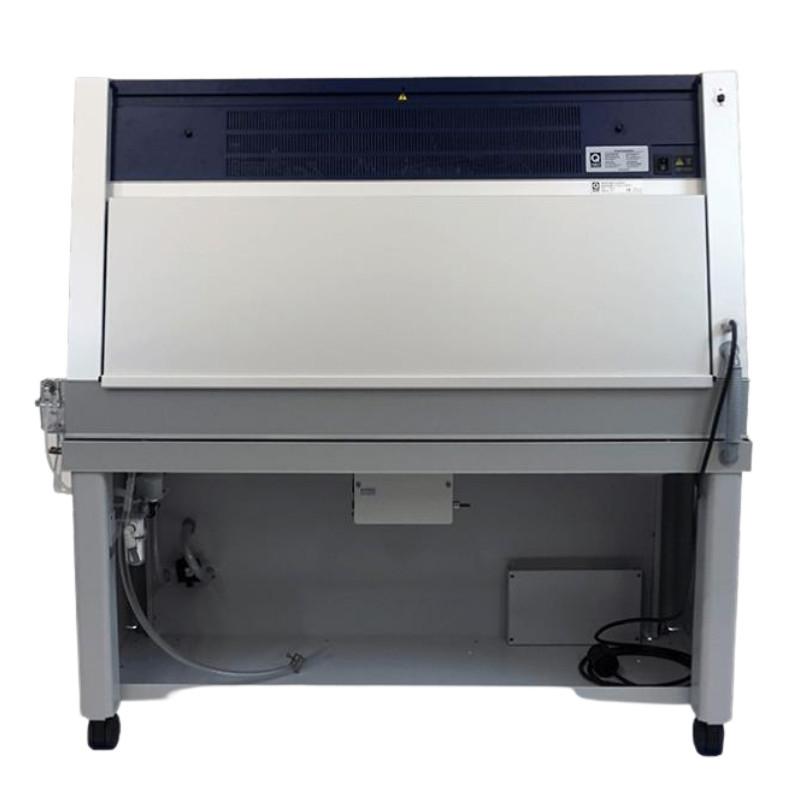
UV aging Test Chamber usually consists of UV lamp, sample rack, temperature control system, etc. In the experiment, the material sample to be tested is placed on the sample rack, the UV lamp is started and the corresponding experimental parameters are set, such as light intensity, temperature, etc., and then UV light is irradiated for a certain period of time, and finally the physical properties of the sample are observed. and chemical property changes to evaluate the weather resistance of materials. The UV aging Test Chamber mainly simulates the ultraviolet spectrum in sunlight to accelerate the aging of materials by ultraviolet radiation. Its working principle is to use an ultraviolet lamp to generate ultraviolet light, place the material to be tested under the ultraviolet lamp, control the time and intensity of ultraviolet light exposure, and simulate the ultraviolet light exposure under different environmental conditions to evaluate the weather resistance of the material.
Application areas
UV aging Test Chambers are widely used in materials science, product research and development, quality control and other fields. In the field of material science, UV aging Test Chambers can be used to evaluate the aging rate and degree of aging of materials of different types and formulations under UV radiation, and to guide the selection and design of materials; in the field of product research and development, UV aging Test Chambers can be used It is used to evaluate the weather resistance of products and guide product design and improvement; in the field of quality control, UV aging Test Chambers can be used to detect the quality of products and adjust the production process in a timely manner to improve product quality and performance.
The application of UV aging Test Chamber is of great significance to improve the stability and durability of materials. By simulating the impact of ultraviolet radiation on materials, aging problems of materials can be discovered early, providing a scientific basis for material selection, design and improvement; at the same time, by evaluating the weather resistance of materials, the performance and life of materials in actual use can be predicted. Guide product development and production. With the continuous advancement of technology, UV aging Test Chambers will continue to be improved and improved to achieve higher aging simulation accuracy and stability. In the future, UV aging Test Chambers are expected to be used in more fields of material research and product development, becoming one of the indispensable tools in scientific research and engineering practice.
Conclusion
As a key equipment for simulating the impact of ultraviolet light irradiation on materials, the UV aging Test Chamber has important application significance. By evaluating the weather resistance of materials under ultraviolet radiation, we can provide scientific basis for material selection, design and improvement, and improve the stability and durability of materials. With the continuous development of science and technology, UV aging Test Chambers are expected to play a more important role in fields such as materials science and product research and development, and promote the progress of scientific research and engineering practice.
- 1Principle and application of plastic rope UV aging Test Chamber
- 2The working principle and application of UV aging Test Chamber for die casting aluminum
- 3Basic principle and application of anode UV aging Test Chamber
- 4UV aging Test Chamber in solar photovoltaic weathering test
- 5Application of UV aging Test Chamber in drying rack
- 6Application of UV aging Test Chamber in furniture
- 7UV aging Test Chamber for sealant aging test
- 8Application of accelerated weathering Test Chamber in respirator
- 9Application and test of UV aging Test Chamber in silicon oxidation