Analysis on the Technology of Spreader
Summary:
Plaster, as a common external agent, is widely used in the medical and health care fields. As one of the key equipment for plaster production, the plaster coating compound machine plays a vital role in the plaster production process. This article will conduct an in-depth analysis and discussion of the technical principles, development history and future trends of plaster coating composite machines, aiming to provide reference and inspiration for researchers and production practitioners in related fields.
introduction
With the continuous development of medical technology and the improvement of people's health awareness, the application of plasters as a convenient and effective external agent in clinical and family settings is gradually increasing. As one of the key equipment for plaster production, the plaster coating compound machine is of great significance while ensuring product quality, improving production efficiency, and reducing production costs. This article will discuss the technical principles, development history and future trends of plaster coating composite machines.
Technical principles of plaster coating compound machine
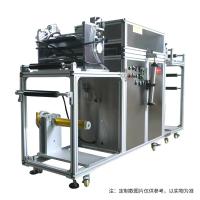
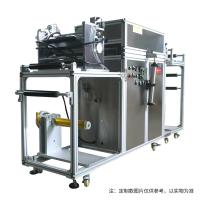
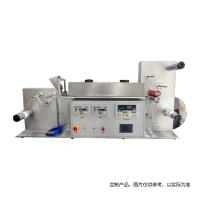
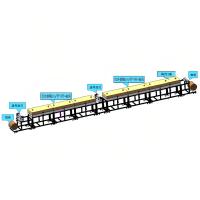
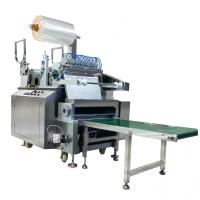
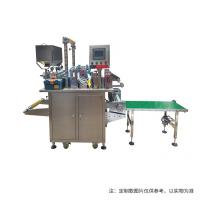
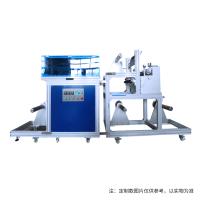
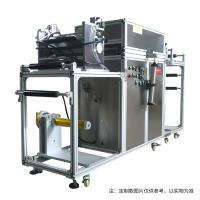
The plaster coating compound machine is mainly composed of a liquid supply system, a coating system, a compounding system, a drying system, and a coiling system. Its working principle is to coat and compound the liquid mixture of the plaster base material and the active ingredients under certain process conditions, and then solidify and shape it by drying, and finally complete the production of the plaster. Specifically, its working process mainly includes the following steps:
(1) Liquid supply system: The liquid mixture of plaster base material and active ingredients is delivered to the coating system through the pumping system.
(2) Coating system: Coat the liquid mixture evenly on the plaster base material to ensure that each part has enough active ingredients.
(3) Composite system: Compound the coated plaster base material with other auxiliary materials to enhance the performance of the product.
(4) Drying system: The coated plaster base material is solidified and formed by drying to remove moisture and improve the stability and quality of the product.
(5) Coiling system: Coil the dried plaster base material into rolls to facilitate subsequent cutting, packaging and other processes.
The technical principle of the plaster coating compound machine is mainly to achieve uniform coating and solidification molding of the liquid mixture to ensure the quality and stability of the plaster product.

The development history of plaster coating compound machine
As a kind of special equipment, the development history of the plaster coating compound machine is closely related to the progress of plaster production technology and technology. With the development of science and technology and changes in market demand, plaster coating composite machines have experienced an evolution from simplicity to complexity, and from tradition to intelligence.
(1) Early stage: Early plaster coating composite machines mainly used manual operation or simple mechanical equipment for production. The production efficiency was low, the product quality was unstable, and it could not meet the market demand.
(2) Mechanization stage: With the advancement of industrial production, plaster coating composite machines have gradually realized mechanized operation, using electric transmission and automatic control systems to improve production efficiency and product quality.
(3) Automation stage: In recent years, with the rapid development of information technology, plaster coating composite machines have gradually realized automation and intelligence. The use of advanced sensors, control systems and human-computer interaction interfaces enables automatic monitoring and adjustment of the production process, improving production efficiency and production quality.
(4) Intelligent stage: In the future, with the application of artificial intelligence and big data technology, the plaster coating compound machine will further become intelligent. Through data analysis and prediction, the optimization of the production process and intelligent decision-making can be achieved to further improve production efficiency and product quality.
The future trend of plaster coating compound machines
In the future, plaster coating composite machines will show the following development trends:
(1) Application of intelligent technology: With the continuous development of artificial intelligence and big data technology, plaster coating compound machines will achieve a higher level of intelligence. Through data analysis and prediction, the optimization of the production process and intelligent decision-making can be achieved to further improve production efficiency and product quality.
(2) Precision production: In the future, plaster coating composite machines will achieve a higher level of precision production. Through advanced sensors and control systems, precise monitoring and adjustment of the production process is achieved, improving product stability and consistency.
(3) Energy saving and environmental protection: In the future, plaster coating composite machines will focus on energy saving and environmental protection. Use advanced energy management technology and environmentally friendly materials to reduce energy consumption and environmental pollution and achieve sustainable development.
(4) Flexible production: In the future, plaster coating composite machines will achieve a higher level of flexible production. Through modular design and flexible production line layout, rapid switching and production of products of different specifications and varieties can be achieved to meet the diversification and personalization of market demands.
in conclusion
As one of the key equipment for plaster production, the plaster coating compound machine plays a vital role in the plaster production process. With the development of science and technology and changes in market demand, plaster coating composite machines continue to carry out technological innovation and improvement, realizing the evolution process from simple to complex, from traditional to intelligent. In the future, plaster coating composite machines will continue to develop and grow, achieving intelligent, precise, energy-saving, environmentally friendly and flexible production, providing more efficient, stable and reliable equipment support for plaster production.

- 1Application and selection of laboratory coater in PDMS thin film prepative
- 2Application of doctor blade coater in electrode and solid electrolysis preparation
- 3Application case of Bar Coater coating slurry on small workpiece ceramic substrate [Experimental video demonstration]
- 4Laboratory Technology and Application of Polyvinyl Alcohol Film Coating on Ultrafiltration Membrane
- 5Several Common Experimental Spreader Methods and Their Applications
- 6Application of laboratory coater coating aluminum oxide paste on PET film
- 7Experimental test of performance of epoxy resin film coated on metal iron plate by small coater
- 8Method and application of experimental coater coating water-based slurry on aluminum foil
- 9Application of wire rod coater in hydrogen battery separator prepative