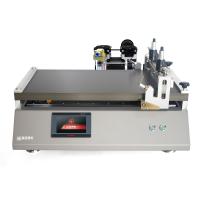
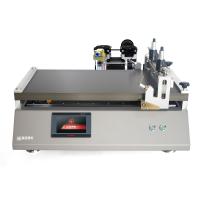
Polymer coil coater vs sheet coater: technology showdown
Summary:
With the wide application of polymer materials in various industries, polymer coil coating machines are an important production equipment, and their technical level and performance have an important impact on product quality and production efficiency. This article will deeply explore the technical characteristics, working principles and comparison of polymer coil coating machines with sheet coating machines, with a view to providing reference and reference for related industries.
I. Introduction
The polymer coil coating machine is a kind of equipment specially used for coating polymer materials. Its main application areas include plastic films, rubber belts, coating materials, etc. In contrast, sheet coating machines are more commonly used for coating flat materials such as boards, paper, and textiles. There are significant differences between the two in terms of application scenarios and process requirements. Their technical characteristics and working principles will be discussed in detail below.
2. Technical characteristics of polymer coil coating machine
1. High degree of automation
The polymer coil coating machine has achieved a high degree of automation in the production process. Through advanced control systems and sensor technology, it can achieve precise control of the coating process. The operator only needs to simply set parameters, and the equipment can automatically complete a series of processes such as coating and drying, greatly improving production efficiency.
2. High-precision coating
The coating machine adopts advanced coating technology and can achieve high-precision coating of polymer materials. The precision coating head and roller design ensures uniform and consistent coating, effectively improving coating quality. At the same time, it can be adjusted according to the requirements of different products to meet diversified production needs.
3. Widely applicable to different materials
The polymer coil coating machine has strong versatility and is suitable for different types of polymer materials, such as polyethylene, polyvinyl chloride, polypropylene, etc. The coating head and roller can be replaced according to actual needs to achieve the production of a variety of materials, improving the flexibility and scope of application of the equipment.
4. Energy saving and environmental protection
Modern polymer coil coating machines pay more attention to energy conservation and environmental protection in their design, using advanced energy efficiency technology and equipment structures to reduce energy consumption. At the same time, environmentally friendly coatings and solvents are used to reduce the impact on the environment and meet the requirements of sustainable development.
5. Highly integrated
Each component of the coating machine is highly integrated and operates in a coordinated manner through an advanced control system. Information transmission and data sharing can be realized between each unit, which improves the collaborative efficiency of the entire production line and reduces production costs.

3. Working principle of polymer coil coating machine
The working principle of the polymer coil coating machine is mainly divided into two stages: coating process and drying process.
The coating process is the core process of the polymer coil coating machine. Under the action of the coating head, the polymer material is evenly coated on the surface of the substrate. The design of the coating head usually includes an adjustable nozzle and a scraper, which enables precise control of the coating thickness by controlling the motion trajectory and coating amount of the coating head.
After the coating is completed, the coil enters the drying process. At this stage, hot air circulation or infrared radiation is used to quickly dry the coated polymer material. During the drying process, the quality and performance of the coating layer are ensured by controlling parameters such as temperature and wind speed.
The entire work process is automatically controlled through an advanced control system, ensuring efficient, stable and controllable production.
4. Comparison with sheet coating machine
1) Differences in working principles
The polymer coil coating machine is mainly used for roll materials, such as films, rubber tapes, etc. The coating process is completed in the coiled state. The sheet coating machine is mainly used for plate materials, and the coating process is carried out in a flat state.
2) Applicable materials are different
The polymer coil coating machine is suitable for roll-shaped polymer materials, such as polyethylene, polyvinyl chloride and other coils. The sheet coating machine is more suitable for flat materials, such as paper, boards, textiles, etc.
3) Different equipment structures
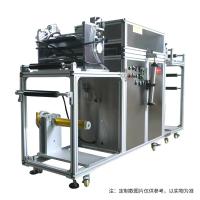
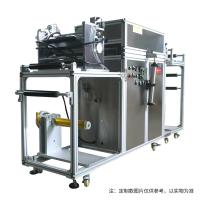
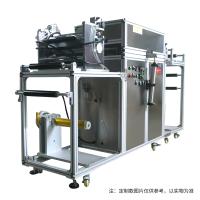
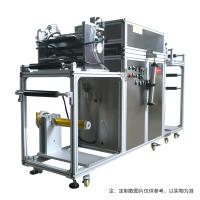
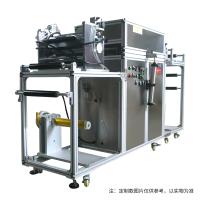
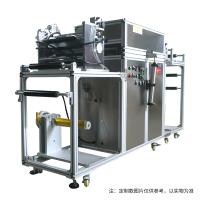
Due to the different coating objects and working conditions, there are differences in equipment structures between polymer coil coaters and sheet coaters. Coil coaters usually include units such as winding systems, coating systems and drying systems, while sheet coaters pay more attention to flat conveying and positioning systems.
4) Differences in automation levels
Since polymer coil coating machines are mainly used for mass production, they have a high degree of automation and reduce manual operations. Sheet coating machines are usually used to produce smaller-scale customized products, and their degree of automation is relatively low and relies more on the skills of the operator.
5) Different process requirements
Due to different coating objects and working conditions, there are also differences in process requirements between polymer coil coaters and sheet coaters. The coil coater pays more attention to the uniform coating and rapid drying of roll materials, while the sheet coater pays more attention to the surface quality and appearance requirements of flat materials.

To sum up, the polymer coil coating machine has obvious advantages in terms of automation, precision control, and applicable materials, and is suitable for mass production. The sheet coating machine is more suitable for small batches and diversified production needs, focusing on the surface quality and appearance requirements of the product. Choosing the appropriate coating machine model will directly affect production efficiency and product quality, so it needs to be carefully selected according to specific needs in actual applications.


- 1Application and selection of laboratory coater in PDMS thin film prepative
- 2Application of doctor blade coater in electrode and solid electrolysis preparation
- 3Application case of Bar Coater coating slurry on small workpiece ceramic substrate [Experimental video demonstration]
- 4Systematic understanding of coil isolation film coater
- 5Laboratory Technology and Application of Polyvinyl Alcohol Film Coating on Ultrafiltration Membrane
- 6The principle and application of miniature coil spraying machine
- 7Several Common Experimental Spreader Methods and Their Applications
- 8Application of laboratory coater coating aluminum oxide paste on PET film
- 9Experimental test of performance of epoxy resin film coated on metal iron plate by small coater