Determination of film corrosion rate by Electrochemistry
In order to determine the rate of the corrosion process, various electrochemical methods can be used. In terms of paint film testing, this method has not been fully developed, so it has not been widely used.
There is a paint film on the metal surface, which will make the corrosion process more complicated. But in principle, the corrosion contact process on the painted metal is no different from the ordinary corrosion process on the unpainted metal. Therefore, the possibility of using electrochemical methods to check the corrosion resistance of paint films on metals should not give rise to any doubt. The choice of an appropriate method is of great importance.
Recently a method for measuring the electrode potential was proposed and tested on a corrosion cell (local cell) model. As pointed out by Akimov, the polarization method (preparation of the polarization curve) should be emphasized.
The important corrosion processes on iron and steel surfaces in neutral salt solutions (fresh water and sea water) or in humid air all belong to the scope of electrochemical corrosion contact with depolarization of oxygen.
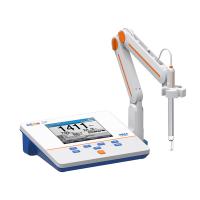
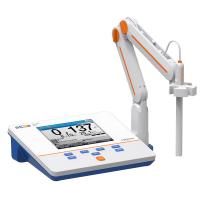
The basic process that determines the rate of this corrosion contact is the ionization process. On the anode is the ionization process of the metal, which is mainly produced as a result of the hydration of metal ions: (related instrument: Ion Meter)

From this it can be seen why paint films on metals are damaged to varying degrees in the anodic and cathodic regions when immersed in a salt solution. On painted surfaces, anodic and cathodic regions appear due to uneven aeration and uneven activity of the corrosion cell. On the anode area, the metal ions that have been generated can freely pass through the paint film and enter the electrolytic process without damaging the paint film. On the anodic area, the paint film is damaged by the generated alkali. Depending on the type of coating film, its corrosion resistance on the anodic and cathodic areas may be different.
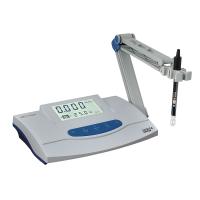
In order to quickly judge the protective performance of the removal film in salt solution, the basic model of the corrosion-contact battery with painted electrodes placed in the corrosion solution can be used, and the damage of the coating film can be measured according to the current intensity of the original battery. In order to ascertain the corrosion resistance to anodic or cathodic processes, the determination can be carried out both with a painted anode and with a painted cathode in the presence of a corresponding unpainted counter electrode. (Related instrument: conductivity meter)
It should be noted that the operation of this model of a galvanic cell is undoubtedly different from the operation of a corrosion cell occurring on a metal surface. The work of corrosion cells is far more complicated, and besides that the values obtained under the action of corrosion cells are minimal compared to the effects of galvanic cells produced in the presence of the corresponding counter electrode.
Tomashov, Kiselev and Golidberg proposed an electrochemical method to measure the protective performance of paint film according to the cathodic slow path diagram on the corrosion cell model. Therefore, in practice, the corrosion rate of iron is mostly determined by The cathodic process of oxygen depolarization is examined.





- 1Determination of Corrosion Resistance of Long-lasting Anticorrosive Coatings
- 2Chemical and Corrosion Resistance Testing of Films
- 3Coating mass testing - corrosion resistance test
- 4Determination of film corrosion rate by polarization method
- 5Coating corrosion resistance inspection - thioethylene amine corrosion test
- 6Coating corrosion resistance inspection - hydrogen sulfide test
- 7Coating corrosion resistance inspection -- electrolysis corrosion test
- 8Coating corrosion resistance inspection - periodic wetting corrosion test
- 9Coating corrosion resistance test--copper salt accelerated acetic acid salt spray test (cAss method)