Principle, Application and Type Selection Analysis of Chrome Coating Thickness Gauge
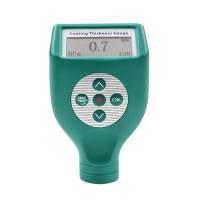
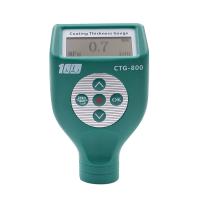
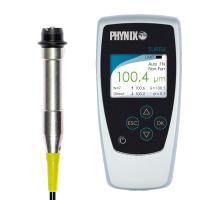
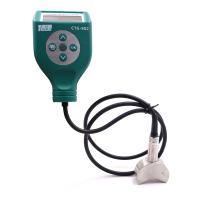
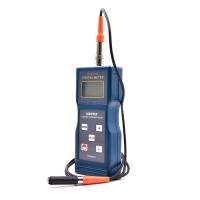
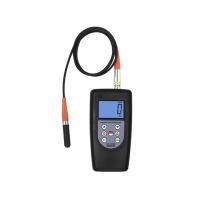
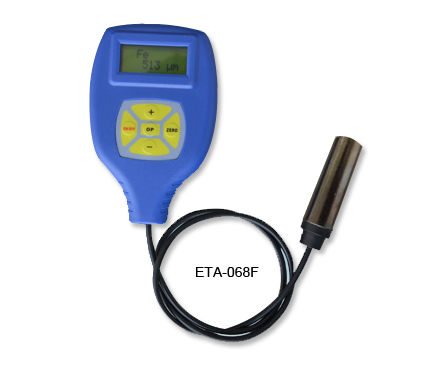
Chrome coating is a common surface treatment method that is widely used in automobiles, home appliances, furniture and other industries to improve the appearance, texture and corrosion resistance of products. In order to ensure the quality and performance of chrome plating coatings, measuring coating thickness is an essential step. Chrome coating Thickness Gauge, as an instrument specially used to measure the thickness of chromium coating, plays an important role in industrial production and quality control. This article will delve into the principles, applications and selection of chrome coating Thickness Gauges.
principle
The working principle of the chrome coating Thickness Gauge is mainly based on the principles of magnetic induction and radiation absorption. Chrome coating Thickness Gauges use a pair of magnetic induction sensors, one of which is located on the coating surface and the other on the substrate. These sensors send electromagnetic signals and receive feedback signals, analyzing changes in the signals to calculate the thickness of the coating. Some chrome coating Thickness Gauges are also equipped with a radiation source and Detector, which use the degree of absorption of radiation in different materials to measure the thickness of the coating. The chrome coating is usually opaque, while the base material is transparent. By comparing the absorption of rays in the coating and base material, the thickness of the coating can be determined. The measured signal undergoes data processing and algorithm analysis inside the instrument, and finally displays the coating thickness value.
application
Chrome coating Thickness Gauges are widely used in various industries. During the production process of chrome coatings, the Thickness Gauge can be used to monitor the coating thickness in real time to ensure that the chrome coating of each product meets the specified thickness requirements. . During the product quality inspection stage, the Thickness Gauge can be used to quickly and accurately detect the thickness of the chromium plating coating to determine whether the product is qualified. By continuously monitoring the coating thickness, problems in the production process can be discovered in time, process parameters can be optimized, and production efficiency and product quality can be improved. During product repair and maintenance, the Thickness Gauge can be used to determine the remaining thickness of the coating, evaluate its corrosion resistance, and provide a basis for maintenance plans.
Selection
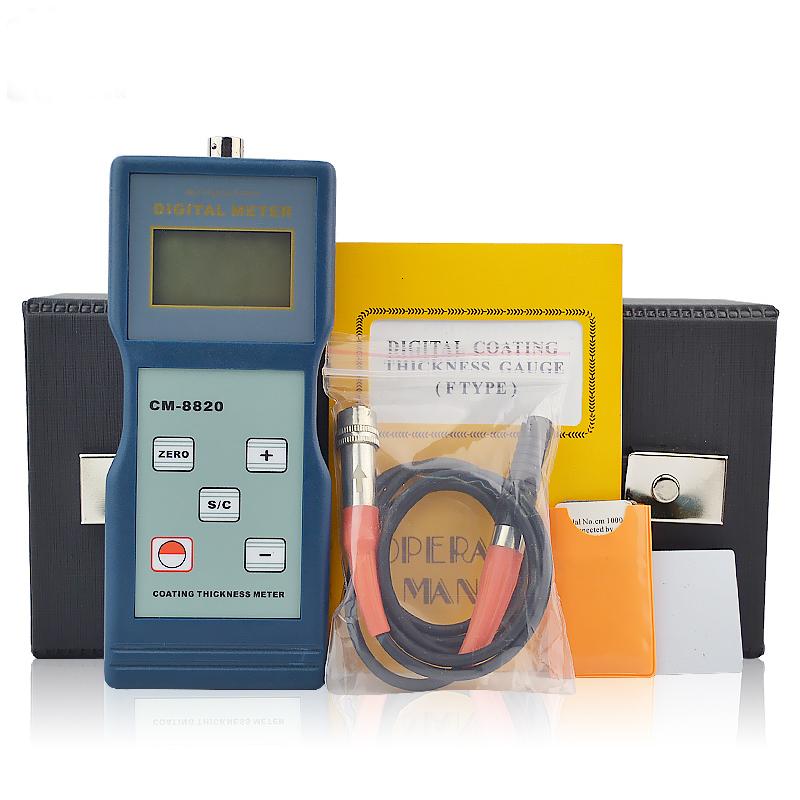
When choosing a chrome coating Thickness Gauge, you need to consider that different Thickness Gauges have different measurement ranges, and you should choose a suitable measurement range according to actual needs. Different application scenarios have different requirements for measurement accuracy, so a Thickness Gauge with appropriate accuracy should be selected. Choose the appropriate measurement principle according to actual needs, such as magnetic induction method or radiation absorption method. For applications that require measurements in the field, choosing a portable Thickness Gauge can increase productivity and convenience. Consider the price of the equipment, brand reputation and other factors, and choose products with reliable quality and stable performance.
Conclusion
As a key quality control tool, the chrome coating Thickness Gauge plays an important role in the production and application of chrome coatings. By measuring coating thickness, problems can be discovered in time, process parameters can be optimized, and production efficiency and product quality can be improved. When selecting and using a chrome coating Thickness Gauge, its principle, application and selection-related factors need to be fully considered to ensure the accuracy and reliability of the measurement results.

- 1Nondestructive measurement Coating thickness
- 2Principle, application and selection of traffic coatings Coating Thickness Gauge
- 3Principle, Application and Selection of Eddy current Coating Thickness Gauge
- 4Principle, Application and Type Selection of Electronic Coating Thickness Gauge
- 5Explore the principle, application and selection of phosphating layer Coating Thickness Gauge
- 6Principle, Application and Selection of Coating Thickness Gauge for inner wall of small pipe
- 7Basic principle and application scenario of steel Coating Thickness Gauge
- 8Principle and Application Analysis of Coating Thickness Gauge
- 9Measurement principle of commonly used coating Thickness Gauge