Principle, Application and Type Selection of Ultrasonic Thickness Gauge
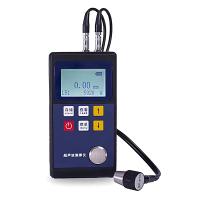
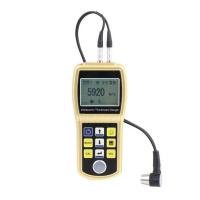
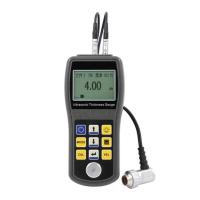
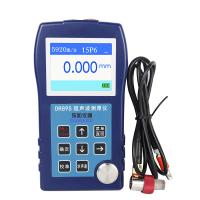
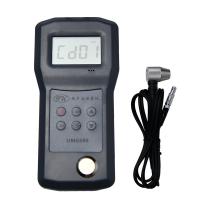
Alloy ultrasonic Thickness Gauge is a kind of equipment commonly used for non-destructive testing, which is widely used in metal processing, aerospace, chemical industry and other fields. This article will introduce the working principle, application fields and selection points of alloy ultrasonic Thickness Gauges to help readers better understand and choose the equipment that suits their needs.
Principle
The working principle of alloy ultrasonic Thickness Gauge is based on the principle of propagation and reflection of ultrasonic waves. Its main components include an ultrasonic transmitter, receiver and processing system. First, the ultrasonic emitter sends high-frequency sound waves to the surface of the object being measured. The sound wave then travels inside the object to be measured and is partially reflected back to the ultrasonic receiver. Based on the propagation time and velocity of the sound waves, as well as the propagation characteristics of the ultrasonic waves in the material, the thickness of the measured object can be calculated. Finally, the processing system processes and analyzes the received acoustic signal to obtain the thickness data of the measured object.
Apply
In the metalworking industry, alloy ultrasonic Thickness Gauges are often used to measure the thickness of sheet metal, pipes, containers, etc., to monitor the degree of wear and tear of materials and detect defects, and guide production and maintenance.In the aerospace field, alloy ultrasonic Thickness Gauges are widely used in the inspection and maintenance of aircraft structures, engine parts, etc., to ensure flight safety and equipment reliability.In chemical engineering, alloy ultrasonic Thickness Gauge can be used to measure the thickness of chemical equipment and pipelines, monitor corrosion, wear and tear, and ensure the safe operation of production equipment.
Selection points
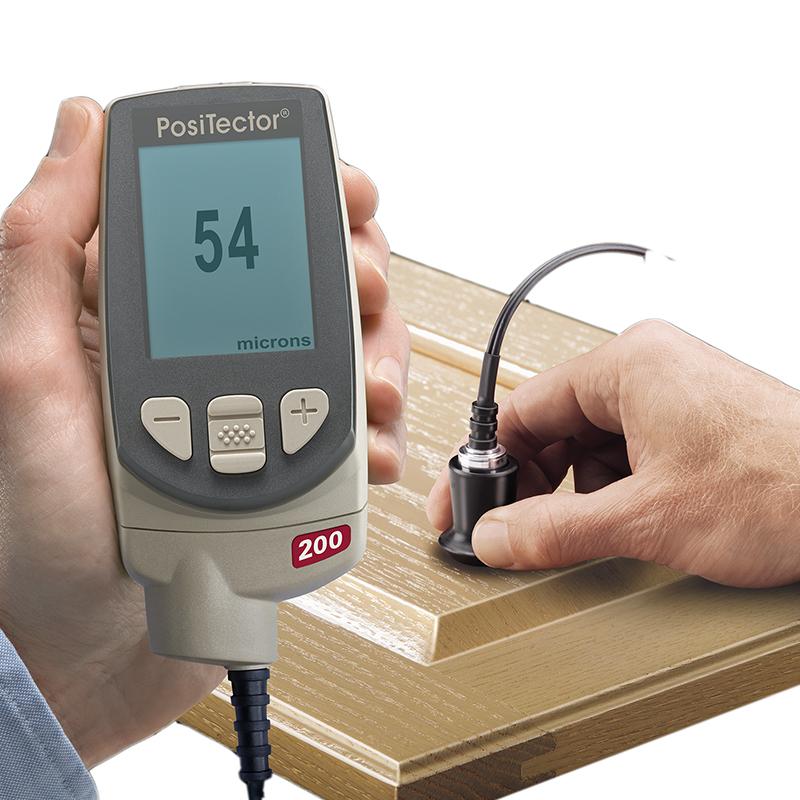
When choosing an alloy ultrasonic Thickness Gauge, it is necessary to consider that different application scenarios have different requirements for the measurement range and accuracy, so it is necessary to consider whether the measurement range and accuracy meet the actual needs when selecting the model.The types of alloy ultrasonic Thickness Gauges include single element transducers and dual element transducers, and the selection of the appropriate transducer type needs to be evaluated according to the nature and surface condition of the object to be measured.Modern alloy ultrasonic Thickness Gauges are often equipped with data processing software that can process and analyze the measurement data and output corresponding reports. When selecting a model, it is necessary to consider whether the data processing and output methods meet the actual requirements.For applications that require measurements in the field, portability and ease of operation are important considerations. Therefore, choosing an alloy ultrasonic Thickness Gauge that is portable and easy to operate can improve productivity.
Epilogue
As an important non-destructive testing equipment, alloy ultrasonic Thickness Gauge plays an important role in metalworking, aerospace, chemical industry and other fields. Correctly selecting the right alloy ultrasonic Thickness Gauge is of great significance to monitor the degree of material wear, detect defects, and ensure the safe operation of equipment.
- 1Principle, Function, Application and Selection of Multifunctional Ultrasonic Thickness Gauge
- 2Principle, Application and Type Selection of Ultrasonic Thickness Gauge
- 3Principle, Application and Selection of Ceramic Ultrasonic Thickness Gauge
- 4The Principle, Application and Precautions of Copper Plate Ultrasonic Thickness Gauge
- 5Principle and Application of Ultrasonic Thickness Gauge
- 6Measurement principle and influencing factors of high temperature ultrasonic Thickness Gauge
- 7Principle of Portable Ultrasonic Thickness Gauge
- 8How does an ultrasonic Thickness Gauge work?
- 9How to use an ultrasonic Thickness Gauge?