Measuring method of coating viscosity
Coating viscosity is an important technical parameter in the coating industry, which directly affects the construction performance, leveling and sagging of the paint film. In the coating process, choosing the right coating viscosity is crucial to ensure the quality of the coating. In this article, we will introduce in detail the concept of coating viscosity, its influencing factors and commonly used measurement methods.
1. The concept and influencing factors of paint viscosity
Paint viscosity, also known as the consistency of the coating, refers to the ability of the coating to hinder the relative movement of molecules due to intermolecular interactions during the flow process. It can be used to describe the viscosity of the coating, which affects the fluidity and coating effect of the coating during the application process. In the coating process, the right viscosity of the paint is essential to achieve a uniform, flat coating result.
The viscosity of a coating is affected by a variety of factors, including the composition of the coating, the solid content, the type and proportion of solvents, the particle size and dispersibility of the pigment. Different coating systems have different viscosity characteristics, for example, solvent-based paints typically have a lower viscosity, while water-based paints have a relatively higher viscosity. Therefore, when preparing and selecting coatings, various factors need to be considered to obtain the desired coating viscosity.
2. Commonly used coating viscosity measurement methods
In order to accurately measure the viscosity of coatings, a variety of tests are commonly used in the industry. The following are common ways to measure the viscosity of coatings:
Viscometer measurement
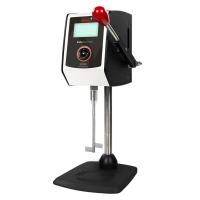
A viscometer is a commonly used instrument to measure the viscosity of liquids, usually in two types: rotary viscometer and vertical viscometer. A Rotational Viscometer calculates the viscosity value of a liquid by measuring the rotational speed and torque of rotation, while a vertical viscometer calculates the viscosity value by measuring the force required by the liquid as it rises in the viscometer.
Viscometer measurement is a commonly used method of measuring the viscosity of liquids, which measures the resistance of a liquid as it flows, thereby determining the viscosity of a liquid. In the coatings industry, viscometer measurements are widely used to evaluate the flow and viscosity of coatings to ensure good workability and final coating results.
1. The principle of the viscometer
A viscometer is an instrument specifically used to measure the viscosity of liquids, which is based on the relationship between the resistance and viscosity of the liquid as it flows. Depending on the measuring principle, viscometers can be divided into two types: rotary viscometers and vertical viscometers.
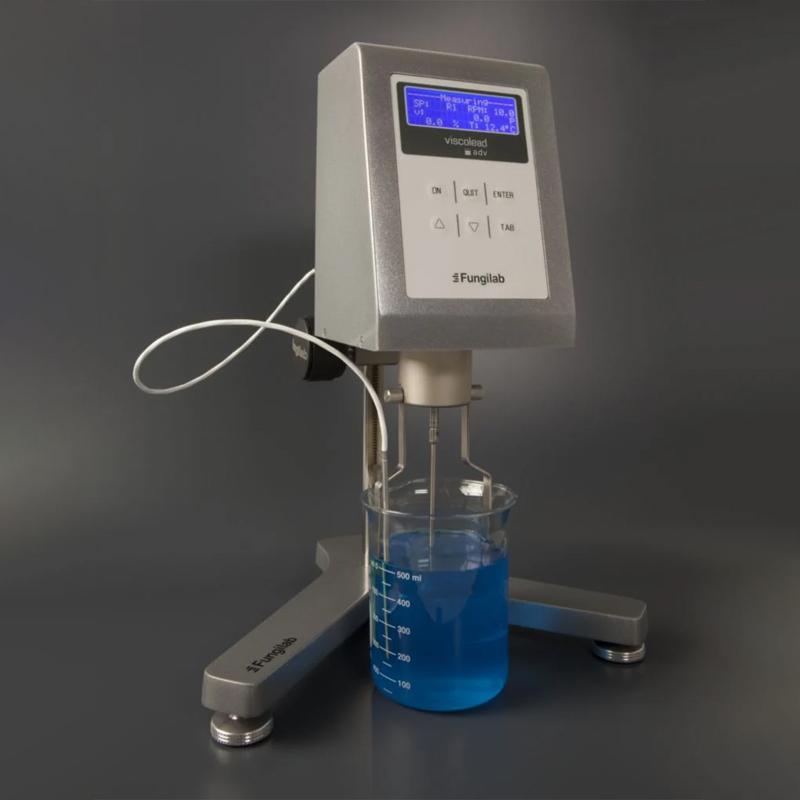
Rotational Viscometer:
A Rotational Viscometer calculates the viscosity value by placing the viscometer in the liquid to be measured, and then rotating the rotor of the viscometer and measuring the rotational speed and torque. The resistance of the liquid to the rotor is directly proportional to the viscosity of the liquid, so the viscosity value of the liquid can be calculated by measuring the rotational speed and torque of the rotor.
Vertical viscometer:
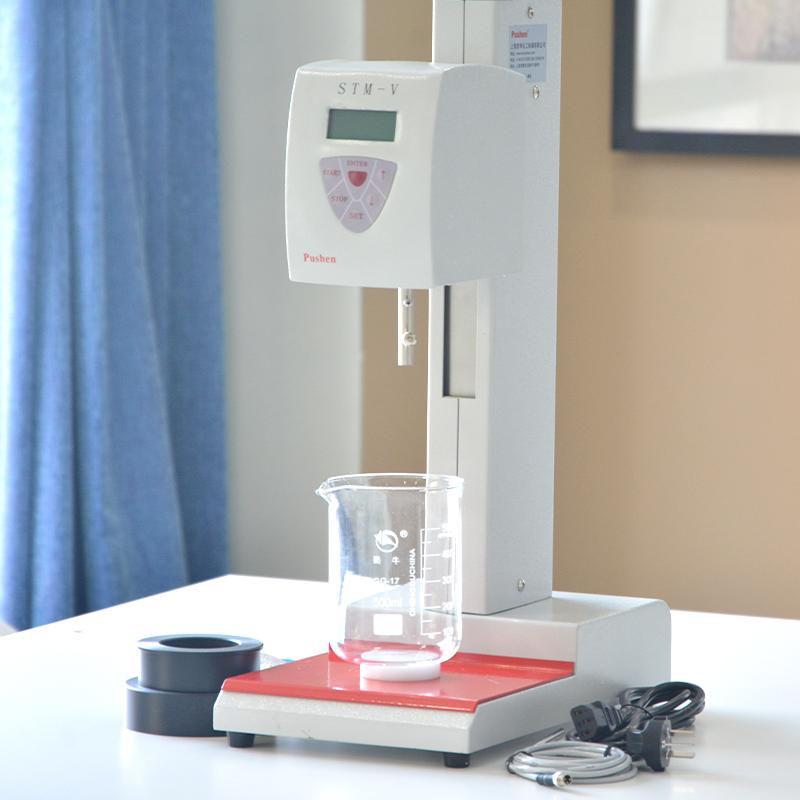
A vertical viscometer is a viscometer that places a viscometer in a liquid container and calculates the viscosity value by measuring the force required for the liquid to rise when the viscometer rises. The resistance of the liquid to the rise of the viscometer is directly proportional to the viscosity of the liquid, so the viscosity value of the liquid can be calculated by measuring the force required for the liquid to rise.
2. The operation steps of the viscometer
When using a viscometer for viscosity measurement, you usually need to follow these steps:
Step 1: Preparation: Prepare the liquid to be measured, and ensure that the temperature of the liquid is the same as the standard temperature to ensure the accuracy of the measurement results.
Step 2: Set up the viscometer: Select the appropriate viscometer type and measurement range according to the measurement needs, and set the viscometer correctly in the liquid to be measured.
Step 3: Start the viscometer: Start the motor or measuring system of the viscometer to make the viscometer start to rotate or rise to start the measurement process.
Step 4: Stabilize the measurement: After waiting for the motion of the viscometer to stabilize, record the corresponding rotational speed (for a rotating viscometer) or the force required to rise (for a vertical viscometer).
Step 5: Calculate the viscosity value: Based on the measured data, the viscosity value of the liquid is calculated using the standard viscosity calculation formula.
3. Precautions
When measuring with a viscometer, you need to pay attention to the following aspects:
Viscosity measurement results are highly affected by temperature, so it is necessary to ensure that the temperature at the time of measurement is stable and matches the standard temperature.
According to the characteristics and measurement requirements of the liquid to be measured, a viscometer of the appropriate type and measurement range is selected for measurement.
Operate in strict accordance with the operation steps to avoid deviations in measurement results caused by operation errors.
The viscometer is calibrated and maintained regularly to ensure its measurement accuracy and stability.
Flow cup measurement
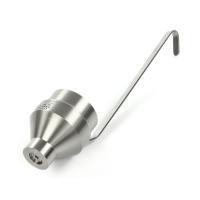
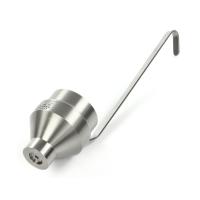
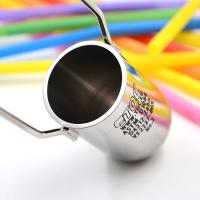
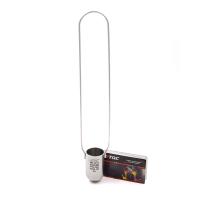
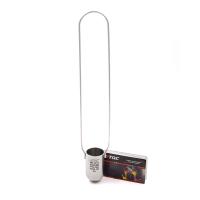
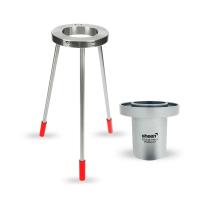
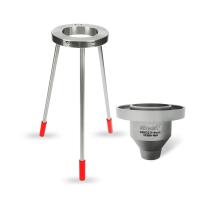
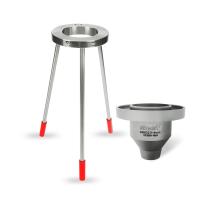
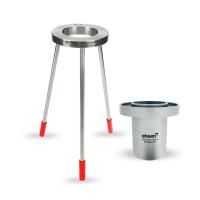
Flow cups are another commonly used tool for measuring the viscosity of liquids, usually using Fox Flow Cups or Doin Flow Cups. To measure, the Flow Cup is placed upside down in a container, and then a certain amount of liquid is poured out, the time required to flow out of the cup mouth is recorded, and the viscosity value is calculated according to the time and the diameter of the flow outlet.
Flow cup measurement is a commonly used method of measuring the viscosity of liquids by measuring the time it takes for them to flow out of the Flow Cup. In the coatings industry and beyond, Flow Cup measurement is widely used to assess the flow and viscosity of liquids to ensure that they meet the requirements of production and application.
1. The principle of the Flow Cup
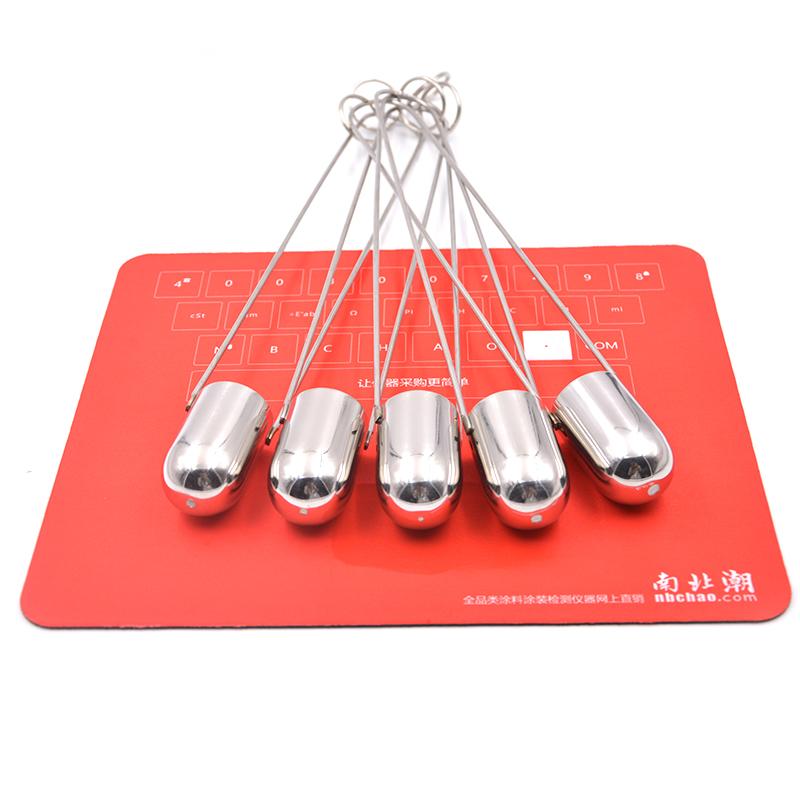
The Flow Cup is a specially designed container, which is usually used in Fox Flow Cups, Duin Flow Cups, etc. They have a flow outlet of a specific size and shape, and by controlling the diameter of the flow outlet and the amount of liquid filled in the Flow Cup, viscosity measurements can be achieved in different measuring ranges.
In Flow Cup measurements, the speed at which a liquid flows out of a Flow Cup is affected by viscosity. Liquids with higher viscosity will flow out more slowly, while liquids with lower viscosity will flow out faster. Therefore, the viscosity of a liquid can be determined indirectly by measuring the time it takes to flow out of the liquid.
2. The operation procedure of the Flow Cup
When using a Flow Cup for viscosity measurement, it is usually necessary to follow these steps:
Step 1: Preparation: Prepare the liquid to be measured and make sure that its temperature matches the standard temperature.
Step 2: Set up the Flow Cup: Place the Flow Cup upside down in the container, and adjust the height of the flow outlet and the liquid level.
Step 3: Pour the liquid to be measured: Pour the liquid to be measured into the Flow Cup, and start the timer when the liquid level is stable.
Step 4: Record the outflow time: Record the time it takes for the liquid to flow out of the Flow Cup, and record the diameter of the outflow at the same time.
Step 5: Calculate the viscosity value: Based on the measured time and flow port diameter, the viscosity value of the liquid is calculated using the standard viscosity calculation formula.
3. Precautions
When performing Flow Cup measurement, the following aspects need to be noted:
Viscosity measurement results are highly affected by temperature, so it is necessary to ensure that the temperature at the time of measurement is stable and matches the standard temperature.
According to the characteristics and measurement requirements of the liquid to be measured, select the Flow Cup of the appropriate type and measurement range for measurement.
The diameter of the flow outlet has a significant impact on the measurement results, and it is necessary to select the appropriate flow outlet diameter according to the viscosity of the liquid and the measuring range.
Operate in strict accordance with the operation steps to avoid deviations in measurement results caused by operation errors.
Other methods
In addition to the above methods, there are also some simple viscosity measurement methods, such as finger test, shovel test, etc. Although these methods are not as accurate as viscometers and Flow Cup measurements, they still have some reference value in some situations.
In the painting process, choosing the right paint viscosity is one of the keys to ensure the coating effect. In general, higher paint viscosities are suitable for situations where vertical coating is required or where higher thickness coating is required, while lower coating viscosity is suitable for situations where spraying or coating on irregular surfaces is required.When choosing the viscosity of the paint, it is necessary to consider factors such as the coating method, the temperature of the construction environment, the shape and surface condition of the coating object. In addition, it is necessary to determine the appropriate viscosity range according to the actual needs of the coating and the application requirements to ensure that the application process runs smoothly and the coating results are reliable.
Coating viscosity is an important technical parameter in the coating industry, which directly affects the construction performance and coating effect of coatings. Choosing the right coating viscosity is crucial to ensure the quality of the coating. Through reasonable coating viscosity measurement and selection, the coating efficiency and coating quality can be effectively improved to meet different construction needs. Therefore, it is of great significance to strengthen the understanding and control of the viscosity of the coating to improve the stability and reliability of the coating process.

- 1Coating viscosity determination - viscosity cup Yiwen
- 2Liquid viscosity measurement and application
- 3Viscosity: Microscopic forces inside liquids shape macroscopic properties
- 4Zahn Cup Method for Determination of Coating Viscosity
- 5Application of Viscosity Cup in Printing ink viscosity measurement
- 6Thermostatic bath working principle and its application in viscosity measurement
- 7How to measure the viscosity of paints with Ford Viscosity Cup?
- 8Rotational viscometer measurement of molasses viscosity
- 9Chocolate viscosity measurement with Rotational Viscometer