Gloss inspection method of slurry inks
In the printing industry, the gloss of the ink directly affects the quality and visual effect of the printed matter. Slurry inks are a common type of printing ink, and their gloss inspection methods are essential to assess the quality of printed matter. This article will deeply discuss the gloss test method of slurry ink, including technical details of instruments and equipment, inspection steps, precautions, etc., to help printing practitioners better understand and apply the test method.
1. Introduction
Slurry ink is a type of ink commonly used in the printing process, which has good applicability and printing effect. In the quality control of printed matter, gloss is one of the important indicators, which directly affects the appearance and texture of printed matter. Therefore, accurately assessing the gloss level of slurry inks is essential to ensure the quality of your prints.
2. Instruments and equipment
In order to carry out the gloss inspection of slurry inks, we need to prepare the following instruments and materials:
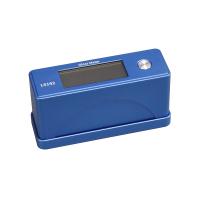
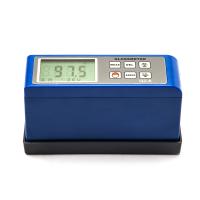
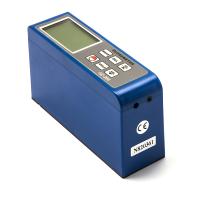
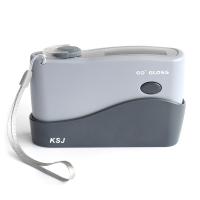
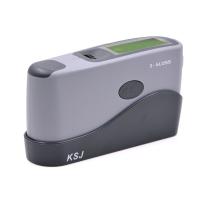
Gloss meter (60° angle): meet the requirements of 5.3 in GB/T 9754-2007 standard. Gloss meters are a key tool for measuring the gloss of inks, expressing the gloss level of inks by the ratio of reflected light.
Coated paper: Choose 157 g/m2 double-sided coated paper, which meets the gloss requirements of Table 1 in the GB/T 10335.1-2017 standard. Coated paper, as a printing medium, plays an important role in gloss testing.
Metering platform: used to place the printing sample to ensure the stability and accuracy of the test.

3. Inspection steps
3.1 Sample Preparation
First of all, the sample needs to be prepared according to the method specified in the standard. For slurry inks, the printing sample can be prepared by the scraping method or according to the method specified in the relevant standard. The prepared printing sample should meet the requirements of the standard to ensure the accuracy and reliability of the test.
3.2 Drying method
The prepared specimen needs to be dried to ensure that the gloss of the ink is not affected by humidity and dryness. Depending on the type of ink, different drying methods are used:
For UV-curable inks, dry them in accordance with the requirements in the QB/T 2826-2017 standard.
For oxidized conjunctival drying inks and volatile drying inks, the printing sample is left under test conditions for more than 24 hours, and the test is carried out after the ink is completely dry.
3.3 Measurements
During the measurement process, the accurately adjusted gloss meter probe is aligned with the sample to be measured with 3 blank coated sheets lined at the bottom, and the data is read out. During the measurement process, the stability of the measurement platform should be ensured, and care should be taken to avoid interference of external light on the test results.
4. Test results
Once the measurement is complete, the measured data needs to be processed to arrive at the final gloss value. According to the requirements of the standard, three points in the upper, middle and lower parts of the sample should be selected for measurement, and the difference between the data of each point should be calculated, and if the difference is less than 5 gloss units, the arithmetic average value should be taken as the gloss value of the ink. If the difference is more than 5 gloss units, a re-sample test is required.
5. Precautions
When performing the gloss inspection of slurry ink, the following matters need to be noted:
The quality of the prepared paper has a great impact on the gloss of the ink, so the paper with stable quality should be selected for testing.
After the ink is prepared, it should wait enough time for drying to ensure that the test results are accurate and reliable.
When using a gloss meter, it should be handled with care to avoid damaging the instrument to ensure the accuracy and repeatability of the test.
6. Conclusion
The gloss inspection method of slurry ink is one of the important links to ensure the quality of printed matter. By testing in strict accordance with the inspection steps and conditions specified in the standard, the gloss level of slurry inks can be accurately evaluated, providing an important quality control basis for the printing industry. In practice, it is necessary to strictly comply with the standard requirements and pay attention to the details of the inspection process to ensure the accuracy and reliability of the test results.
-
![KSJ WGG60-Y4 high-precision Glossiness Meter, special for thin film industry, built-in lithium battery]()
-
![KSJ WGG60-EJ single angle Glossiness Meter, metal Eletroplating copper foil surface, built-in lithium battery]()
-
![KSJ WGG60-E4 Gloss meter built-in lithium battery]()
-
![KSJ MG68-F2 intelligent Gloss meter, projection angle 60 °/85 °]()
-
![KSJ MG26-F2 intelligent Gloss meter projection angle 20 °/60 °]()
-
![KSJ MG268-F2 Intelligent Gloss Meter 20 °/60 °/85 ° Gloss + Haze + reflectance]()
-
![DONGRU DR268 color screen three angle Glossmeter 0-2000Gs]()
-
![DONGRU DR61S Glossmeter 0-200Gs]() DONGRU DR61S Glossmeter 0-200Gs$ 314.00
DONGRU DR61S Glossmeter 0-200Gs$ 314.00 -
![DONGRU B60M color screen intelligent Glossmeter Measurement angle 60 °]()



- 1Principle and Application of Glossiness Tester
- 2Working Principle and Application of Metal Gloss Meter
- 3Basic principle and application analysis of insulating paint gloss Detector
- 4Working principle and application analysis of film Glossmeter
- 5Principle and application analysis of microporous gloss meter
- 6 FZ/T 01097 Analysis of fabric gloss test method
- 7Evaluation and Application of Optical Properties of Powder coatings
- 8Coating coatings - Determination of surface gloss and Gloss meter
- 9The Importance and Method of Gloss Measurement of Paint Film