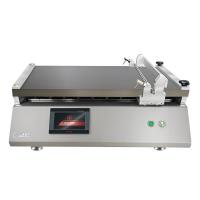
Selection and Application of Experimental Film Applicator on PET Substrate
Summary: In this paper, the selection and experimental application of squeegee vacuum adsorption coater for coating adhesive film on PET substrate under laboratory conditions are introduced. The thickness of the adhesive film is 20 μm, and the coating process requires heating, and the solid contains 5% of the toxic substance 2-iodoiphenol. The article discusses in detail the selection criteria, operation steps, and possible challenges and solutions in the experiment of the film coating machine, which provides an important reference for the laboratory adhesive film coating work.
Keywords: Laboratory Film Coating Machine, PET Substrate, Adhesive Film, Scraper Coating, Heating, Toxic Substances
introduction
Adhesive films have a wide range of applications in scientific research, engineering applications, and medical device manufacturing. Coating adhesive film is a common task under laboratory conditions. This article will focus on how to apply adhesive film on PET (polyester) substrate with a thickness of 20 μm, taking into account factors such as heat and toxic substances. We will introduce how to choose the right coater, as well as the operation tips and solutions to the problems that may be encountered in the experiment.
1. Selection of film coating machine
When choosing a Film Applicator, there are several factors to consider:
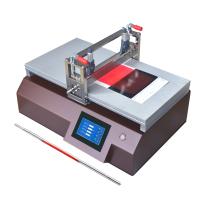
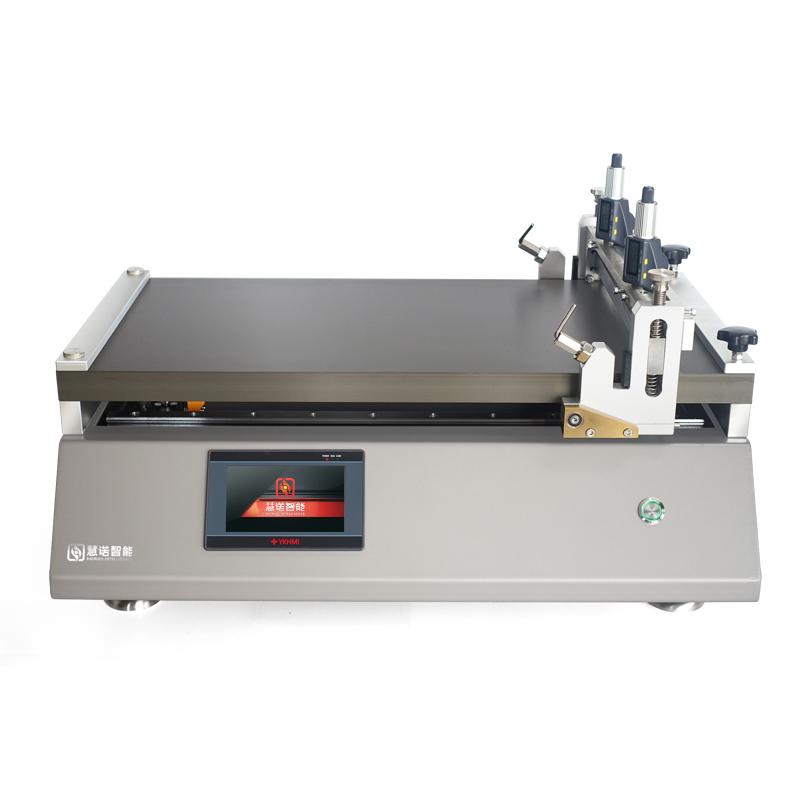
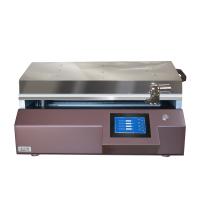
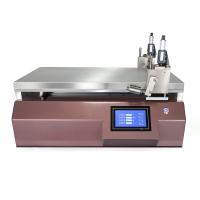
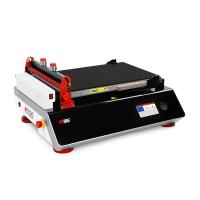
Coating method: Considering the thickness and uniformity requirements of the adhesive film, drawdown blade coating is a common and effective coating method. Therefore, we chose a squeegee vacuum adsorption coating machine.
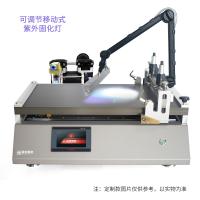
Heating function: Since the PET substrate needs to be heated during the coating process to improve adhesion, it is important to ensure that the coater is heated when selecting the film.
Vacuum adsorption capacity: The vacuum adsorption capacity ensures that the adhesive film adheres tightly to the substrate during the coating process, thus ensuring the uniformity of the coating.
Ease of use: Choose an easy-to-operate, easy-to-control coater to improve the efficiency of your experiments.
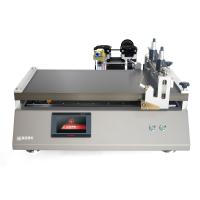
Based on the above considerations, we chose the squeegee vacuum adsorption coating machine, which has adjustable heating function and strong vacuum adsorption capacity, and at the same time is easy to operate, which is very suitable for adhesive film coating work in the laboratory.
2. Procedure
When applying adhesive films in the laboratory, you need to follow these steps:
1) Preparation: Clean the working surface of the Film Applicator to ensure that it is dust-free. Prepare the PET substrate and the adhesive solution required for coating.
2) Adjust the coating machine: According to the experimental requirements, adjust the working parameters of the coating machine, including coating speed, scraper pressure and heating temperature. Make sure the coater is in a steady state.
3) Heating the PET substrate: Place the PET substrate on the working surface of the film coater, activate the heating function, and heat the PET substrate to the desired temperature.
4) Coating the adhesive film: Evenly apply the glue on the heated PET substrate, and start the film coating machine at the same time to ensure that the glue is evenly scraped and adhered to the substrate.
5) Vacuum adsorption treatment: Start the vacuum adsorption function of the film coating machine to ensure that the film is tightly attached to the PET substrate to avoid bubbles and uneven coating.
6) Curing treatment: According to the characteristics of the glue, the curing treatment is carried out to ensure the stability and durability of the glue film.
7) Inspection and Storage: Check the quality of the coated adhesive film to ensure that there are no defects and contamination. Store the film in a dry, dust-free environment to prevent contamination or damage.
3. Experimental application
Laboratory adhesive film coatings have important applications in many fields, such as:
Materials research: Coating technology can be used to prepare functional materials with different properties for sensors, electronic devices and other fields.
Biomedical applications: Adhesive film coating can be used to prepare biomedical materials, such as artificial blood vessels, medical patches, etc., and has broad clinical application prospects.
Preparation of optical devices: Adhesive film coating technology has important applications in the preparation of optical devices, such as liquid crystal displays, optical films, etc.
Functional film research: Coating technology can be used to prepare films with specific functions, such as waterproof, antifouling, antibacterial and other functions, for textiles, building materials and other fields.
4. Possible challenges and solutions
During the experiment, problems such as uneven coating, peeling off of the adhesive film, and poor vacuum adsorption effect may be encountered. To address these issues, the following solutions can be taken:
Uneven coating: Adjust the working parameters of the coater, such as scraper pressure, coating speed, etc., to ensure that the glue can be evenly applied to the substrate.
Adhesive film shedding: Check that the surface of the substrate is clean before application to ensure that the adhesive can fully adhere to the substrate. In addition, the vacuum adsorption parameters of the coater can be adjusted to enhance the adhesion of the adhesive film to the substrate.
Poor vacuum adsorption: Check whether the Vacuum Pump and adsorption system are working properly, clean the adsorption system, and ensure that sufficient vacuum adsorption force can be formed.
conclusion
Laboratory adhesive film coating is an important experimental technology, which has a wide range of application prospects in scientific research and engineering applications. This article describes the selection and experimental application of coating adhesive film on PET substrate, and discusses in detail the selection criteria, operation steps, and possible challenges and solutions of the film coater. We believe that this information can provide a useful reference for laboratory adhesive film coating work and promote the development of research and application in related fields.

- 1How Flat Film Applicators Can Build a New Generation of Functional Materials on Fabrics
- 2NVP anode film FAQ and solution
- 3Application Technology of Laboratory Film Applicator in Dielectric Thin Film
- 4Comparison of Advantages and Disadvantages of Three Heating modes for Laboratory Film Applicators
- 5Application and selection of laboratory coater in PDMS thin film prepative
- 6Scraping machine selection case: film substrate large size high accuracy scraping solution
- 7Application of Film Applicator in PEM Research and Preparation
- 8Application of Film Applicator in PVDF-HFP Material Research
- 9Application of Film Applicator in Cosmetic Base Body