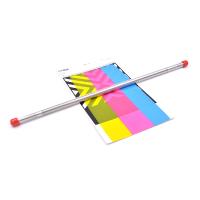
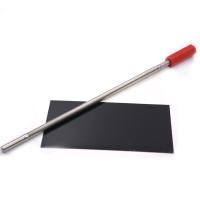
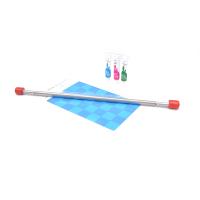
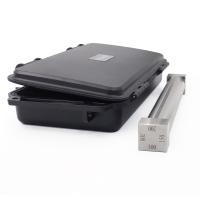
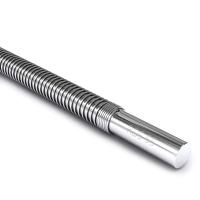
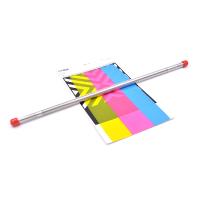
Wire Bar Applicator rod and wet Film Applicator difference video tells you
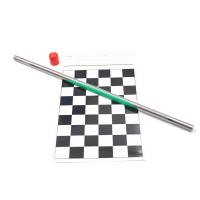
According to the Mayer principle, Mayer Rods is theoretically capable of realizing a variety of step films of different thicknesses, such as 1 micron, 2 micron, 3 micron, etc., which has advantages in the preparation of ultra-thin coating and step films of different thicknesses. At the same time, Mayer Rods is also capable of preparing multi-layer films, which can be achieved with coating widths ranging from a few centimeters to a few meters. However, its disadvantage is that it is difficult to clean, and special gap rods need to be used when the viscosity is greater than 1000cp, which is not recommended when it exceeds 3000cp; in addition, too long rods can affect the linearity of the coating, thus affecting the coating accuracy.
As for the Applicator, the film thickness is mainly controlled through the middle groove, but it is difficult to achieve the subdivided stepped film thickness, which is usually set to 20 microns, 50 microns, 100 microns, etc. However, when dealing with high viscosity slurry, the device can avoid scratches and is easy to clean. However, the disadvantage is that multi-layer coating cannot be realized, and the optional film thickness range is narrow; when the coating width is large, the material cost is too high, and the fluid with too low viscosity is difficult to control the film thickness.




- 1Introduction of 30μm Wet Film Applicator
- 2Difference Between Applicator Rod and Film Applicator
- 3Mayer Rods VS Film Applicators
- 4Differences Between Different Types of Film Applicators
- 5Several solutions for double coating
- 6What function types are available for the Nanbei Tide Experimental Small Coater?
- 7What are the models of popular bar applicators?
- 8Comparison of different brands of adjustable wet film preparers
- 9Tide Review: Adjustable Wet Film Coater ZUA2000.150