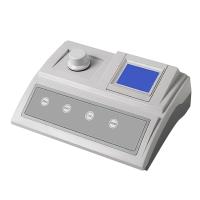
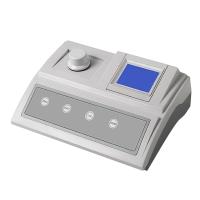
Residual chlorine, total chlorine reagent simple operation process
Concentration prediction:Before testing the water sample, the residual chlorine or total chlorine concentration value of the water sample should be predicted, and the excess concentration should be diluted and measured, for example, the residual chlorine or total chlorine should be predictedThe concentration value is 0-10mg/L, and the operation can be done directly according to the operation steps; If the residual chlorine or total chlorine concentration is expected to exceed 10mg/L, the water sample should be diluted to 0-10mg/L range.
Notes:The determination of residual chlorine and total chlorine has strict requirements for time, and the color development time must be strictly controlledThe measured value is the residual chlorine value at 1 minute, and the total chlorine value is measured at 10 min of color development.
1. When the predicted value is in the range of 0-10mg/L
If there is residual chlorine or total chlorine, the water sample will appear orange-yellow, and the darker the color, the higher the concentration value of the water sample. Analytical Procedure: Residual Chlorine; Watch out for overrange tips!

2. When the predicted value exceeds 10 mgL /L
The water sample is diluted to the above 0-10 mg/L concentration range, and then manipulated according to the corresponding range, and the result is multiplied by the dilution factor.
3. Hands-on test steps

4. Precautions
◆ Pay attention to cross-contamination, use different measuring utensils for different liquids (pay attention to changing the tip when using a pipette).
◆ Use appropriate pipetting tools to take liquids, and large range measuring tools cannot measure small volumes of water samples, such as: 5mL pipettes cannot be used to remove 2mL and below liquidsFor liquids less than or equal to 2mL, it is recommended to pipette twice with a 1mL pipette.
◆ When using a pipette, it is necessary to calibrate the pipette frequently (it is recommended to do so once a week), and pay attention to replacing the tip during use.
- 1Application of residual chlorine Detector in canned food factory
同奥科技
- 2Basic principle and application of residual chlorine meter in waterworks
- 3Application of Water Quality Analyzer in Swimming Pool Water Quality Detection
- 4AQ3070 Portable Residual Chlorine and Total Chlorine Colorimeter Description
- 5OLILONG AQ2070 Residual Chlorine Colorimeter Operating Instructions