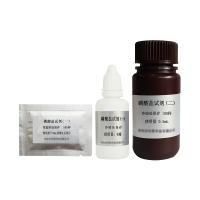
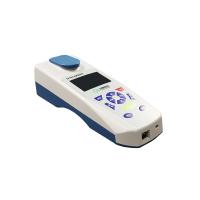
Phosphoric acid salt reagent simple operation process
Concentration prediction:Before testing the water sample, first predict the phosphate value of the water sample, and select the operation steps corresponding to the range, for example, predict the phosphate concentration value0-2mg/L, you need to select the operation procedure of 0-2mg/L range; If the phosphate concentration is predicted to be 2-20 mg/L, the 2-20 mg/L range is chosenSteps.
1. When the predicted value is in the range of 0-2mg/L
If phosphate is present, the water sample will appear blue, and the darker the color, the higher the concentration value of the water sample. Analytical procedure: phosphate L; Watch out for overrange tips!

2. When the predicted value is in the range of 2 - 20mg/L
If phosphate is present, the water sample will appear blue, and the darker the color, the higher the concentration value of the water sample. Analytical procedure: Phosphate H; Watch out for overrange tips!

3. When the predicted value exceeds 20 mgz/L
The water sample needs to be diluted to the corresponding concentration value in sections 1-2 above, and then operated according to the corresponding range, and the determination result is multiplied by the dilution factor.
4. Test steps on the computer

5. Precautions
◆ If there is phosphate, the water sample shows blue, and the darker the color, the higher the concentration value of the water sample.
◆ Pay attention to cross-contamination, use different measuring utensils for different liquids (pay attention to changing the tip when using a pipette).
◆ Use appropriate pipetting tools to take liquids, and large range measuring tools cannot measure small volumes of water samples, such as: 2mL pipettes cannot be used to remove 2mL and below liquidsFor liquids less than or equal to 2mL, it is recommended to pipette twice with a 1mL pipette.
◆ When using a pipette, it is necessary to calibrate the pipette frequently (it is recommended to do so once a week), and pay attention to replacing the tip during use.