How to Choose an Overhead Stirrer Impeller?
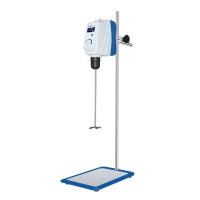
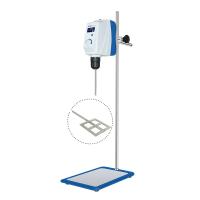
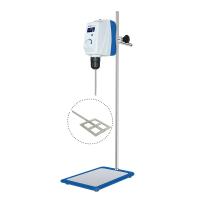
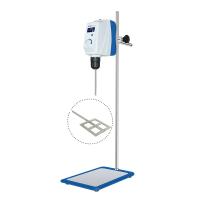
In a laboratory environment, effective stirring techniques are one of the keys to ensuring that samples are homogeneously mixed. In order to meet the needs of various laboratories, overhead agitators were born. The overhead agitator has a variety of paddle options to cope with different materials and performance requirements, providing users with a high-performance, demanding mixing experience. This article will introduce the features of the overhead agitator and the various impellers that can be selected.
Mixing paddle material and characteristics
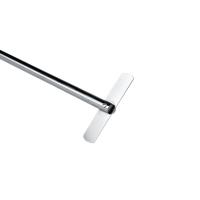
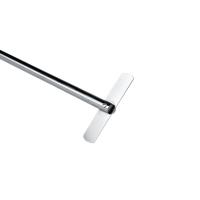
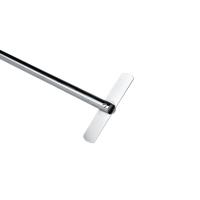
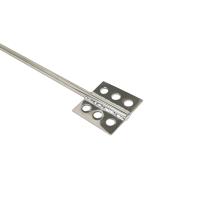
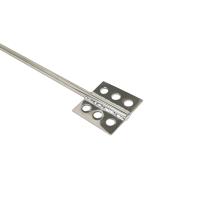
Stainless Steel (316) Stirring Impeller: This type of stirring impeller has excellent corrosion resistance, can resist the erosion of strong acids such as nitric acid, sulfuric acid, etc., and also shows good high temperature resistance, suitable for harsh experimental conditions.
Polytetrafluoroethylene (PTFE) impeller: PTFE impeller has excellent heat and cold resistance, and can still maintain stability in extreme temperature ranges (-180~260°C). It also exhibits excellent chemical stability and is virtually immune to corrosion by any chemical agents, including concentrated sulfuric acid, nitric acid, hydrochloric acid, etc., as well as resistance to various organic solvents.
Optional impeller types
Three-blade impeller:
As a standard mixing head, it can make the mixing medium flow axially from top to bottom with low shear force, which is suitable for situations where general mixing requirements are low.
Four-blade impeller:
It is suitable for medium and high-speed stirring, which can make the mixing medium produce axial flow and local shear force, and has a good effect on samples with high mixing requirements.
Dissolving impellers:
Medium and high speed can make the mixed medium produce radial flow, forming strong turbulence and high shear force, suitable for experimental samples that need to crush particles in liquids.
Centrifugal impellers:
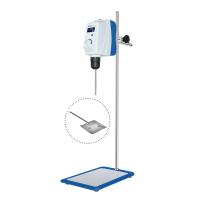
For medium and high speed use, it is especially suitable for narrow-mouth containers, and opens as the speed increases, producing a mixing effect similar to that of a four-blade impeller.
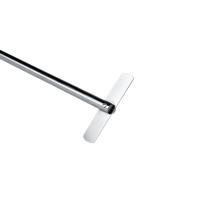
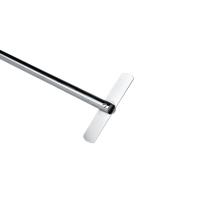
Fan impeller:
It is suitable for medium and low speed stirring, producing tangential flow, small turbulence, good heat exchange performance, and suitable for occasions with gentle stirring medium.
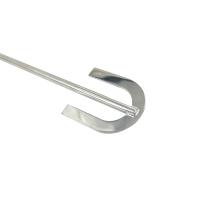
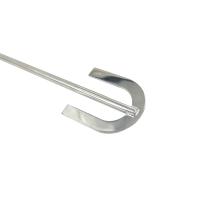
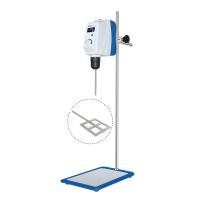
Anchor impeller: It is suitable for low-speed stirring, producing tangential flow and forming a high shear rate at the edge, especially for high-viscosity fluids.

With its high performance, versatile impeller options, and adaptability to a wide range of experimental conditions, overhead stirrers are a reliable solution for stirring samples in the laboratory. Whether it's for samples with high corrosion resistance or for mixing experiments at extreme temperatures, the overhead stirrer provides stable and reliable stirring to support your experiments.