Experimental Application of Automatic Film Applicator for Coating Hot-melt adhesive on Breathable Film
introduction
Breathable membranes are widely used in many fields, especially in the medical, construction, and apparel industries. Breathable membranes are characterized by their ability to allow gases to pass through, but to block the penetration of liquids and particles. As a result, they have unique advantages in terms of waterproofing, dust resistance, and breathability. To further enhance the functionality of the vent film, it is often coated with a hot melt adhesive. Hot melt adhesives have excellent adhesion and durability, which can significantly improve the adhesion and service life of breathable films.
The purpose of this experiment was to investigate the process and effect of automatic film coater coating hot melt adhesive on breathable film. By controlling the parameters of the film coating machine, the uniformity and adhesion strength of the hot melt adhesive coating are optimized, and reliable technical support is provided for the practical application of breathable films.
Experimental materials and equipment
Experimental materials
Breathable membrane: Breathable membrane with common polyethylene (PE) and polypropylene (PP) substrates is selected.
Hot melt adhesive: EVA hot melt adhesive with low melting point is used, which has good adhesion and weather resistance.
Experimental equipment
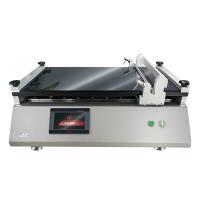
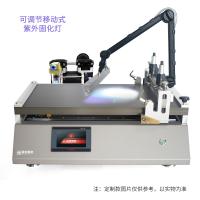
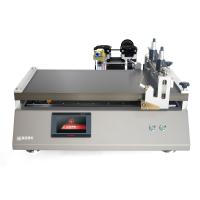
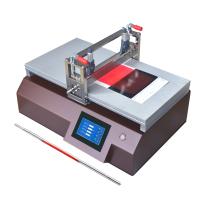
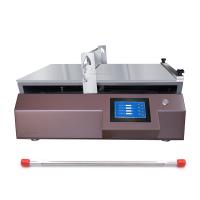
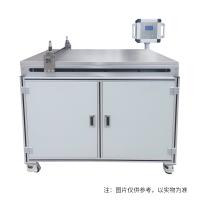
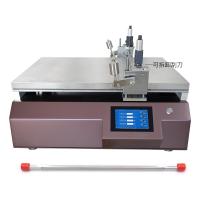
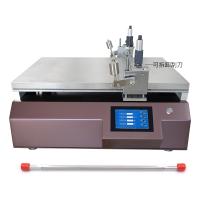
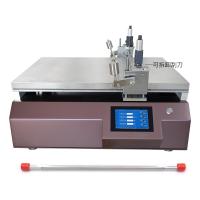
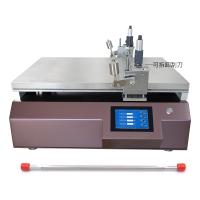
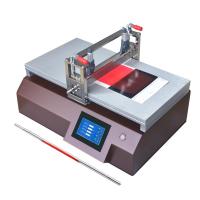
Automatic Film Applicator: including coating head, heating system, control system and rewinding and unwinding device. The machine has the function of precise control of coating thickness and coating speed.
Test equipment: including Tensile Testing Machines, air permeability Testers and microscopes to evaluate the coating effect.
Experimental Methods
Clean the surface of the breathable membrane to ensure that there is no dust and impurities.
Fix the breathable film on the reel of the automatic Film Applicator to ensure that the winding is tight and flat.
Set the operating parameters of the coater, including the coating speed, coating thickness, and the temperature of the hot melt adhesive. The initial setting is 10 m/min, the coating thickness is 20 microns, and the hot melt adhesive temperature is 150°C.
Start the Film Applicator and observe the working state of the coating head to ensure that the hot melt adhesive is evenly coated on the surface of the breathable film.
According to the experimental needs, the coating speed and thickness were adjusted, and the coating effect under different parameters was recorded.
After the coating is completed, the breathable film passes through the cooling roller table to make the hot melt adhesive cool and solidify quickly.
Rewind the coated breathable film for later use.
A tensile test was performed to test the adhesion strength of the hot melt adhesive after application.
Use a gas permeability Tester to measure the change in air permeability performance of the breathable film before and after application.
Observe the uniformity and integrity of the coating layer with a microscope.

Experimental results and discussion
1) Coating uniformity
Microscopic observation showed that under the initial parameter setting, the hot melt adhesive coating layer was relatively uniform, and no obvious accumulation or defects were found.
After adjusting the coating speed and thickness, it was found that the faster the coating speed, the thinner the coating thickness, and the worse the uniformity of the coating layer. Conversely, the slower the coating speed, the thicker the coating thickness, and the more uniform the coating layer is, but it is easy to produce over-thickness problems.
2) Adhesion strength
The tensile test results showed that the adhesion strength of the breathable film was significantly improved after the hot melt adhesive was coated. At the initial parameter setting, the adhesion strength reaches 3.5 N/cm.
Different coating thicknesses have a great influence on the adhesion strength, and the adhesion strength is better when the coating thickness is 20 microns. When the coating thickness is less than 10 microns or higher than 30 microns, the adhesion strength decreases significantly.
3) Breathability
The results of the air permeability test showed that the air permeability of the breathable film decreased after the application of the hot melt adhesive, but it still remained within the acceptable range.
Different coating thicknesses have a greater impact on air permeability, and when the coating thickness is 20 microns, the air permeability decreasescompareSmall.
conclusion
In this experiment, the process and effect of the automatic film coater on the breathable film of hot melt adhesive were studied. By controlling the coating speed, coating thickness and hot melt adhesive temperature of the coating machine, the uniform coating of the hot melt adhesive can be achieved, and the adhesion strength of the breathable film can be improved, while maintaining its good air permeability. The experimental results show that the optimal coating parameters are the coating speed of 10 m/min, the coating thickness of 20 microns, and the hot melt adhesive temperature of 150°C.

- 1How Flat Film Applicators Can Build a New Generation of Functional Materials on Fabrics
- 2NVP anode film FAQ and solution
- 3Application of laboratory coater in LED fluorescent film Spreader
- 4Application Technology of Laboratory Film Applicator in Dielectric Thin Film
- 5Comparison of Advantages and Disadvantages of Three Heating modes for Laboratory Film Applicators
- 6Application and selection of laboratory coater in PDMS thin film prepative
- 7Scraping machine selection case: film substrate large size high accuracy scraping solution
- 8Application of Film Applicator in PEM Research and Preparation
- 9Application of Film Applicator in PVDF-HFP Material Research