Application Technology of Small Automatic Film Applicator Applying Glue on Plastic-keeping Film
introduction
As a common packaging material, plastic wrap is widely used in food preservation, industrial packaging, and daily life. In order to enhance the adhesion and functionality of plastic wrap, applying the right amount of glue is an important process step. As an efficient and accurate coating equipment, the small film coating machine can significantly improve the efficiency and quality of the plastic wrap gluing process. This article will introduce in detail the application technology of small film coater to apply glue on plastic wrap, including equipment selection, process flow, parameter optimization and practical application cases.
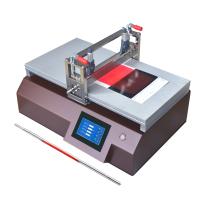
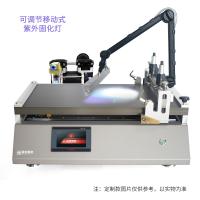
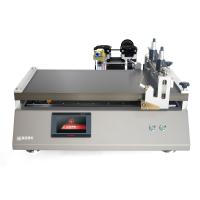
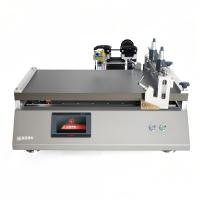
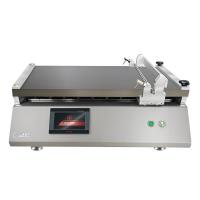
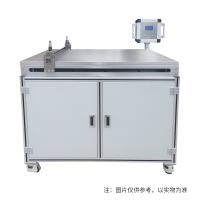
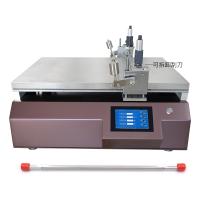
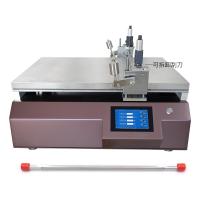
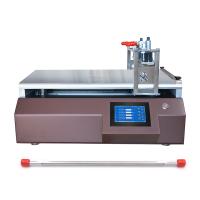
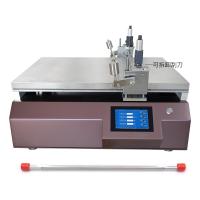
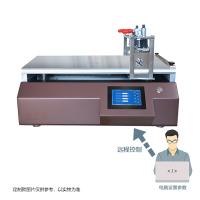
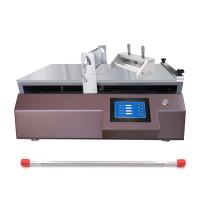
Introduction to the small Film Applicator
How it works
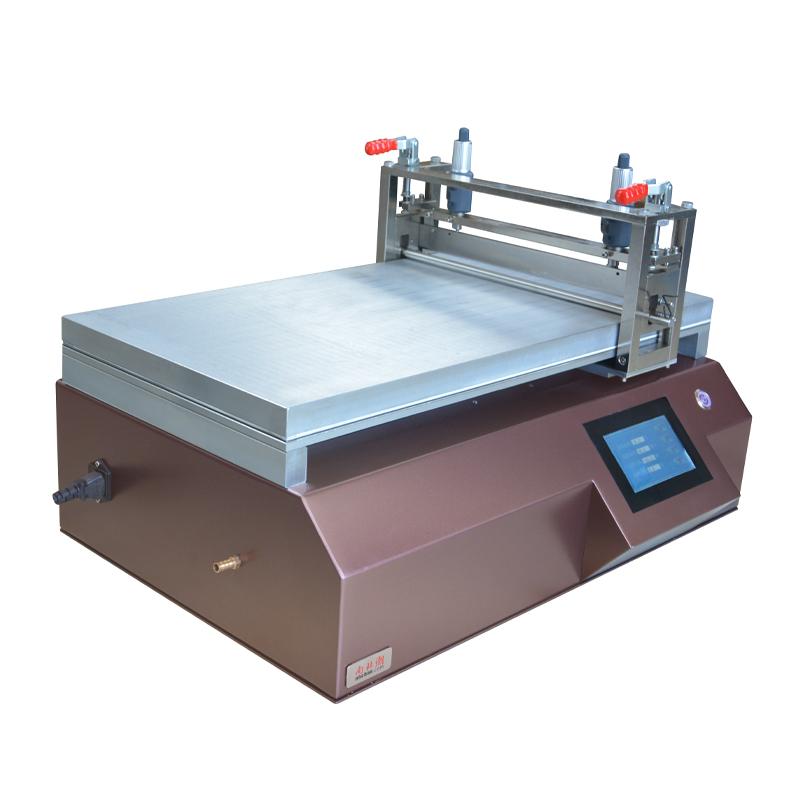
The small Film Applicator evenly spreads the glue on the surface of the plastic wrap by controlling the coating head and coating parameters. A Film Applicator typically includes a coating system, a drive system, a control system, and a substrate fixing system. The coating system is responsible for applying the glue to the plastic wrap; The transmission system controls the speed and direction of movement of the plastic wrap; The control system ensures the coating quality by adjusting the coating speed, coating thickness and other parameters; The substrate fixing system keeps the plastic wrap flat and stable.
Type & Function
According to the different coating methods, small film coating machines are mainly divided into several types, such as wire rod coating machine, scraper coating machine, spraying machine and roller coating machine. Each type of Film Applicator has its own characteristics in terms of coating effect, scope of application, ease of operation, etc.
Wire rod coating machine: the glue is applied to the substrate through the wire rod, which is suitable for film materials, with good coating uniformity and easy to control the thickness.
Scraper coating machine: use the scraper to evenly coat the glue, which is suitable for the coating of thicker coatings, and the coating film has high flatness.
Spraying machine: The glue is atomized and sprayed on the substrate through the nozzle, which is suitable for the coating of complex shapes and large areas of substrates.
Roller coating machine: The glue is applied by the roller, which is suitable for continuous production and large-area coating.
Device selection
When choosing a small Film Applicator, the following factors should be considered:
Coating accuracy: The equipment should have high-precision coating ability to ensure the uniformity and thickness consistency of gluing.
Ease of operation: The equipment should be easy to operate and maintain, adapting to the needs of the laboratory and small-scale production.
Applicability: The equipment should be suitable for the gluing process of film materials such as plastic wrap, with appropriate coating speed and coating thickness adjustment range.
Stability and reliability: The equipment should have good stability and reliability to ensure continuous operation for a long time.
Gluing process
Pre-gluing treatment
Before proceeding with the gluing process, the plastic wrap needs to be properly pre-treated to ensure the gluing effect.
Cleaning: Remove dust, oil and other impurities on the surface of the plastic wrap to ensure the adhesion of the glue.
Flatness check: ensure that the surface of the plastic wrap is flat and there are no obvious wrinkles or damage.
Gluing process
Coating parameter setting
According to the actual needs, set the parameters such as coating speed, coating thickness and coating method.
Coating speed: According to the viscosity of the glue and the characteristics of the plastic wrap, choose the appropriate coating speed. In general, a lower coating speed can improve the coating uniformity, but reduce the production efficiency.
Coating thickness: Adjust the coating thickness according to the application requirements. The thickness should be uniform and consistent to avoid the phenomenon of being too thin or too thick.
Coating method: select the appropriate coating method (wire rod coating, scraper coating, etc.), and adjust it according to the specific process requirements.
Gluing operation
Start the machine: Turn on the coater, set the coating parameters, and preheat and prepare.
Loading cling film: Fix the cling film on the substrate fixing system of the coater to ensure that it is flat and stable.
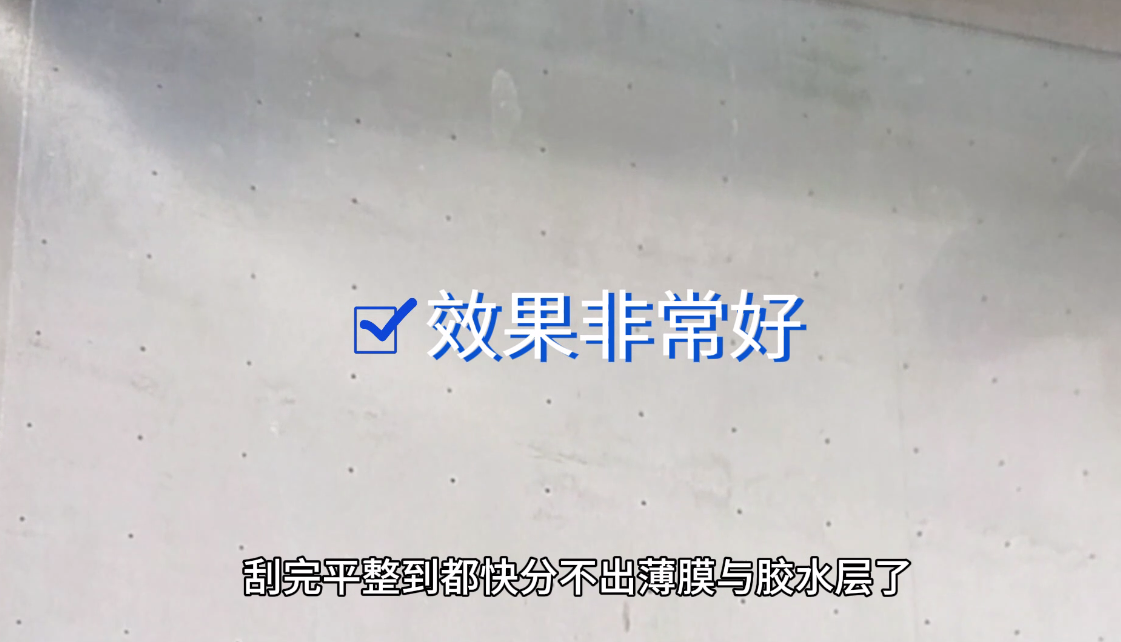
Glue coating: Start the Film Applicator and apply according to the set parameters. Ensure that the glue is evenly coated on the surface of the plastic wrap, observe the coating effect, and adjust the parameters in time to optimize the coating quality.
Drying: After gluing, the plastic wrap needs to be dried to cure the glue and ensure its adhesion and stability. The drying method can be natural drying, heating drying or infrared drying.
Post-gluing treatment
Quality inspection: After gluing, the quality inspection of the plastic wrap is carried out to ensure that the coating is uniform, no bubbles, and no leakage.
Packaging and storage: Pack the glued plastic wrap to avoid dust and pollution, and store it in a dry and cool environment.
Parameter optimization and quality control
Parameter optimization
In order to achieve the best gluing results, the coating parameters need to be optimized.
Coating speed optimization: Through experiments, the optimal balance between coating speed and coating quality is found. Coating experiments were carried out at different speeds to observe the uniformity and thickness consistency of the coating and determine the optimal coating speed.
Coating thickness optimization: Adjust the coating thickness according to the actual application requirements. By measuring the thickness after coating, several experiments were carried out to find the optimal thickness parameters.
Optimization of coating method: According to the characteristics of the plastic wrap and the viscosity of the glue, the most suitable coating method is selected. Comparative experiments were carried out on different coating methods to determine the optimal coating method.
quality control
In order to guarantee the quality of gluing, strict quality control is required.
Coating uniformity inspection: Observe the surface of the coated plastic wrap through a microscope to check the coating uniformity.
Coating thickness measurement: Using a thickness measuring instrument, measure the thickness after coating to ensure that it is within the allowable range.
Adhesion test: Conduct an adhesion test to ensure that the plastic wrap has good adhesion after gluing.
Environmental control: control the temperature, humidity and cleanliness of the coating environment to avoid the influence of environmental factors on the coating quality.
Practical application examples
Case 1: Gluing of food cling film
Requirements analysis
A food company needed to produce a batch of food cling film with high adhesion to improve food preservation. The company decided to use a small Film Applicator to glue the plastic wrap.
Process
Perform a cleanliness and flatness check on the plastic wrap.
According to the characteristics of the food cling film, the coating speed is set to 100mm/s, the coating thickness is 0.02mm, and the wire rod coating method is selected.
Start the film coating machine and apply it according to the set parameters to ensure that the glue is evenly coated on the surface of the plastic wrap.
The natural drying method is used to cure the glue.
Perform quality checks on the glued plastic wrap to ensure that it is uniform, free of bubbles and no leakage.
Wrap the glued plastic wrap and store it in a dry, cool environment.
Results & Analysis
The food cling film after gumming treatment has good adhesion and freshness effect, which meets the needs of food companies. The application of the film coating machine has improved the production efficiency and product quality, and has been recognized by customers.
Case 2: Gluing of industrial packaging film
Requirements analysis
An industrial enterprise needs to produce a batch of industrial packaging films with specific functions to improve the safety and stability of product packaging. The company decided to use a small Film Applicator to glue the packaging film.
Process
Pre-gluing treatment: Cleaning and flatness inspection of the packaging film.
Coating parameter setting: According to the characteristics of the packaging film, set the coating speed to 150mm/s, the coating thickness to 0.05mm, and select the scraper coating method.
Gluing operation
Start the coater and preheat and prepare according to the set parameters.
Fix the packaging film on the substrate fixing system of the coater to ensure that it is flat and stable.
Start the Film Applicator and apply according to the set parameters. Ensure that the glue is evenly coated on the surface of the packaging film, observe the coating effect, and adjust the parameters in time to optimize the coating quality.
The heating and drying method is used to make the glue cured quickly.
Quality checks
The quality of the glued packaging film is checked to ensure that the coating is uniform, free of bubbles and no leakage, and special attention is paid to the detection of coating thickness and adhesion.
Packaging and storage
Wrap the glued packaging film to avoid dust and contamination and store it in a dry, cool environment.
Results & Analysis
The glued industrial packaging film has high adhesion and excellent protective properties, which significantly improves the safety and stability of product packaging in practical applications. The application of film coating machine improves production efficiency and product quality, and meets the needs of industrial enterprises.
Parameter optimization and experimental research
Coating speed optimization experiments
Design of Experiments
The influence of different coating speeds on the gluing effect was studied through experiments, and the optimal speed range suitable for plastic wrap gluing was selected. The experiment was set with multiple different coating speeds (e.g., 50mm/s, 100mm/s, 150mm/s, 200mm/s), applied at the same coating thickness, and the coating quality was checked.
Experimental results
The experimental results show that the coating uniformity and thickness consistency change as the coating speed increases. In the speed range of 50mm/s to 150mm/s, the coating effect is better, and the coating uniformity and thickness consistency are higher. When the speed exceeds 150mm/s, the coating uniformity decreases.
Analysis of results
Through experiments, it was determined that the optimal range of coating speed between 50 mm/s and 150 mm/s could ensure the uniformity and consistency of gluing. Depending on the specific application needs, the appropriate coating speed is selected within this range to balance coating quality and production efficiency.
Coating thickness optimization experiments
Design of Experiments
The influence of different coating thicknesses on the gluing effect was studied through experiments, and the optimal thickness range suitable for plastic wrap gluing was selected. In the experiment, multiple different coating thicknesses (e.g., 0.01mm, 0.02mm, 0.05mm, 0.1mm) were set up to coat at the same coating speed, and the coating quality was checked.
Experimental results
The experimental results show that the coating uniformity and adhesion will vary under different coating thicknesses. In the thickness range of 0.01mm to 0.05mm, the coating effect is better, and the coating uniformity and adhesion are higher, and when the thickness exceeds 0.05mm, the coating uniformity and adhesion decrease.
Analysis of results
Through experiments, it was determined that the coating thickness was between 0.01 mm and 0.05 mm as the optimal range, which could ensure the uniformity and adhesion of the gluing. Depending on the specific application needs, the appropriate coating thickness can be selected within this range to meet different gluing requirements.
conclusion
The application of small film coating machine in the gluing process of plastic wrap is of great significance, which can significantly improve the gluing efficiency and quality. By selecting the right coating machine, optimizing the coating parameters, and strict quality control, the gluing process of plastic wrap can be efficient, accurate and stable. The practical application cases show that the film coating machine has a wide range of application prospects in the fields of food cling film, industrial packaging film, medical cling film and so on. With the development of new material technology, intelligent coating technology and environmental protection technology, the gluing process will continue to innovate and progress, bringing more possibilities for the functional improvement and application expansion of plastic wrap and other packaging materials.

- 1How Flat Film Applicators Can Build a New Generation of Functional Materials on Fabrics
- 2NVP anode film FAQ and solution
- 3Application Technology of Laboratory Film Applicator in Dielectric Thin Film
- 4Comparison of Advantages and Disadvantages of Three Heating modes for Laboratory Film Applicators
- 5Application and selection of laboratory coater in PDMS thin film prepative
- 6Scraping machine selection case: film substrate large size high accuracy scraping solution
- 7Application of Film Applicator in PEM Research and Preparation
- 8Application of Film Applicator in PVDF-HFP Material Research
- 9Application of Film Applicator in Cosmetic Base Body