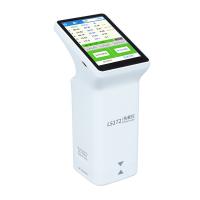
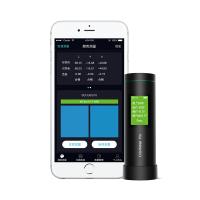
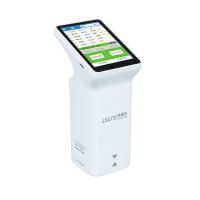
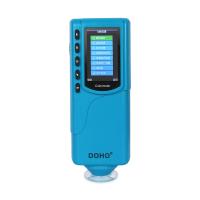
Color difference meter lab value test method
Colorimeters typically use the Lab color space defined by the CIE (International Commission on Illumination) for color measurements and comparisons. The Lab color space is a standard that sets the standard for color brightness (L) and hue (a, b) to accurately describe the characteristics of colors.
The Lab value test method involves the following steps and principles
1. Calibrate the Colorimeter
Before performing any color testing, it is essential to ensure that the Colorimeter is calibrated. Calibration is the process of adjusting an instrument to ensure that its output accurately reflects a standardized color space. Typically, the calibration of a Colorimeter involves adjusting the color response of the instrument using a standard white plate or reference standard.
2. Prepare test samples
Prepare samples that need to be tested, making sure they meet the required standards or specifications in terms of color. Sample preparation may involve preparing a standard color sample as a benchmark of comparison, or preparing a product or material to be evaluated.
3. Measure the Lab value of the sample
The sample is measured using a Colorimeter. There are usually a few things to keep in mind when measuring:
Stable ambient conditions: Ensure that the ambient light and temperature conditions during the measurement process are as stable as possible to avoid the influence of external factors on the measurement results.
Multi-measurement averaging: For each sample, it is recommended to take multiple measurements and calculate the average to improve the accuracy and repeatability of the measurement results.
Consistency of measurement position: For large or uneven samples, it is necessary to ensure that the position and orientation of the sample are consistent during the measurement process to avoid differences in the measured values.
4. Data analysis and comparison
After the measurement is completed, the Colorimeter generates the Lab values (L, a, b) of the sample. These values describe the characteristics of the sample in terms of brightness (L), red-green hue (a), blue-yellow hue (b).
The L value indicates the brightness of the sample, ranging from 0 (black) to 100 (white).
A value represents the red-green component of the sample, a positive value indicates red, and a negative value indicates green.
The b value represents the yellow-blue component of the sample, a positive value indicates yellow, and a negative value indicates blue.
5. Comparison and Judgment
Compare the measured Lab values with reference values or standards. Based on the comparison results, we can evaluate whether the color of the sample meets the requirements or determine the size of the color difference.

Considerations and recommendations
Choose the appropriate viewing angle, some Colorimeters may require measurements at a specific viewing angle to obtain the most accurate color information.
Pay attention to the influence of color light sources, different light sources (such as D65, D50, etc.) will affect the perception of color, and ensure that measurements are made under the appropriate light source conditions.
Record and save data to record measurement data for later tracking and analysis, or as evidence of quality control.
Through these steps, the Colorimeter can effectively measure and evaluate the color characteristics of the sample, helping to ensure the color consistency and compliance of the product during production and quality control.