How to verify the photoelectric Turbidimeter?
A Turbidity Meter is an instrument used to measure the scattering or absorption of light caused by suspended particulate matter in liquids, and is widely used in water quality monitoring, industrial production, and laboratory analysis.Based on the principle of scattered light, phototurbidimeters quantitatively characterize the concentration of particulate matter by measuring the degree to which insoluble particulate matter in a transparent liquid scatters or attenuates light. Its basic components include a light source, a sample measuring cell, a photoelectric detection element and a display unit.
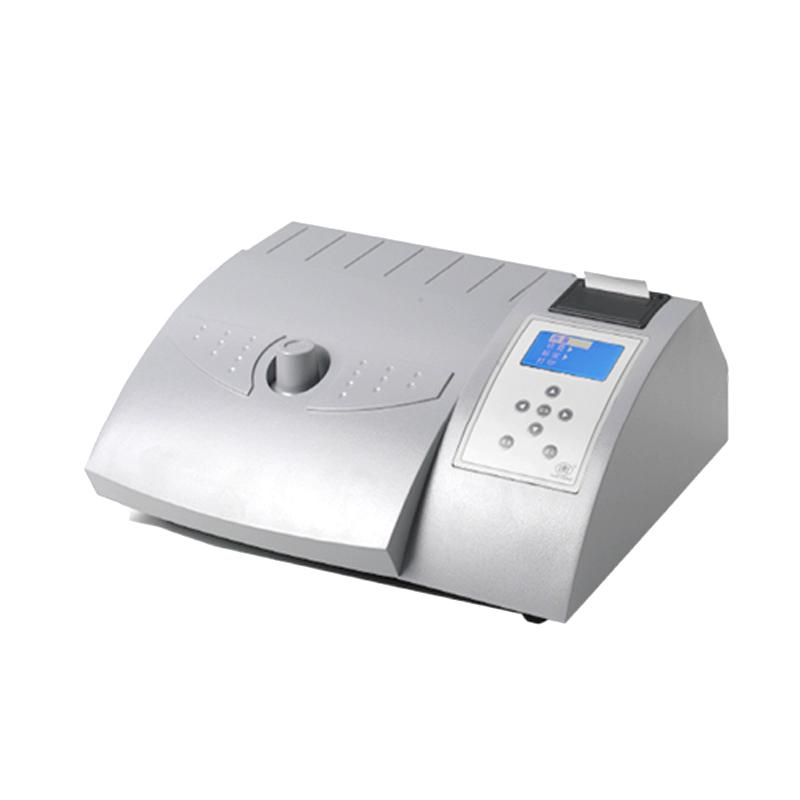
The characterization of photoTurbidity Meters is a critical process to ensure that their measurement results are accurate and reliable. The characterization process consists of several steps and criteria:
1. Calibrate the light source
The light source used in a photoTurbidity Meter must be stable and accurate, so the light source needs to be calibrated first to ensure that the light intensity of its output meets the requirements. The usual calibration method involves measuring the light intensity of the light source with a photometer and adjusting it as needed.
2. Calibrate the Detector
The Detector part of a phototurbidimeter is usually a photodiode or other photoDetector. To ensure accurate measurements, the Detector needs to be calibrated. The purpose of calibration is to confirm the response and sensitivity of the Detector so that the optical signal can be accurately converted into an electrical signal in subsequent turbidity measurements.
3. Calibrate the turbidity standard
During the characterization, standard turbidity liquids are used for measurement and comparison. The turbidity values of these standard liquids are known and are precisely measured and certified. Formazine solution is often used as a standard turbidity solution because it can produce stable and reproducible turbidity values.
4. Measure and compare
The photoTurbidity Meter is placed under appropriate measurement conditions (e.g., ambient temperature and humidity are stable) and the turbidity of each standard turbidity solution is measured sequentially. The results of each measurement are recorded and compared to standard values.
5. Analyze the measurement data
The accuracy and stability of the Turbidity Meter are analyzed according to the measurement data. Evaluate the difference between the measurement results and the standard value, and calculate performance indicators such as presentation error and repeatability.
6. Adjustment and calibration
Based on the verification results, if the measurement results of the Turbidity Meter are found to deviate from the standard value, correction and adjustment may be required. This may involve calibrating the light source, adjusting the sensitivity of the Detector, or making electronic corrections within the instrument.
The characterization of a photoTurbidity Meter is an important step in ensuring that it can measure turbidity accurately and reliably. By following a standardized verification process, the accuracy of the measurement results can be ensured, thus ensuring the reliability and suitability of the photoelectric Turbidity Meter in a variety of applications such as environmental monitoring, industrial process control, and laboratory analysis. In this regard, please refer to JJF 1700-2018 Turbidity Meter type evaluation outline and JJG 880-2006 Turbidity Meter verification regulations
-
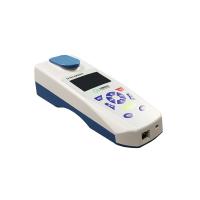
![TONGAO TR-781H Portable water Turbidimeter]()
-
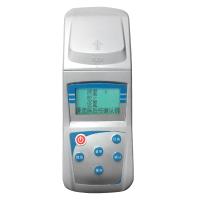
![Qiwei ZD-201 Portable Turbidity Meter]()
-
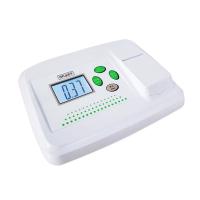
![Qiwei WGZ-1000AS Microcomputer Turbidity Meter 0~1000NTU]()
-
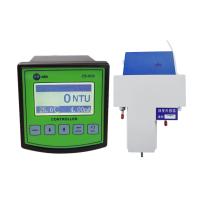
![NOBOTECH ZS-600 Flow type online Turbidimeter 0-500NTU]()
-
![NOBOTECH ZS-600 submerged online Turbidimeter 0-10000NTU]()
-
![LEICI WZT-701 Online turbidity monitor]() LEICI WZT-701 Online turbidity monitor$ 2701.00
LEICI WZT-701 Online turbidity monitor$ 2701.00 -
![LEICI WZB-170 Turbidity Meter 850nm/200NTU]()
-
![LEICI WZB-171 Turbidity Meter 850nm/200NTU]()
-
![LEICI WZB-172 Turbidity Meter 850nm/500NTU]()