Pulping process and equipment in paper preparation
The preparation process of paper stock is one of the important links to ensure paper quality and reduce papermaking costs. In this process, pulping, as a key step, directly affects the physical properties and printing quality of the paper. This article will discuss in depth the role and influencing factors of pulping technology in paper stock preparation, as well as the development and application of modern pulping equipment.
Pulping is the process of mechanically or chemically treating cellulose raw materials to disperse, swell and refine them to improve the uniformity, strength and printability of the paper. The unbeaten cellulose material is hard and difficult to distribute evenly during the paper preparation process, resulting in the smoothness and strength of the finished paper cannot meet the requirements. Through pulping, the hydrogen bonding force between cellulose molecules is enhanced, which effectively improves the tensile strength, burst strength and flexural strength of the paper.In the beating process, according to the treatment method and degree of fiber, it can be divided into two main types: free beating and sticky beating. Free pulping is mainly based on cutting fibers and dispersing, which is suitable for the production of paper grades with good absorption, such as filter paper; Viscous pulping, on the other hand, focuses on the expansion and refinement of fibers, and is suitable for the production of paper grades that require high strength and smoothness, such as high-grade paperwork.
Pulping equipment
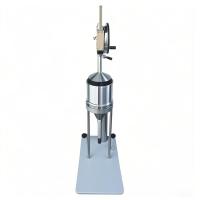
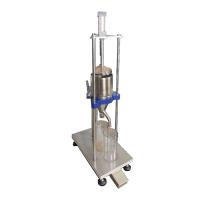
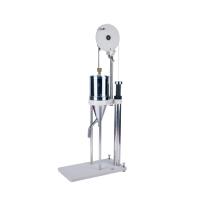
With the advancement of science and technology, the beating equipment has developed from the initial batch trough Freeness Tester to the modern high-efficiency continuous Freeness Tester equipment, such as the disc refiner. These equipment have been significantly improved in terms of pulping efficiency, energy consumption, and ease of operation, which has greatly promoted the automation and capacity growth of pulp preparation.
(1) Trough Freeness Tester
【Features】It occupies a large area, has high power consumption and complex operation, but is suitable for processing various slurries with different properties, especially the semi-slurry treatment of long fiber slurry.
【Application】It is used for the preliminary treatment of pulp, and has a good pulping effect for crude cellulose such as cotton and linen, which can ensure the quality of pulp and pulping efficiency.
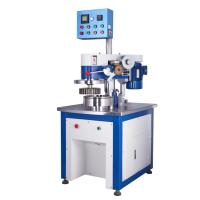
(2) Disc refiner
【Features】Continuous operation, high pulping efficiency, low energy consumption, simple structure, convenient operation, suitable for fine pulping of a variety of cellulose raw materials.
【Application】It is widely used in the modern pulp industry, which can process long fiber and short fiber pulp, including wood pulp, waste paper pulp, etc., and is used to prepare all kinds of paper with high strength and high smoothness.
In order to ensure the beating effect and the consistent quality of the pulp, the modern process has introduced precise measurement and control technology for the degree of beating and the length of the fiber:
(1) It is one of the important means to control the quality of pulping by measuring the dehydration of slurry by the beating degree meter, which reflects the degree of fiber dispersion and swelling.
(2) The average length of the fibers is determined by microscopy, fiber measuring instrument or fiber wet weight method to evaluate the strength and molding properties of the paper.