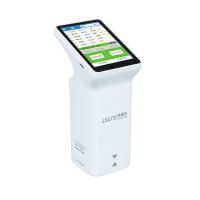
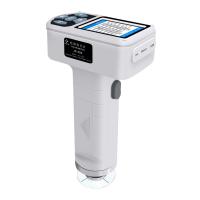
Teach you to understand the value of the color difference meter, the correct use of color difference meter and analysis of Color data is no longer difficult!
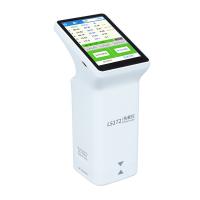
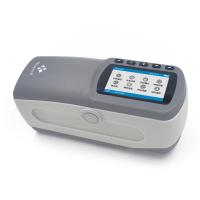
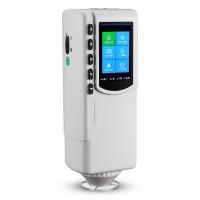
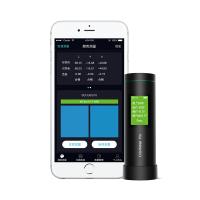
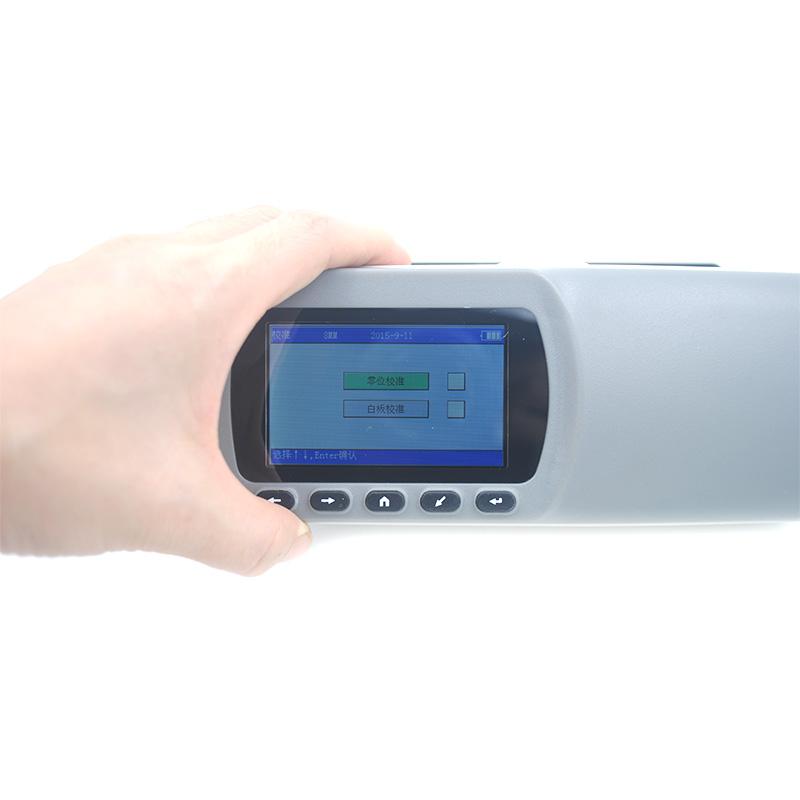
A Colorimeter is an instrument used to measure and compare color differences, and its values are often expressed in a variety of color spaces and parameters. Understanding these values is important for proper use of Colorimeters and analyzing color data, and here are common Colorimeter values and what they mean.
Common color spaces and their numerical representations
CIELAB (or Lab for short) color space
L: brightness value, indicating the brightness range of the color, the value range is usually 0 to 100, 0 is black, 100 is white.
A: Red/green axis, positive values indicate an increase in the red component, and negative values indicate an increase in the green component.
b: Yellow/blue axis, positive values indicate an increase in the yellow component, and negative values indicate an increase in the blue component.
CIELCH color space
L: LUMINANCE VALUE, THE SAME AS L IN THE CIELAB COLOR SPACE.
C: Saturation or saturation, which indicates the purity or intensity of the color.
h: Hue angle, which indicates the specific hue of the color.
ΔE(DeltaE) color difference
Represents the difference value between the two colors. Common calculation methods include ΔEab, ΔE94, ΔE00, etc. The smaller the ΔE, the closer the two colors are.
RGB color space
R: the red component, the value range is 0 to 255.
G: green component, the value ranges from 0 to 255.
B: blue component, the value range is 0 to 255.
XYZ color space
X, Y, Z: tristimulus value, which represents the trichromatic value of the color. This is a color space that is associated with physical measurements and is used to transform other color spaces.
Other common parameters
ΔL,Represents the difference in brightness, with positive values indicating that the sample is brighter than the standard, and negative values indicating that the sample is darker than the standard.
Δa,Represents the difference value on the red/green axis, with a positive value indicating that the sample is redder than the standard and a negative value indicating that the sample is greener than the standard.
Δb,Represents the difference on the yellow/blue axis, with positive values indicating that the sample is more yellow than the standard, and negative values indicating that the sample is bluer than the standard.
Application examples
Measuring color consistency: During the production process, Colorimeters are used to ensure the consistency of the color of the product. For example, car paint color in automobile manufacturing, textile dyeing, etc.
Color matching: In printing, coatings, plastics and other industries, it is used to match the color samples provided by customers.
Quality control: It is used to detect whether the color of the product is within the allowable tolerance range to ensure that the product meets the standard.
Calculate the chromatic aberration ΔE
ΔE represents the magnitude of the color difference, and its formula varies depending on the color space. Taking the CIELAB color space as an example, the formula for calculating ΔEab is as follows:
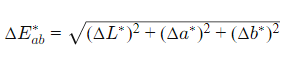
Here, ΔL, Δa, and Δb are the differences between the two colors on the L, a, and b axes, respectively.
epilogue
Understanding the representation and meaning of Colorimeter values is critical for color management and quality control. Different color spaces and parameters provide different methods of color description, and the appropriate parameters can be selected for analysis and comparison according to the specific application. With the correct use of a Colorimeter, the color consistency and quality of the product can be ensured.