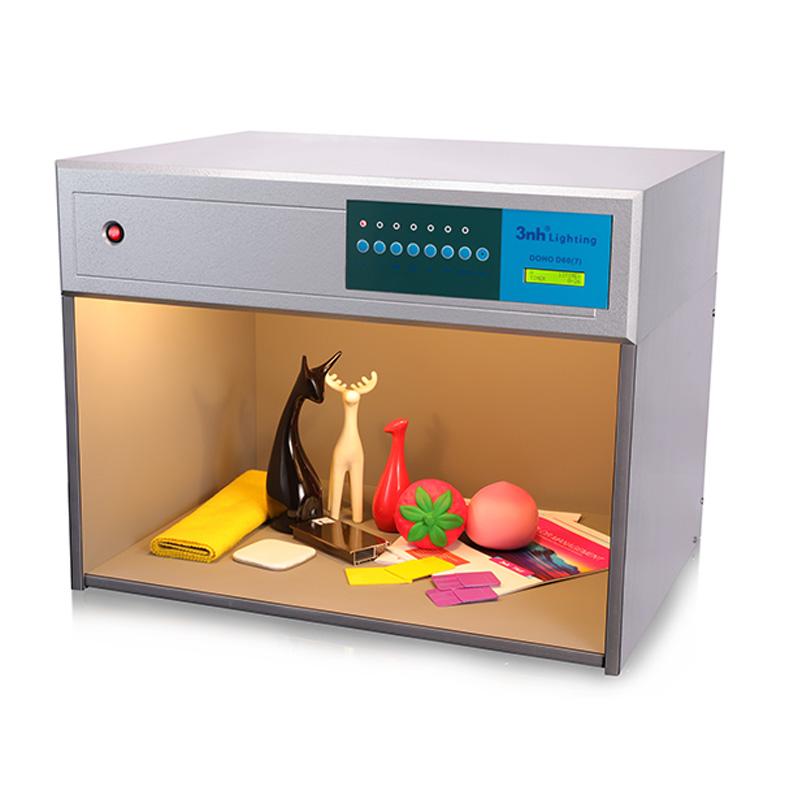
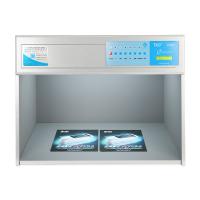
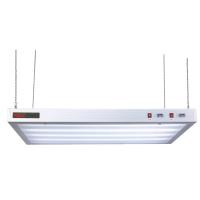
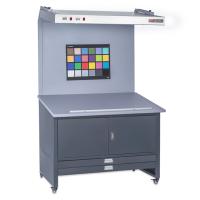
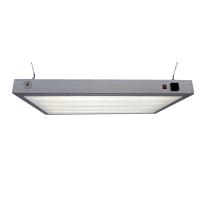
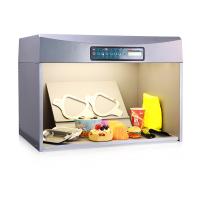
Color Assessment Cabinet efficient color, need to do these 5 points!
In modern science and industry, the standard light source box is a key piece of equipment to ensure color consistency and accuracy, and the strict control of its internal and external environment is essential for the accuracy of experimental results. This article will delve into the five key requirements for a standard light box to help readers better understand and apply them.
The importance of the color temperature of the light source
The color temperature of a light source directly affects how we observe and evaluate the color of an object. According to the international standard ISO3664:2000, a standard light source box must be able to provide a stable color temperature, typically in the range of 6500K or 5000K, with a permissible fluctuation range of ±200K. This color temperature setting allows the light source to produce a light effect that approximates typical daytime natural light conditions, ensuring consistency and comparability of color evaluations at different times and locations.
Evaluation of the color rendering of a light source
The color rendering performance of a light source (color rendering index Ra) is a key indicator to measure its ability to restore the true color of an object. Standard light sources usually require a color rendering index Ra greater than 90, which means that the light source is able to highly reproduce the true color of an object in natural light without causing it to appear noticeably cast. The light source box with good color rendering performance can effectively improve the accuracy of color detection and comparison.
The influence of light source illuminance on color detection
The illuminance of the light source directly affects the observer's perception and evaluation of the color of the object. ISO3664:2000 specifies the illuminance requirements of a light source when illuminating the surface of the object being observed, which should generally be maintained within the range of 2000 Lux (plus or minus 500 Lux). This level of illuminance ensures that the illumination intensity provided by the light source is sufficient to allow the color evaluation to be carried out under good visual conditions, thus reducing the interference of the external environment in the color evaluation.
Color control of the surroundings
When performing color inspection, the environment around the light source box also needs to be tightly controlled to avoid external factors affecting the inspection results. ISO3664:2000 requires that no other illumination sources should be present around the observation light source to directly or indirectly irradiate the surface of the object being observed. In addition, the wall panels and tops on and around the light source box, as well as the observer's clothing, should be neutral gray with a reflectivity of less than 60% to minimize the reflection and refractive effects of color.
Guarantee of the uniformity of the light source
In order to ensure the accuracy of the color evaluation, the uniformity of the light source inside the light source box is crucial. If the lamp layout is not reasonable or the light source is not evenly illuminated, it will affect the result when comparing the color difference between two objects. Therefore, the design and layout of the lamp inside the light source box must be reasonable to ensure the uniformity of the light source, so as to ensure the stability and reliability of color evaluation.
epilogue
Through an in-depth analysis of the five key environmental requirements for efficient color matching in a standard light box, we can better understand how to create a stable and accurate color evaluation environment. Strictly following international standards and technical specifications, and reasonably designing and maintaining the internal and external environment of the light source box will effectively improve the accuracy and reliability of color evaluation in scientific research and industrial production, and promote progress and innovation in related fields.