Assessing battery safety performance - short circuit test and needle stick damage test
As an indispensable energy storage device in modern life and industry, the safety of batteries is a key issue. Short-circuit and pinprick failure tests are one of the important means to evaluate the safety performance of batteries. This article will delve into the significance, methods, and applications of battery short-circuit and pinstick failure testing in the battery industry.
Battery short circuit test
A short circuit in a battery is a short circuit between the positive and negative terminals of the battery or inside the battery, which usually leads to serious consequences such as high temperatures, explosions and even fires. Therefore, the main objectives of the short circuit test are:Evaluate the safety performance of the battery, and test the reaction and safety of the battery in the event of an accidental short circuit;Verify the reliability of the internal structure and materials of the battery, and evaluate whether the battery can effectively isolate the positive and negative electrodes and the internal electrolyte by simulating the short circuit situation to prevent the occurrence of short circuit accidents.
Battery short circuit testing typically includes the following steps and methods:
External short circuit test simulates short circuits caused by external factors by directly connecting the positive and negative electrodes of the battery or applying conductive materials to the surface of the battery housing.
Internal short-circuit testing, in which conductive materials are applied or physical contact is created between the electrodes and electrolytes inside the battery, simulating a short circuit caused by damage to the battery's internal structure.
Note: During the short circuit test, the test conditions need to be strictly controlled, such as the current size, the test time and the ambient temperature, to ensure the accuracy and repeatability of the test.
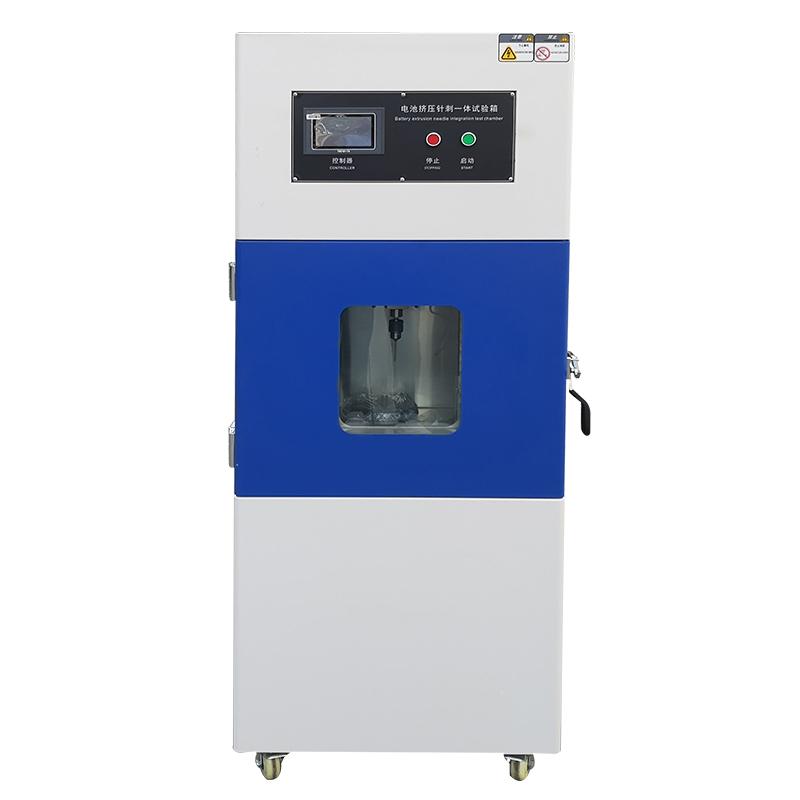
Needlestick destruction test
The needlestick failure test is an experimental method that simulates the puncture or damage that may be encountered in the battery casing during use. Its main objectives include:Evaluate the puncture resistance of the battery casing and test the reaction and degree of damage to the battery casing when punctured by sharp objects.Verify the structural strength of the battery casing and evaluate the ability of the battery casing to protect against external damage to prevent electrolyte leakage or internal short circuit caused by external objects penetrating.
The following steps and methods are generally used for needlestick failure testing:
Choose the right test needle, and choose the right sharp needle, usually a metal material, based on the test standard and battery type.
A standardized pressure and velocity is applied to the surface of the battery housing at a certain speed, usually with a certain force until a specified depth is reached.
Record and evaluate test results, record mechanical parameters (e.g., applied force, depth, etc.) at puncture, and assess whether the battery case has penetrated, leaked, or otherwise abnormal.
Application parsing
Battery short circuit and pinprick failure testing have important application value in the battery industry.Short-circuit and pinprick testing can effectively evaluate the safety performance of batteries in the event of an accident, helping manufacturers and consumers identify and avoid potential safety risks.As a key part of production quality control, these tests verify that the materials and processes used in the battery production process meet the design requirements and ensure the quality and reliability of the battery.Countries and regions usually have relevant testing standards and regulations, such as IEC62133, UN38.3, etc., to ensure that the test results are internationally applicable and comparable.
epilogue
As a key technical means to ensure the safety and quality of batteries, battery short circuit and needlestick failure test will continue to play an important role in the context of continuous progress in battery technology and expansion of application scenarios. In the future, with the introduction of new materials and new processes, these test methods will continue to evolve and improve, providing technical support and guarantee for the sustainable development of the battery industry.