ATP fluorescence detection: fast and efficient bacterial detection method
ATP (Adenosine triphosphate) fluorescence detection is a method commonly used to rapidly detect active biomass in biological samples.
principle
ATP is the main energy molecule of all living cells and is found in the cells of all living organisms. ATP fluorescence detection uses ATP in biological samples to indirectly measure the active biomass in a sample, and its basic principles are as follows:
Extract ATP
First, ATP molecules are extracted and released from biological samples (e.g., water samples, food, biological samples, etc.) through chemical or biochemical methods.
Fluorescence reactions
The extracted ATP reacts with luciferase and luciferin substrate to form luciferin diphosphate (Luciferin AMP) and photons. This is a bioluminescence reaction that is catalyzed by luciferase and produces a fluorescent signal proportional to the concentration of ATP.
Fluorescence measurements
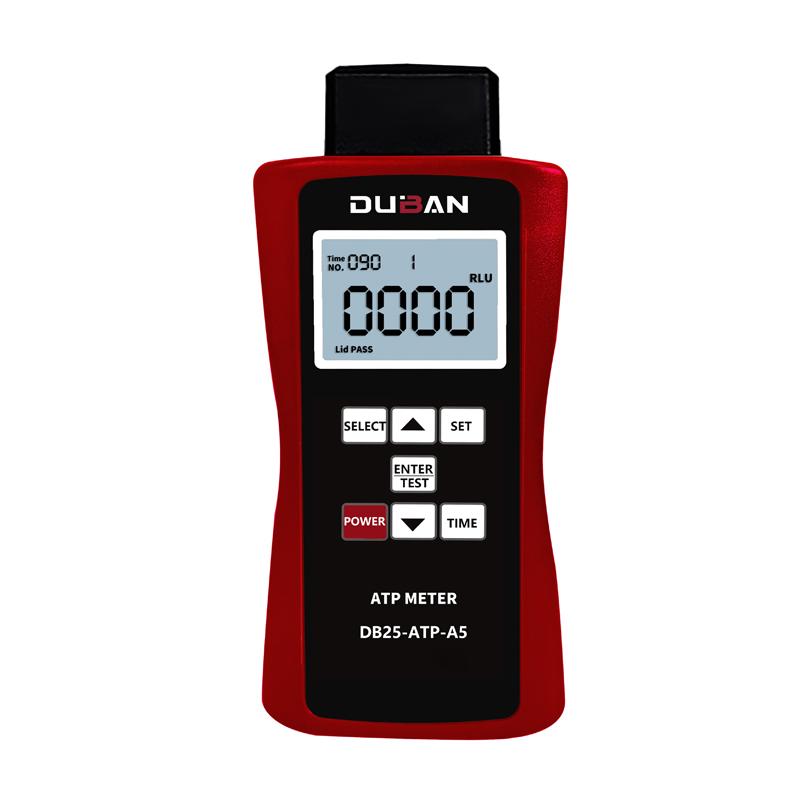
The fluorescence signal is measured by a fluorescence Detector or photometer and its intensity is proportional to the concentration of ATP in the sample. Therefore, the measured fluorescence signal can be used to estimate the amount of active biomass in the sample.
Fields of application
Food safety, which is used to detect microbial contamination during food production and handling, such as surface cleaning, equipment hygiene, and product quality control.
Water quality monitoring, which provides rapid detection of total microbial biomass in water samples, such as drinking water, swimming pool water, and industrial wastewater.
Biomedicine, used in the pharmaceutical industry for hygienic validation of production facilities and biological contamination control.
Environmental monitoring, which assesses microbial activity in soil and air samples to study environmental impacts and ecosystem health.
ATP fluorescence detection offers the following advantages over traditional media methods:
Rapidity
The ability to deliver results in minutes saves a lot of time compared to traditional culture methods.
Sensitivity and precision
High sensitivity to total microbial biomass enables detection of even tiny amounts of viable cells.
Real-time monitoring
Enables real-time and continuous monitoring for applications that require frequent detection and rapid response.
Automation and high throughput
Modern ATP detection systems support automated operations and large-scale sample processing for high-throughput needs in laboratories and industry.
epilogue
As a rapid, sensitive and reliable biological detection technology, ATP fluorescence detection has a wide range of application prospects in the fields of food safety, water quality monitoring, biomedicine and environmental monitoring. Its continuous technological advancement and application expansion will provide more accurate and efficient methods for the analysis of biological samples in various industries, helping to protect public health and environmental safety.