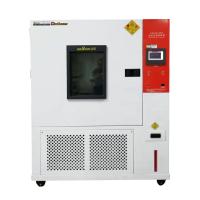
Application and structure principle of low/high Temperature Test Chamber
High-low Temperature Test Chamber is a kind of environmental adaptability testing equipment widely used in mechanical industry products, instrumentation, electronic and electrical products and their components and materials. They simulate the performance of products under extreme temperature conditions, including abrupt and gradual types, each suitable for different testing needs.
1. Use
High-low temperature mutation Test Chamber
The high-low Temperature Test Chamber is mainly used to evaluate the adaptability and performance stability of various mechanical and industrial products, instrumentation, electronic and electrical products and their components and materials in the environment of rapid temperature changes, especially in the cold and thermal shock test. These chambers need to comply with the strict regulations of the International Electrotechnical Commission (IEC) and national standards (GB), such as IEC-68-2 and GB2423.22, to ensure the reliability and comparability of test processes and results, and to provide a scientific basis for product design improvement and quality control.
High-low temperature gradient Test Chamber
The high-low temperature gradient Test Chamber is designed to evaluate the performance of products under environmental conditions with gradually changing temperatures, such as simulating prolonged exposure to the interior of a car or outdoors. This Test Chamber is designed and manufactured in accordance with the requirements of the International Electrotechnical Commission (IEC) and the national standard (GB), and meets the standard provisions of IEC-68-2 test Nb and GB2423.22 test b, ensuring the rate and stability of temperature change, accurately simulating the actual use environment, and providing a reliable evaluation basis for the reliability and durability of the product.
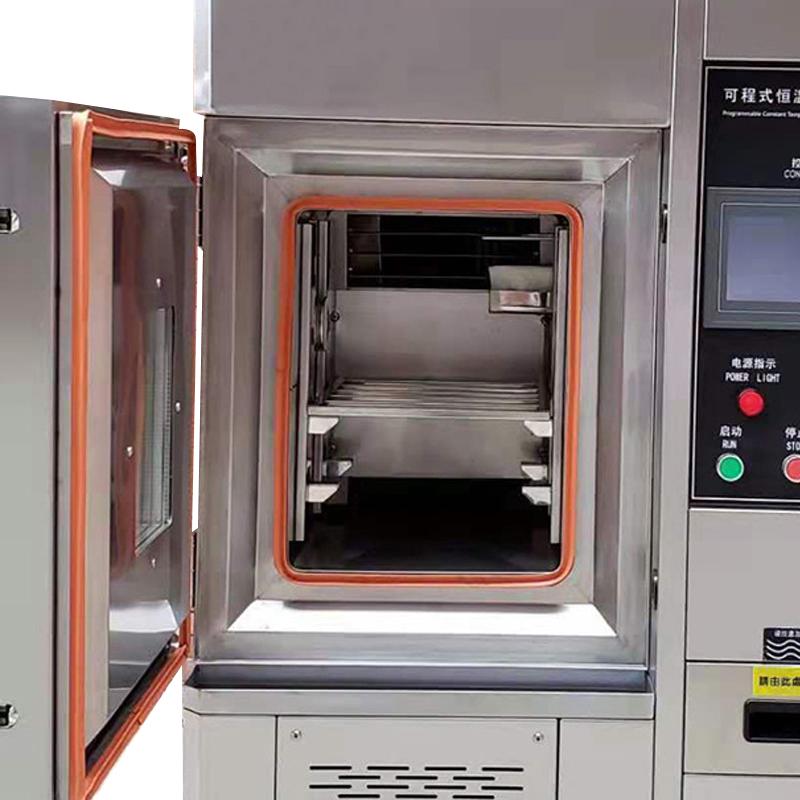
Second, the structural principle
1. High-low temperature mutation Test Chamber (Thermostatic medium-air)
Test chamber with balance-type constructionThe working principle is similar to that of a balance scale, where the specimen is placed in a mesh box on two pallets. Compressed air moves the balance pole up and down to quickly transfer the specimen from the ambient temperature environment to the high-low temperature chamber for testing.During the lifting process, the specimen will be exposed to the room temperature area for a period of time, and then put into a high-low temperature environment for cold and thermal shock testing.
The specimen is vertically movingTest chambersIt will beThe specimen is placed in the upper and lower high-low temperature chambers of the Test Chamber, and the specimen is driven to lift vertically by a speed-regulating motor installed on the top of the chamber. This compact structure allows the specimen to be quickly and alternately exposed to high-low temperatures during the lifting process, enabling thermal shock testing.The stationary position of the specimen ensures that the influence of mechanical stress on the test results is reduced during impact.
2. High-low temperature mutation Test Chamber (constant temperature medium - liquid)
This type of equipment uses liquids such as clean water, salt water or silicone oil as a constant temperature medium, and the specimen is suspended on a mechanism with a combination of torque motor and cylinder. Through the lifting and rotation of these mechanisms, the specimen can be immersed in a set high-low temperature liquid tank in turn for thermal shock testing. The liquid medium provides high thermal conduction efficiency, ensuring that the temperature of the specimen changes quickly and uniformly during impact, simulating the rapid temperature change conditions in the real environment.
3. Temperature abrupt change fluid particle tank(Thermostatic medium - solid)
Powdered solid particles are used as the heat transfer medium and fluidized by an air jet device, which can achieve efficient thermal shock testing.
The working principle uses powdered solid particles as the heat transfer medium, and fluidizes the solid particles through the air jet device. This structure is similar to that of a device with a liquid medium, but the heat transfer medium is changed from liquid to solid particles. The use of solid particles can effectively eliminate the problem of test fluid loss that may be caused by liquid media, and at the same time, the equipment operation is more convenient and the sample cleaning is more convenient.
4. High-low temperature gradient Test Chamber structure
The chamber is equipped with a precisely controlled temperature system that allows the temperature to be gradually changed according to a preset heating and cooling rate. Automatic program controls are usually designed to ensure accurate and repeatable temperature changes. Gradual temperature changes can be simulated with a single Test Chamber, making it suitable for products that require performance evaluation at slow temperature changes. Its shape and structure are similar to cryogenic test equipment, but with higher temperature control accuracy and stability.
The different structures and principles of the high-low Temperature Test Chambers are suitable for a variety of different testing needs, from rapid thermal shock to the simulation of gradual temperature changes, providing a key environmental adaptability assessment tool for product development and quality control. As technology advances, Test Chambers are designed to be more and more precise and reliable to meet changing market and technical standards.With an in-depth understanding of the purpose and construction of these chambers, it is possible to better select the equipment that suits the testing needs of specific products, ensuring reliability and durability in a wide range of environmental conditions.


- 1Principle, application and selection of low/high Temperature Test Chamber for plastic belt
- 2Principle, application and selection of fire-proof coatings low/high Temperature Test Chamber
- 3Principle, application and selection of ultra low/high Temperature Test Chamber
- 4Principle and application of desktop low/high Temperature Test Chamber
- 5Application of FRP low/high Temperature Test Chamber
- 6The working principle and application scenario of non-standard high-low-Temperature Test Chamber
- 7Application of programmable low/high Temperature Test Chamber NBC-CDW-150M in luminaire testing
- 8What are the requirements for the installation site of the low/high Temperature Test Chamber?
- 9How to distinguish between low/high Temperature Test Chamber and heat & cold shock chamber