Thermal Shock Test Chamber for printed circuit boards
In the modern electronics industry, printed circuit boards (PCBs) are an important part of electronic devices. With the miniaturization and functional complexity of electronic products, the reliability and stability requirements of PCBs are also increasing. As a device that simulates extreme environmental changes, the thermal shock Test Chamber plays an important role in the quality control and reliability testing of PCBs. This article will discuss in detail the application and importance of thermal shock Test Chambers in PCBs.
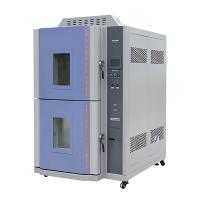
Thermal shock Test Chamber
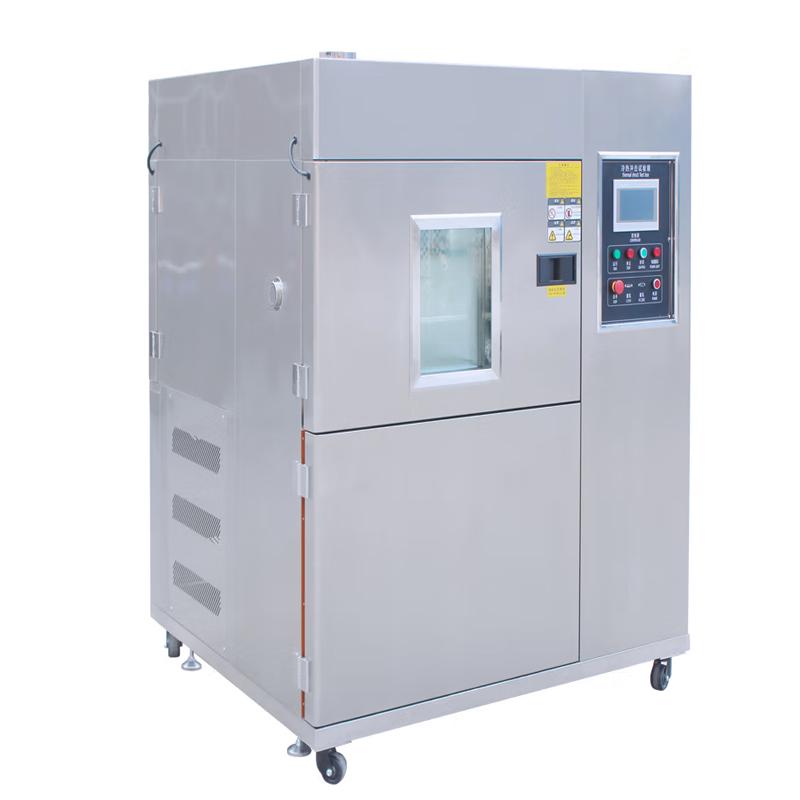
The thermal shock Test Chamber simulates the operation of electronic components under extreme temperature changes by rapidly alternating high-low temperature environments. The Test Chamber usually consists of two separate temperature zones: a high temperature zone and a low temperature zone, which simulate drastic temperature changes by quickly switching the temperature zones where the PCB is located. The purpose of this test is to evaluate the performance and reliability of the PCB and its solder joints under temperature stress.
advantage
Simulating the real environment, the thermal shock Test Chamber can truly simulate the working state of electronic equipment under different temperature conditions, and provide reliable test data.
Fast detection, the Test Chamber can complete multiple high-low temperature switching in a short time, accelerate the aging test, and improve the test efficiency.
The reproducibility is strong, the test conditions are controllable, and the test results are highly repeatable and reliable.
Applications in PCB
Reliability testing of weld joints
There are a large number of solder joints on the PCB, and these solder joints may cause problems such as cracks and desoldering in high-low temperature environments. Through the thermal shock test, the reliability of the weld joint under severe temperature changes can be tested to ensure its stability in practical applications.
Material performance testing
Materials used in the PCB manufacturing process (such as substrate materials, copper clad laminates, etc.) may undergo problems such as deformation and cracking in high-low temperature environments. Thermal shock testing can effectively evaluate the performance of these materials in extreme environments, ensuring the overall quality of the PCB.
Durability testing of electronic components
Various electronic components on a PCB (such as resistors, capacitors, ICs, etc.) may also experience performance degradation and failure during extreme temperature changes. Through thermal shock testing, the durability of these components can be tested to ensure their reliability over long periods of use.
Coefficient of Thermal Expansion Matching Test
PCB and component materials undergo thermal expansion or contraction when temperature changes. If the coefficient of thermal expansion of different materials does not match, it can lead to problems such as stress concentration and material damage. The thermal shock test can detect the matching of the coefficient of thermal expansion between different materials, and optimize the design and material selection.
In short, the thermal shock Test Chamber has an irreplaceable and important role in the quality control and reliability testing of PCBs. By simulating extreme temperature changes, key factors such as solder joints, material properties, durability of electronic components, and matching of the coefficient of thermal expansion can be effectively detected, providing an important reference for PCB design and manufacturing. With the continuous development of electronic products, the application of thermal shock Test Chamber in PCB will be more extensive and deeper, providing a strong guarantee for the progress of the electronics industry.
References
Publishing House of Electronics Industry, Technical Handbook of Printed Circuit Boards, 2021.
Wu Yifan, Electronic Components and Their Reliability, Tsinghua University Press, 2019.




- 1"Two-Chamber" and "Three-Chamber" heat & cold shock boxes, which one is more suitable for you?
- 2Principle, Application and Selection of Main board Thermal Shock Test Chamber
- 3Precision heat & cold shock testing device
- 4What parts of Thermal Shock Test Chamber need to be cleaned frequently?
- 5Thermal Shock Test Chamber FAQ and calibration method
- 6Temperature Impact Test Application of Electronic Components
- 7The difference between low/high Temperature Test Chamber and high-low temperature impact Test Chamber?
- 8Working Principle, Failure and Application of Thermal and Cold Shock Test Chamber
- 9Explanation of the correct operation of the hot and cold shock Test Chamber [including eight and a half minutes of video demonstration]