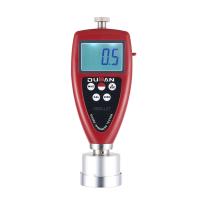
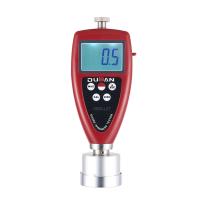
Main methods and applications of fabric hardness testing
Fabric hardness testing is the process of measuring the hardness or stiffness of a fabric when subjected to an external force, which helps determine the feel, comfort, durability, and suitability of the fabric.
The main methods of fabric hardness testing
Compression testing
Principle: A fabric sample is placed on a test platform and a predetermined pressure is applied. Measure the degree to which a fabric is compressed under pressure.
Equipment: A compression Hardness Tester is usually used, which can accurately measure the deformation of a fabric after being subjected to pressure.
Application: Used to evaluate the softness and comfort of padding materials (e.g. mattresses, cushions).
Flexure test
Principle: Measure the stiffness of a fabric when it is bent. A fabric sample is usually suspended from a Tester and then a bending force is applied to measure how much it bends.
Device: Use a flexure Hardness Tester or softness meter.
Application: Used to evaluate the drape and feel of fabrics, such as the softness of garment fabrics.
Peel test
Principle: Test the hardness of a fabric during tearing or peeling. The resistance of a fabric is measured by applying a tensile force.
Device: Use a peel Hardness Tester or tear Tester.
Application: Used to evaluate the abrasion resistance and strength of fabrics, commonly used in the testing of packaging materials and abrasion resistant fabrics.
Rebound test
Principle: Measure the ability of a fabric to return to its original shape after being compressed. That is, whether the fabric can quickly return to its original form after removing the pressure.
Device: Rebound Hardness Tester is used.
Application: Used to evaluate the elasticity and morphological retention ability of fabrics, such as testing for sportswear and elastic fabrics.

Relevant standards and norms
ISO Standards: The International Organization for Standardization (ISO) offers a variety of textile testing standards, such as ISO9073 (Physical Property Testing of Fabrics).
ASTM Standards: The United States Society for Testing and Materials (ASTM) also provides relevant methods for testing the hardness of fabrics, such as ASTMD1388 (Testing of Softness and Stiffness of Fabrics).
Practical application examples
garment manufacturing,Hardness testing is used to ensure that the softness of the fabric is suitable for different seasons and uses. For example, winter coats require stiffer fabrics to maintain their shape, while summer shirts require softer fabrics for added comfort.
household items,Test the hardness of the filling material of mattresses, sofa cushions, etc., to ensure their comfort and durability. Materials with moderate hardness and softness can provide better support and comfort.
automotive industry,Testing the hardness of car seats and interior materials to improve driving comfort and safety. Ensure that the material behaves consistently over time.
packaging industry,Evaluate the hardness and durability of packaging materials to ensure they effectively protect products and reduce damage during transportation.