Working Principle, Classification and Application of Capillary Viscometer
introduction
A capillary viscometer is an important instrument used to measure the viscosity of liquids. Viscosity is a measure of the resistance of a liquid to flow and is a key parameter in many scientific research and industrial processes. Capillary viscometers are widely used in the chemical, pharmaceutical, petroleum and food industries due to their high accuracy and simple operation.
How a capillary viscometer works
The working principle of a capillary viscometer is based on the capillary phenomenon. When a liquid flows in a thin tube, its flow velocity is related to the viscosity of the liquid and the geometry of the pipe. The viscosity of a liquid can be calculated by measuring the time it takes for a liquid to pass through a capillary under certain conditions. Common formulas include the Poiseuille formula, which relates the flow time to the viscosity of the liquid, capillary length, and radius.
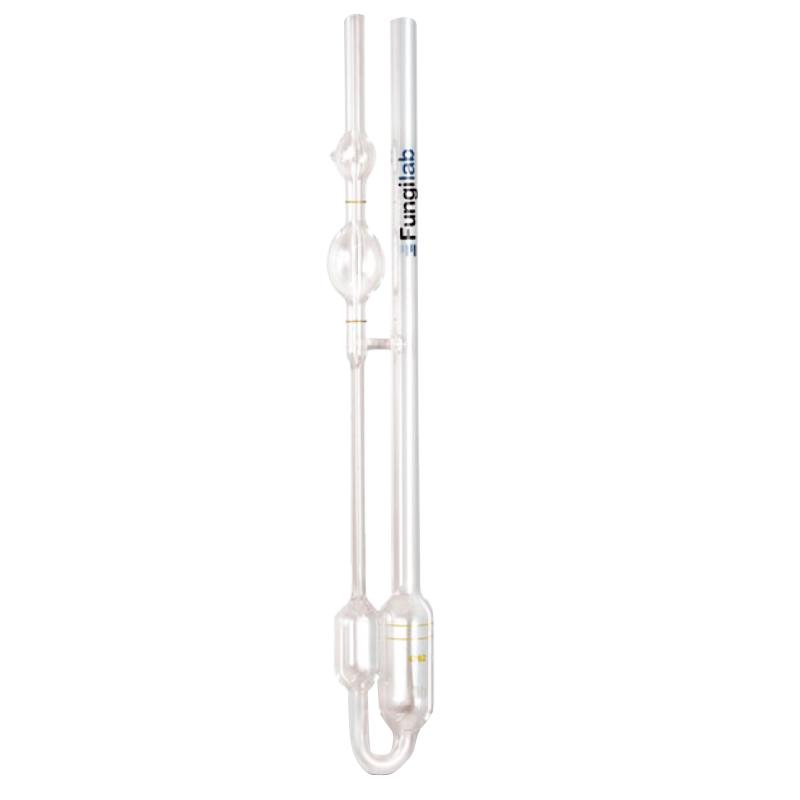
Classification of capillary viscometers
There are various types of capillary viscometers, the common ones include Udsz, Ostwald viscometers, and Possel viscometers. The Ubs viscometer is suitable for accurate measurement of low-viscosity liquids; Ostwald viscometers are more suitable for measuring liquids with higher viscosity; Possel viscometers combine the best of both worlds and are suitable for a wider range of viscosities. In addition, there are other dedicated capillary viscometers for specific applications.
The classification of capillary viscometers can be distinguished in detail according to their design, use, and measurement range. There are mainly the following types:
1. Ubbelohde Viscometer
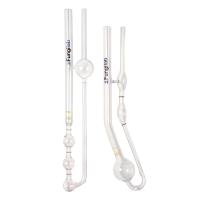
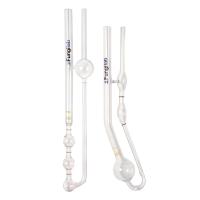
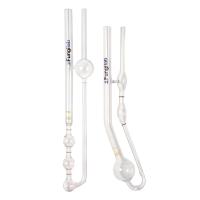
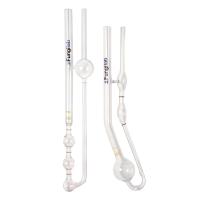
The Ubs viscometer is a common capillary viscometer with a simple design for measuring low-viscosity liquids. Its main structure consists of a glass U-tube with a capillary tube with an extension in the middle, which allows for a stable and easily observed flow of liquid.
How it works: The time it takes for a liquid to pass through a capillary is directly proportional to the viscosity of the liquid. The viscosity of a liquid can be calculated by measuring the time it takes for a liquid to pass through a capillary under certain conditions.
The Oz viscometer is suitable for the accurate measurement of low-viscosity liquids and is widely used in chemical laboratories and quality control fields.
2. Ostwald Viscometer
The design of the Ostwald viscometer is similar to that of the Udss viscometer, but its structure is simpler, consisting mainly of a U-shaped glass tube with a capillary.
How it works:The viscosity of the liquid is calculated by measuring the flow time of the liquid in the capillary, combined with the Poisser formula. Ostwald viscometers are often used to compare the viscosity of two liquids.
Ostwald viscometerIt is suitable for the measurement of medium-viscosity liquids, and is often used in teaching and basic research.
3. Cannon-Fenske Viscometer
The Possel viscometer combines the advantages of the Oost and Ostwald viscometers and consists of a vertically placed glass tube with a capillary at the bottom and a spherical bulge in the middle.
How it works:The time it takes for a liquid to pass through a capillary is directly proportional to its viscosity. By measuring the time it takes for a liquid to pass through a capillary under certain conditions, the viscosity of a liquid can be accurately calculated.
Possel viscometerIt is suitable for the measurement of a wide range of viscous liquids, and is widely used in industrial and scientific research fields.
4. Other common types
Counterflow viscometer
This viscometer determines viscosity by measuring the time it takes for a liquid to reverse flow in a capillary and is suitable for the measurement of highly viscous liquids.
Microcapillary viscometer
Designed for small sample volumes, viscosity measurement of small sample volumes in biomedical and pharmaceutical research.
Spin the capillariesTube viscometer
The viscosity of liquids is measured by rotating the capillary, which is suitable for applications that require high accuracy and dynamic measurement.
Technical parameters of capillary viscometer
The key technical parameters of a capillary viscometer include capillary diameter and length, which directly affect the accuracy and range of the measurement results. Accuracy and repeatability are important indicators to evaluate the performance of viscometers, and in general, the measurement accuracy of capillary viscometers can reach ±0.1%. In addition, temperature has a significant impact on viscosity measurements, so precise temperature control is key to ensuring measurement accuracy.
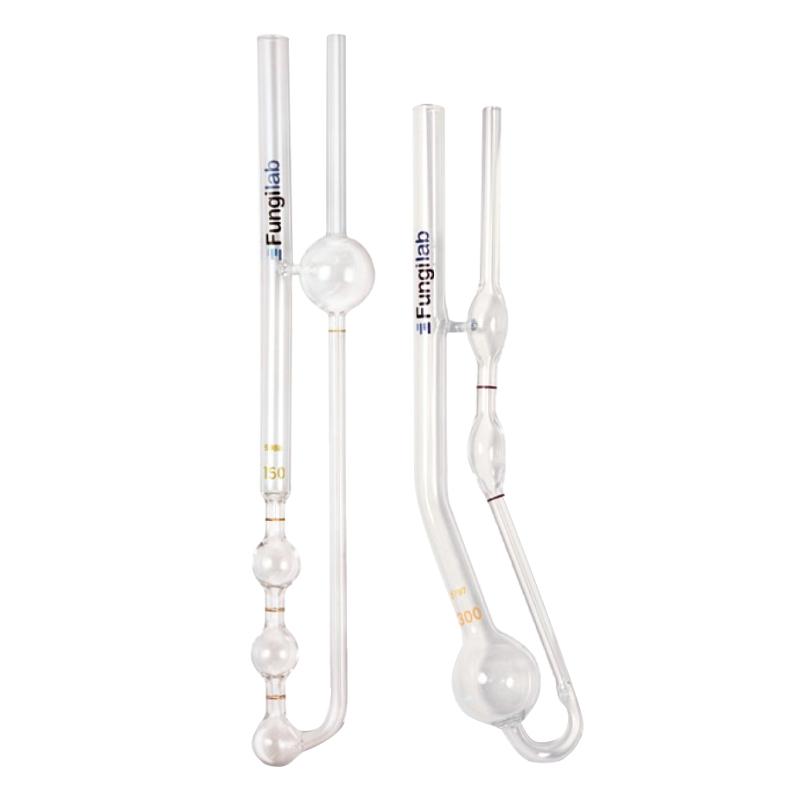
How to use a capillary viscometer
Before using a capillary viscometer, the instrument needs to be pre-treated and cleaned to ensure that no residue can affect the measurement results. Sample preparation and injection need to be done with care to prevent air bubbles from affecting the measurement. The experimental procedure consists of injecting the liquid into the capillary, recording the time it takes for the liquid to flow through the capillary by means of a timer, and calculating the viscosity value according to the formula. Throughout the process, attention needs to be paid to the accurate recording and analysis of the data.
Calibration and maintenance of capillary viscometers
The calibration of the capillary viscometer is the key to ensuring the accuracy of the measurement. Commonly used calibration methods include calibration with a standard liquid of known viscosity. Routine maintenance includes regular cleaning of the capillaries to check the integrity and functionality of the instrument. Common problems include clogged capillaries, liquid residues, and more, which can be resolved with proper maintenance and cleaning methods.
Areas of application for capillary viscometers
Capillary viscometers are widely used in a variety of fields. In the chemical industry, it is used to measure the viscosity of solutions to optimize reaction conditions and product quality; In the pharmaceutical industry, it is used to determine the viscosity of pharmaceutical solutions to ensure the fluidity and stability of drugs; In the petroleum industry, it is used to analyze the viscosity of lubricating oils and fuels; In the food industry, it is used to test the consistency and fluidity of food. Each application area has its own unique needs and use cases.
Advantages and limitations of capillary viscometers
Capillary viscometers have the advantages of high accuracy, ease of operation and low cost compared to other viscosity measuring instruments. However, there are some limitations to its use, such as being sensitive to temperature changes and being suitable for relatively clean liquid samples. These limitations can be addressed by improving experimental conditions and using appropriate calibration methods.
conclusion
As an important viscosity measuring instrument, capillary viscometer plays an important role in scientific research and industrial production. Through continuous technological innovation and application expansion, the measurement accuracy and application range of capillary viscometer will be further improved, providing more reliable data support for the development of various fields.



- 1Viscosity of polypropylene (PP) amide measured by NDJ Viscometer
- 2Which Viscometer to Choose for Licorice Extract Viscosity Testing? How to Test?
- 3Testing Principle, Advantages and Disadvantages of Capillary Viscometer
- 4Application of Rotational Viscometer in juice viscosity test
- 5Principle Differences of Different Viscometers and Their Applications
- 6Principle, Characteristics and Application of Dial Viscometer
- 7Basic Principle and Application of Ceramic Viscometer
- 8Principle, Characteristics and Application of QND Viscometer
- 9Determination of epoxy resin viscosity by Rotational Viscometer


