Copper platings thickness measurement solution
One of the key steps in the printed circuit board (PCB) manufacturing process is the copper immersion process, the main purpose of which is to deposit a layer of conductive copper on a non-conductive substrate to provide a good basis for the subsequent electroplating process. Accurately measuring the thickness of the immersion copper coating is essential to guarantee the performance and quality of the product. This article will explore the challenges of measuring the thickness of immersion copper coatings and provide solutions.
1. The importance of thickness measurement of immersion copper coating
The thickness of the immersion copper plating directly affects the conductivity, mechanical strength, and durability of the PCB. An excessively thick coating can lead to material waste and processing difficulties, while an excessively thin coating can affect the conductivity and reliability of the board. Therefore, accurately measuring and controlling the thickness of the immersion copper plating is the key to ensuring the quality of PCB manufacturing.
2. Measurement challenges
High measurement accuracy is required
In PCB manufacturing, immersion copper coatings are often in the range of a few microns, requiring extremely high accuracy and resolution from measuring equipment. Especially in applications with high-density circuit boards and tiny components, precision is particularly demanding.
Substrate and plating compatibility
Different measurement methods have different requirements for substrates and plating materials. For example, magnetic induction is suitable for the measurement of non-magnetic coatings on iron-based materials, while copper-based materials are less suitable. Therefore, the characteristics of the substrate and the coating must be taken into account when choosing a measurement method.
Measurement complexity of multi-layer coatings
In PCB manufacturing, immersion copper is usually just one layer of multiple coatings. Measuring the total thickness of multiple coatings, or measuring the thickness of each layer separately, requires more complex equipment and methods.
3. Measurement solution for the thickness of immersion copper coating
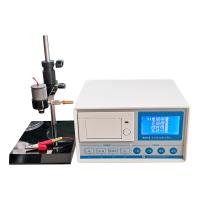
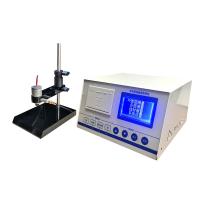
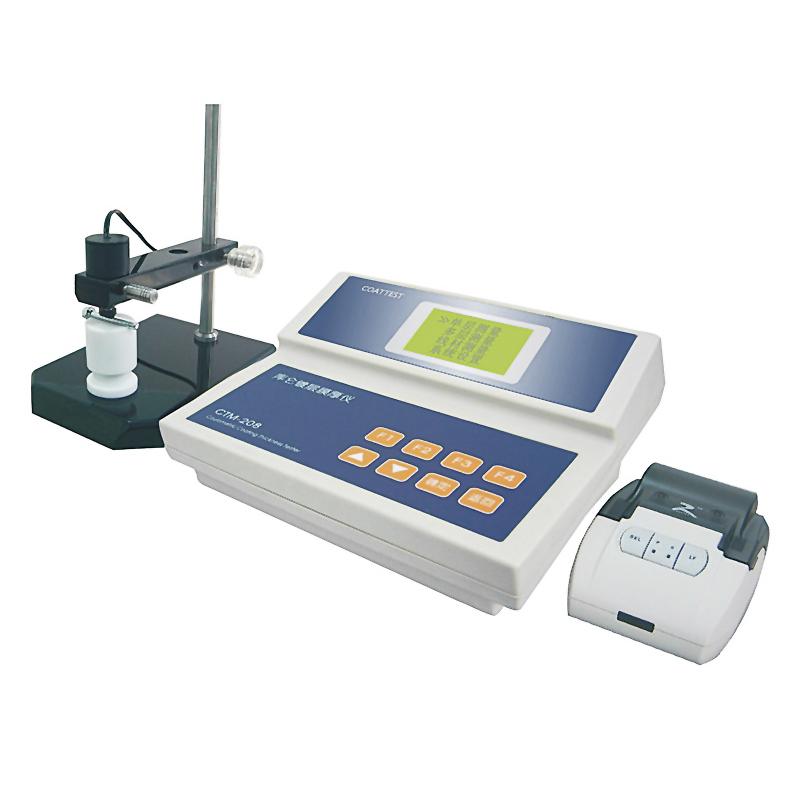
Electrolysis (Coulomb method)
Electrolysis is a precise method of peeling off the coating layer by layer and measuring its thickness. This method is particularly suitable for measuring the thickness of metal coatings such as immersion copper. The advantage of electrolysis is its high accuracy and resolution, which can meet the measurement needs in the range of a few microns. Although relatively complex, this method is an option for high-end applications that require precise control of the thickness of the immersion copper coating.
X-ray fluorescence spectroscopy (XRF)
X-ray fluorescence spectroscopy is another non-destructive method for measuring the thickness of immersion copper coatings. XRF can determine the thickness of different elements by detecting the characteristic fluorescence emitted by a sample in response to X-ray excitation. This method is suitable for coating thickness measurement of a variety of materials, and is relatively simple to operate, and is widely used in PCB manufacturing. However, the accuracy of XRF measurements can be affected by the surface topography of the sample and the uniformity of the coating, so other methods need to be considered for ultra-high accuracy.
Eddy current method
The eddy current method is suitable for measuring the thickness of metal plating on non-ferromagnetic substrates. This method determines the thickness of the coating by detecting eddy current changes caused by electromagnetic induction. The eddy current method has the advantage of being simple and fast, but its measurement accuracy is slightly lower than that of electrolysis and XRF, making it suitable for the general requirements of immersion copper thickness measurements.

4. Solution recommendation and application scenarios
According to the actual application requirements, it is recommended to give priority to the measurement of the thickness of the copper immersion coating by electrolysis (Coulomb method), especially when the accuracy is required. For high-volume production or scenarios that require rapid measurements, X-ray fluorescence spectroscopy or eddy current methods are also viable options. It should be noted that the selection of different measurement methods should take into account the coating thickness requirements, the characteristics of the substrate and the actual situation of the production process.
The measurement of the thickness of the immersion copper plating is essential to ensure the quality of the PCB. Choosing the right measurement method can effectively control the thickness of the coating and ensure product performance and durability. Although electrolysis is suitable for demanding scenarios due to its high accuracy, other non-destructive measurement methods such as XRF and eddy current methods also offer unique advantages in some cases. A comprehensive evaluation of the advantages and disadvantages of each method can provide more suitable thickness measurement solutions for different application scenarios.