Printing ink suitability and paper surface strength
During the printing process, the interaction between ink and paper has a crucial impact on the quality of the final print. Among them, the surface strength of the paper and the printability of the ink are the key factors that determine the printing effect. In this article, we will discuss the common problems of printing ink suitability failures and the methods for determining the surface strength of paper to help printers and paper mills better control print quality.
1. Failure analysis of printing ink adaptability
During the printing process, various problems may occur during the transfer and drying of the ink and the formation of the image, such as dirty plates, dirty rubbing, poor gloss, slow drying, etc. These problems are often closely related to the surface properties of the paper. When the surface strength of the paper is insufficient, it is easy to cause the phenomenon of ink rubbing, deinking, and plate dropping, which seriously affects the quality of the printed matter. Therefore, understanding and addressing printability issues is critical to ensuring high-quality prints.
2. The importance of the surface strength of paper
The surface strength of a paper is a key measure of its ability to withstand printing pressure and ink adhesion. Paper with insufficient surface strength is prone to lint and powder loss during the printing process, which leads to printing failures. In addition, surface strength also affects the transfer efficiency of the ink and the clarity of the image, which is directly related to the overall visual effect of the printed matter.
3. Paper printing surface strength Tester
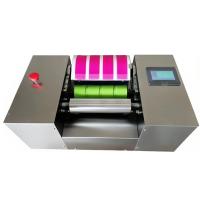
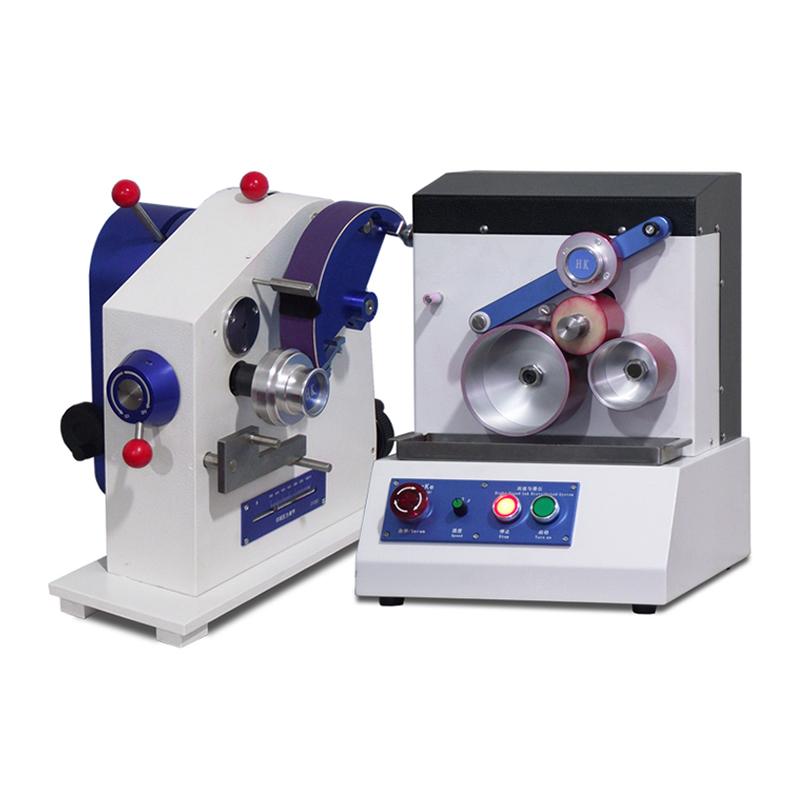
In order to accurately detect the surface strength of paper, paper mills and printing plants widely use paper printing surface strength Testers. This instrument is designed to test the surface strength of coated and uncoated paper to help determine whether the paper is suitable for a particular printing process. The test results of the paper printing surface strength Tester are an important reference for evaluating the adaptability of paper printing, especially in the production and quality control of printed paper.
4. Standard basis and measurement method
The determination of the printed surface strength of paper is usually based on standards such as GB/T 22365-2008, GB/T 2679, ISO 3782 and QB/T 1020. These standards provide specific methods and technical requirements for paper surface strength testing, ensuring the accuracy and comparability of test results. In practice, the test instrument simulates the printing process by applying a certain amount of pressure and friction to evaluate whether the surface strength of the paper can meet the printing requirements.
5. Control the adaptability of paper and ink
In order to improve the quality of printed matter, paper producers and printers need to closely monitor the surface strength of the paper and adjust the production process based on the measurement results. In addition, the printer should also choose the ink that matches the characteristics of the paper, and reasonably adjust the ink balance and printing parameters to avoid failures in the printing process.
By understanding the causes of printing ink suitability failures and the impact of paper surface strength on print quality, printers and paper mills can more effectively control the production process and ensure high-quality output of printed matter. Testing with a paper printing surface strength Tester is an important step to ensure the adaptability of paper and ink, and provides strong technical support for the printing industry.
-
![CHINA flexo proofing instrument NBC-A200 monochrome proofing color scheme dropper ink drop]()
-
![Offset ink Colorimeter NBC-225 Printing ink adaptability, spot color four-color Printing ink Colorimeter]()
-
![YINUO YN-ZSY-4 offset plate inks spot color Proofer inks color display instrument, offset printing four-color offset plate printing two-color optional]()
-
![PUYUN PY-E626 offset plate inks spot color Proofer (four colors)]()
-
![JINPUTE JPT-8 Ink Proofer inks color scheme to get the manuscript ready printing plate width 80mm]()
-
![JINPUTE JPT-2023 Intelligent Ink Proofer Double Station Discharge]()
-
![JINGHUAYIQI LD-OY Pneumatic gravure plate Ink Proofer]()
-
![CHINA Gravure Color Display Machine NBC-130]()
-
![CHINA offset ink Colorimeter NBC-225]() CHINA offset ink Colorimeter NBC-225$ 3282.00
CHINA offset ink Colorimeter NBC-225$ 3282.00