Paper and Cardboard Burst Resistance Determination Method and Instrument Analysis
This article elaborates on the method for determining the burstage resistance of paper and cardboard, including definition, measurement principle and instrument type. The hydraulic and pneumatic types of Muren burst Testers are highlighted, and the functions and requirements of chuck systems, hydraulic systems, adhesive films, and pressure gauges are explained. It also describes the test preparation, operation steps and result calculation, and emphasizes the importance of instrument maintenance and calibration for test accuracy.
definition
Burst resistance
Burst resistance refers to the maximum pressure that a paper can withstand when subjected to a uniform pressure perpendicular to its surface. This pressure is measured in kilopascals (kPa) or kilogram-force per square centimeter (kgf/cm²). Burst resistance reflects the strength and toughness of the paper and is an important indicator to evaluate the durability of the paper.
Burst index
The burst resistance index is the burst resistance value of the paper divided by the quantitative amount of the paper in kilopascals · square meters per gram (kPa·m²/g). This indicator is used to measure the burst resistance of a unit mass of paper and provide a strong performance of the paper in actual use.
principle
The process of determining the burstability of paper involves fixing the specimen in a chuck and coating it with adhesive film. The liquid is then pumped at a constant rate between the specimen and the film, creating a pressure that causes the film to gradually bulge until the specimen ruptures. The maximum pressure recorded in this case is the burst resistance of the paper. This method evaluates the crack strength of the paper under specific conditions by measuring the maximum value of the applied hydraulic pressure.
Instrument - Mullen burst Tester
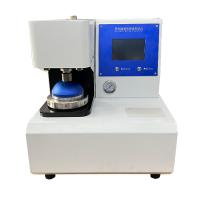
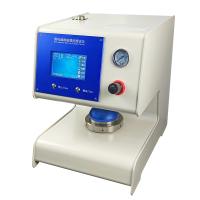
The Muren burst resistance meter is used to determine the burst resistance of paper and cardboard, and is divided into two types: hydraulic and pneumatic. The hydraulic type uses glycerin as the pressure transfer medium, while the pneumatic type uses compressed air. The main difference between the two is the difference in the pressure transmission medium.
Instrument composition
Chuck system,Hydraulics,Adhesive film,Pressure gauge
Chuck system
The chuck system is composed of two chucks, the upper and lower chucks, which require parallel structures and concentric aperture apertures, and the error should not exceed 0.25mm. The gripping force of the chuck needs to be 340 kPa or more (690 kPa for cardboard) to ensure that the specimen is securely clamped and to avoid slipping or damage during the test.
How it works
Older Mullen burst Testers were usually operated manually, with manual adjustment of the chuck and pressure. The new instrument is designed to be automated, using pneumatic or hydraulic devices to achieve automatic clamping and pressurization, improving testing efficiency and accuracy.
Hydraulics
The hydraulic system is driven by an electric motor and is driven by a worm, worm gear and gear system. The rotation of the motor drives the worm and worm gear to rotate, thereby pressurizing the specimen through the oil medium. This system ensures that the liquid is applied to the specimen at a uniform pressure and its burst resistance is accurately determined.
Performance requirements
The system must ensure that no air bubbles exist to ensure the stability of the hydraulic system. The pumping volume should be within the specified range, 95±15 ml/min for the hydraulic system and 170±15 ml/min for the pneumatic system to ensure that the liquid flow during the test process meets the standard.
Adhesive film
Specifications & Materials
The film is a round, elastomeric material designed to match the pressure range. The protrusion height of the film is related to the pressure range applied, so it is important to ensure that its specifications meet the test requirements when selecting and using it.
Inspection & Replacement
The condition of the adhesive film should be checked regularly to ensure that it is working properly. If the adhesive film is found to be damaged or its performance is reduced, it should be replaced in time. At the same time, when replacing the adhesive film, it is necessary to completely remove the air under the adhesive film to ensure the accuracy of the test results.
Pressure gauge
Types & Requirements
With Bourdon tubular pressure gauges, the accuracy requirements need to be met within the measuring range, and the scale resolution should be sufficiently detailed. Check the expansion and friction of the gauge to ensure that it accurately reflects the pressure change during the test.
Calibration & Maintenance
Calibrate the gauge regularly to ensure measurement accuracy. Check the inertia and friction of the pointer to ensure that it moves smoothly and avoid errors in the test results.
Test preparation
Specimen handling
Specimens are collected and processed according to standard methods, and the specimens are cut to 70mm x 70mm to ensure compliance with test requirements.
Test environment
The test is carried out under standard temperature and humidity conditions to ensure the accuracy and reliability of the test results.
Test Steps
Device settings
Select the appropriate measuring range, place the specimen between the chucks, and make sure the chucks are adjusted to the correct position to ensure that the specimen is securely secured.
Test the operation
The pressure is gradually increased until the specimen breaks, and the pressure value is read and recorded. If the specimen has slipped or cracked abnormally, it should be treated and retested as necessary.
data processing
If the rupture value of the specimen is less than 70 kPa, it should be tested with multiple sheets of paper to obtain more accurate results. The average burst resistance and burst resistance index of the specimen are calculated to ensure the validity and accuracy of the data.
Calculation of test results
Average burst resistance
Calculate the average of the bursting resistance values of all test samples to obtain the average bursting resistance (P_B) in kPa.
Burst index
The calculated average burst resistance value (P) is divided by the quantification (W) of the specimen to obtain the burst resistance index (X) in kPa·m²/g.
summary
Burstability determination of paper and cardboard is an important method for assessing the strength of materials, and testing with a Muryn burstTester can provide accurate burstability values and bursting indexes. Proper maintenance and calibration of the instrument is essential to guarantee the reliability of the test results. Through standardized test preparation and operating procedures, the bursting resistance of paper and cardboard can be effectively evaluated, providing important material property data for related industries.
-
![Yunda YD-NPY1 Automatic Burst Strength Tester ≤ 1200kPa]()
-
![JINGWEN JW-102C2Z paper Burst Tester]() JINGWEN JW-102C2Z paper Burst Tester$ 1556.00
JINGWEN JW-102C2Z paper Burst Tester$ 1556.00 -
![JINGWEN JW-102C1Z paper Burst Tester, Burst Tester]()
-
![CHINA NBC-8502B automatic breaking Strength Tester, touch screen breaking machine]()
-
![CHINA NBC-8502 Automatic Breaking Strength Tester]()
-
![CHINA BLD-608B Automatic Burst Strength Testing Machine]()
-
![Taichang TC-NPD5600Q Pneumatic Cardboard Burst Tester 250kPa~ 5600kPa]()
-
![Essence LD-NP-02 Burst Strength Tester Cardboard Classic, Horizontal Touch Screen Version]()
-
![Essence LD - NP-CMP Cardboard Burst Strength Tester, Vertical Touch Screen Version]()