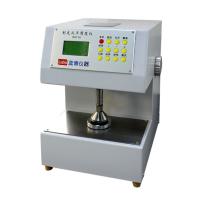
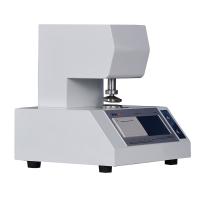
别克法测定纸和纸板平滑度的标准方法
The Buick method is a standard method for determining the smoothness of paper and cardboard by measuring the time it takes for air to pass through the surface of a specimen under a specific contact state and pressure. The method uses a Buick-style smoothness meter to test with a precision glass plate, a vacuum vessel, and a pressure gauge. Accurate instrument alignment and specimen handling are key to ensuring the accuracy of test results.
definition
Buick smoothness refers to the time it takes for a certain amount of air to leak into the specimen face and the annular surface under a specific contact state and differential pressure, in seconds.
principle
By placing the specimen on a glass surface, a specified pressure is applied to create a semi-vacuum, and then the time required for the vacuum level to change within the specified range is measured. The longer the time, the smoother the specimen surface.
instrument
Key components
Glass plate – ring-shaped, 10±0.5 cm in diameter, the test surface is finely polished to ensure no scratches.
Platen – 45 mm diameter with flat surface and 4±0.2 mm thickness for applying the specified pressure.
Vacuum vessels – including large vessels (380±1 ml total volume) and small containers (38±1 ml total volume) with a pumping capacity of up to 53.35 kPa.
Pressure gauge – operating range from 50.66 kPa to 29.33 kPa with an accuracy of ±0.07 kPa.
Timer – accurate to 1 second, to record the time it takes for the vacuum level to change.
Calibration of instruments
Use a special device and a mercury pressure gauge to verify that the contact pressure is accurate.
Check the vacuum level of the instrument by means of standard paper and rubber pads.
Measure the tightness of the vacuum vessel to ensure that the vacuum level remains stable.
A special device is used to measure the change in vacuum level to evaluate the amount of air leakage.
Check the effect of the connecting pipe on the vacuum level to ensure that the system is well sealed.
Replace the pads regularly, usually every three months to a year.
Specimen taking, preparation, and handling
Samples are taken according to standard methods to ensure that the surface of the specimen is free of wrinkles, cracks, or other defects.
Specimens are cut and warmed to ensure that they are tested at standard temperature and relative humidity for accurate results.
Test procedure
Test operation: The specimen is placed on a glass plate and the specified pressure is applied. Measure the time it takes for the vacuum to drop from 50.66 kPa to 48.00 kPa. If the time required is more than 300 seconds, use a small container instead; If the time is less than 15 seconds, the time required to reduce the vacuum from 50.66 kPa to 29.33 kPa is measured using different specimens.
Repeat Testing: Measure the other side of the specimen with another set of specimens to ensure the reliability of the test results.
Calculation and presentation of test results
The smoothness of the specimen surface is represented by the arithmetic mean of the results of the 10 measurements. If a large vacuum vessel is used, smoothness is expressed in seconds; If using a small vacuum vessel, the smoothness value is 10 seconds. Smoothness values under different vacuum conditions should be recorded to fully reflect the smoothness of the specimen.
The Buick method of determining the smoothness of paper and cardboard involves placing the specimen on a special glass plate and measuring the time it takes for air to pass through the specimen under defined pressure conditions. The longer the time, the smoother the specimen surface. The precision calibration of the instrument and the standardized specimen handling are the core to ensure the accuracy of the test. This method provides an effective means to evaluate the surface smoothness of paper, which is of great significance for the quality control of paper products.
-
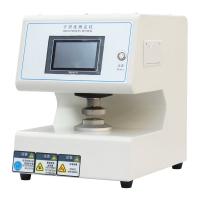
![Taichang Instrument TC-PHD Smoothness Meter, Buick Intelligent Tester 10 +/- 0.05cm ² Test Area]()
-
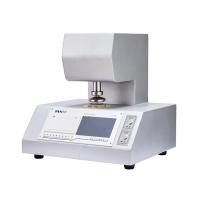
![CHINA NBC-5636 Paper & Cardboard Smoothness Tester]()
-
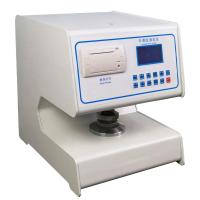
![CHINA BLD-PH10 Smoothness Meter]() CHINA BLD-PH10 Smoothness Meter$ 1695.00
CHINA BLD-PH10 Smoothness Meter$ 1695.00 -
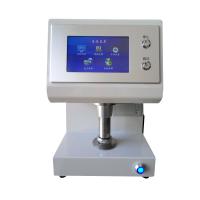
![Essence LD-PHD smoothness meter paper smoothness Bekk Buick, button model]()
-
![CHINA ZY-PH-2 smoothness Tester, Buick method mercury-free paper Tester]()
-
![PUYUN PY-H622 paper Smoothness Tester Bekk Smoothness Tester]()
-
![YINUO YN-PHD01 paper smoothness meter 0~9999s automatic]()
-
![LABO LB-BR10K computer Buick smoothness meter high-precision pressure sensor]()
-
![YANTE YT-ABST Smoothness Tester Automatic smart paper and Cardboard Detector]()