Paper and Cardboard - Determination of whiteness
This article describes the methods for determining the whiteness of paper and cardboard, mainly including the test process under diffuse and vertical lighting conditions. Whiteness was assessed using the blue light reflectance factor at a dominant wavelength of 457 nm, which was divided into specimen assays without and with fluorescent brighteners. Through the reflectance photometer and standard whiteboard, the whiteness value and fluorescence whiteness are accurately calculated.
Basic principle
Whiteness measurement relies on the measurement of the reflectance factor of paper and cardboard by means of a reflectance photometer using diffuse and vertical illumination conditions under a D-light source. Blue light with a dominant wavelength of 457 nm was applied in the assay to assess the whiteness of the paper. The test is divided into two methods: specimens without fluorescent brighteners and specimens containing fluorescent brighteners, ensuring a comprehensive evaluation of different types of samples.
Specimen assay without fluorescent brighteners
Reflectance factor R – the overall reflectivity of the sample.
Internal reflection factor R – the internal reflection capacity of the sample at a specific thickness.
Blue light reflectance factor R – the ability to reflect at 457 nm blue light.
instrument
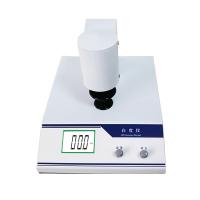
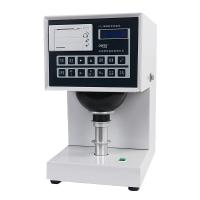
Reflectance photometers need to conform to specific spectral and geometrical properties.
The R filter is used to select the spectral characteristics of the dominant wavelength.
The working standard plate is used to calibrate the instrument.
Preparation of specimens
Sampling was carried out using standard methods.
Cut 150 mm x 75 mm rectangular specimens to ensure a stable total thickness of stacks.
Test procedure
Calibrate the instrument – use a standard blackboard and a working standard board.
Determination of the reflectance factor – the front and back sides of the specimen are tested sequentially, and the reflectance factor is recorded.
Calculation of test results
Calculate the average of the reflection factors of the positive and reverse test samples to one decimal place.
Determination of samples containing fluorescent brighteners
Reflectance factor R – the overall reflectivity of the sample under a light source.
Internal reflection factor R – the ability to reflect at a specific thickness of the sample.
Blue light reflectance factor R – the ability to reflect at 457 nm blue light.
Fluorescent whiteness F – an additional whiteness effect due to a fluorescent brightener.
Fluorescent brightener FWA – A powder that causes fluorescence in the blue range of the visible spectrum in the substrate.
instrument
Reflectance photometers need to conform to specific spectral and geometrical properties.
The R filter is used to select the spectral characteristics of the dominant wavelength.
UV-cut filters remove UV effects less than 400 nm.
Fluorescent standard whiteboards and non-fluorescent standard whiteboards are used for instrument calibration and correction.
Preparation of specimens
Sampling was carried out using standard methods.Cut 150 mm x 75 mm rectangular specimens to ensure a stable total thickness of stacks.
Calibration of the instrument
Calibrate the instrument with a standard blackboard and a three-level non-fluorescent standard whiteboard according to the instrument instructions.
The blue light reflectance factor was tested under a simulated D light source using a three-level fluorescence standard whiteboard for light calibration.
A UV-cut filter is inserted, and a standard whiteboard is used to test the reflectance factor under UV elimination conditions.
Test procedure
The reflectance factor of the specimen under a simulated D light source was determined using an R filter.
A UV-cut filter was inserted, and the reflectance factor of the specimen under UV-canceled conditions was determined.
Calculation of test results
Calculate the blue light reflectance factor of the specimen, including the reflection factor under the simulated D light source and the reflection factor under UV removal conditions.
Determine fluorescent whiteness to assess the actual effect of fluorescent brighteners on whiteness.
Precautions and error control
Calibration and maintenance of instruments
Calibrate the instrument regularly to ensure that its spectral and geometrical properties meet the requirements of the standard.
Keep the instrument clean and check the status of the light source and filters regularly to prevent changes in spectral characteristics.
Calibrations are performed using a standard blackboard and a standard whiteboard to ensure accuracy and consistency of measurements.
Specimen preparation and handling
Samples are taken according to standard methods to ensure the representativeness and consistency of the specimens.
When cutting the specimen, ensure that the size and thickness meet the requirements to avoid errors caused by uneven samples.
Specimens should be stacked to avoid contamination and unwanted light or heat radiation, protecting the surface of the specimens.
Common problems and solutions in calibration and testing
Light source issues – Unstable light sources can affect measurement results. The solution is to ensure that the light source is used in a steady state and that the light source is changed regularly.
Filter Problems – Filter contamination or aging can cause deviations in spectral characteristics. Check and replace the filters regularly to maintain the accuracy of the measurement.
Specimen Handling – Improper specimen handling can lead to measurement errors. It should be ensured that the specimen is properly handled and stored prior to testing to avoid the influence of environmental factors on the measurement results.
Instrument calibration – Instruments that are not properly calibrated can affect data accuracy. Be sure to follow standard procedures for calibration and use standardized reference materials.
conclusion
Whiteness measurement plays an important role in the production and quality control of paper and board, and by accurately measuring the whiteness of paper, it is possible to effectively assess its visual quality and market suitability. For specimens that do not contain optical brighteners, reliable whiteness data can be obtained by using a standardized reflectance photometer for determination under a specific light source. For specimens containing fluorescent brighteners, in addition to the conventional reflectance factor measurement, the effects of fluorescent whiteness and ultraviolet light need to be considered. The choice of the appropriate assay is based on the presence or absence of a fluorescent brightener in the specimen and the required measurement accuracy. Through these methods, it is possible to ensure that the paper and cardboard products produced meet consistent and high standards in quality control.
In conclusion, the whiteness determination method for paper and cardboard ensures the accuracy of the measurement through rigorous test procedures. Specimens, whether with or without a fluorescent brightener, need to be processed according to standardized procedures. This method provides reliable data support for the quality control of paper and cardboard.