Application of Mayer Rods in composite coating prepative
Device selection
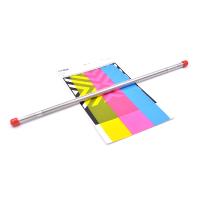
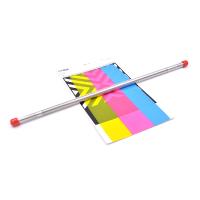
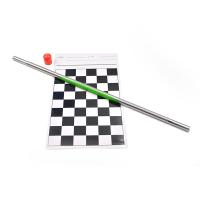
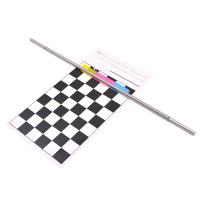
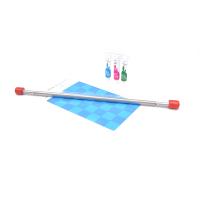
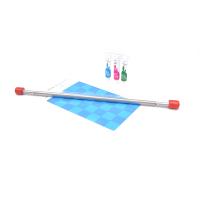
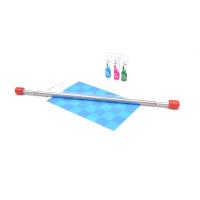
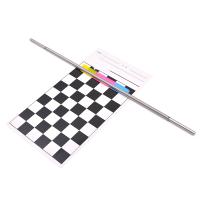
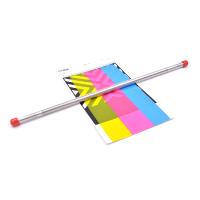
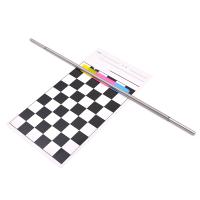
The wire bar applicator usually consists of an elongated applicator rod or a bracket with the gap of the rod that can be adjusted as needed. Choosing the right applicator is crucial, as the size of the gap directly affects the thickness of the wet film and the uniformity of the application.
A wire bar applicator is a type of equipment used to apply liquid paint, usually consisting of a slender applicator rod and bracket. There is a specific gap design on the coating rod that allows control of the wet film thickness of the coating. When used, the operator places the paint evenly in front of the applicator, applies a certain amount of pressure, and then slides the coating at a constant speed to ensure that the coating is uniform and smooth. Wire rod applicators are widely used in the industrial production of coatings, adhesives, and other liquid materials.
Preparation of materials
Before coating, the composite coating needs to be prepared, including inorganic thickeners, dispersants, pigments, film-forming additives, etc. During the mixing process, ensure that the material is sufficiently dispersed to obtain a homogeneous coating.

Coating process
Place the substrate plate to be coated horizontally and fix it to ensure stability during coating.
Place the appropriate amount of composite paint in front of the wire bar applicator. Hold both ends of the applicator and apply downward pressure to maintain close contact between the applicator and the substrate.
Glide across the substrate at a constant speed to ensure that the paint is evenly applied to form a wet film of the desired thickness. Control the sliding speed and pressure to avoid uneven coatings.
Dry and cure
After the coating is completed, the sample is placed in an electric Forced Air Drying Oven and set to hold at 60°C for 1 hour to promote the drying and curing of the coating. The curing process is critical to the performance of the coating, including adhesion, abrasion resistance, and more.
Drying test
According to the GB/T 1728-1979 standard, check whether the coating is completely dry by the filter paper press method. This step ensures the practical performance of the coating and avoids blistering or peeling.
Performance evaluation
Dry and cured composite coatings should be subjected to further performance testing, such as adhesion, corrosion resistance, and electrical conductivity, to ensure that they meet the intended application requirements.

- 1Application of Mayer Rods in protective coating prepative
- 2Application of Mayer Rods in 2D Single Crystal Copper Nanosheet Films
- 3Several Common Experimental Spreader Methods and Their Applications
- 4Application of Mayer Rods in Water-based ink Moulding
- 5Technical method and application of preparing nanometer silver wire thin films with Mayer Rods
- 6The experimental case of OSP Mayer Rods at inks Moulding [with video]
- 7Why Do Film Applicators Need to Change Their Wires Regularly?
- 8Mayer-Rod (Mayer Rods) Preparative 2D Copper Nanosheets
- 9The overlooked role of Mayer Rods in laboratory wet-film preparation