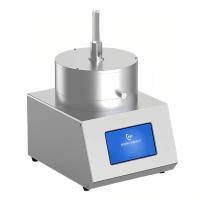
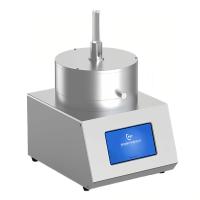
Application of Spin Coater in preparation of Bi1.5MgNb1.5O7 film
introduction
Bi1.5MgNb1.5O7 (BMN) is a perovskite oxide with excellent dielectric properties, which is widely used in capacitors, sensors and microwave devices. In order to realize its application in various electronic devices, the preparation of high-quality BMN films has become a research hotspot. As a wet chemical synthesis technique, the sol-gel method is widely used because of its simple process, low cost, and easy control of chemical composition. In this study, we will explore the specific process of preparing BMN films based on sol-gel method and its advantages.
Overview of the sol-gel method
The sol-gel method uses the hydrolysis and polymerization of metal precursors to form a sol, which is subsequently transformed into a gel, and finally heat treated to obtain the desired oxide film. The advantage of this method is that it can effectively improve the utilization rate of raw materials, enhance the uniformity of sample composition, and thus improve the performance of the film. In addition, the synthesis temperature of the sol-gel method is 400°C to 500°C lower than that of the traditional solid-phase method, which not only reduces energy consumption, but also reduces the volatilization of elements and the formation of second phases due to high temperatures, which helps to improve the dielectric properties of the material.
Experimental materials and equipment
In this experiment, the main raw materials we used include niobium fluoride (NbF5), bismuth chloride (BiCl3), magnesium chloride (MgCl2), hydrofluoric acid (HF), ammonia (NH3· H2O), citric acid monohydrate (C6H8O7· H2O) and so on. These chemistries are of high purity grade to ensure a smooth preparation process. At the same time, the choice of substrate material is crucial, and we chose transparent conductive oxide glass (ITO) as the growth substrate for BMN films due to its good conductivity and stability.
Thin film preparation process
Preparation of sols
The preparation process of thin films is mainly divided into two steps: sol preparation and film formation. First, in the sol preparation stage, we select high-purity Nb2O5 as the niobium source and react it with HF to generate an NbF5 solution. Subsequently, the solution is diluted with deionized water and the pH is adjusted by the addition of ammonia to form a precipitate of Nb(OH)5. This precipitate then reacts with citric acid to form a stable solution of the Nb-citric acid complex. Next, BiCl3 and MgCl2 are added, and the pH is adjusted to form the BMN precursor sol.
Preparation of thin films
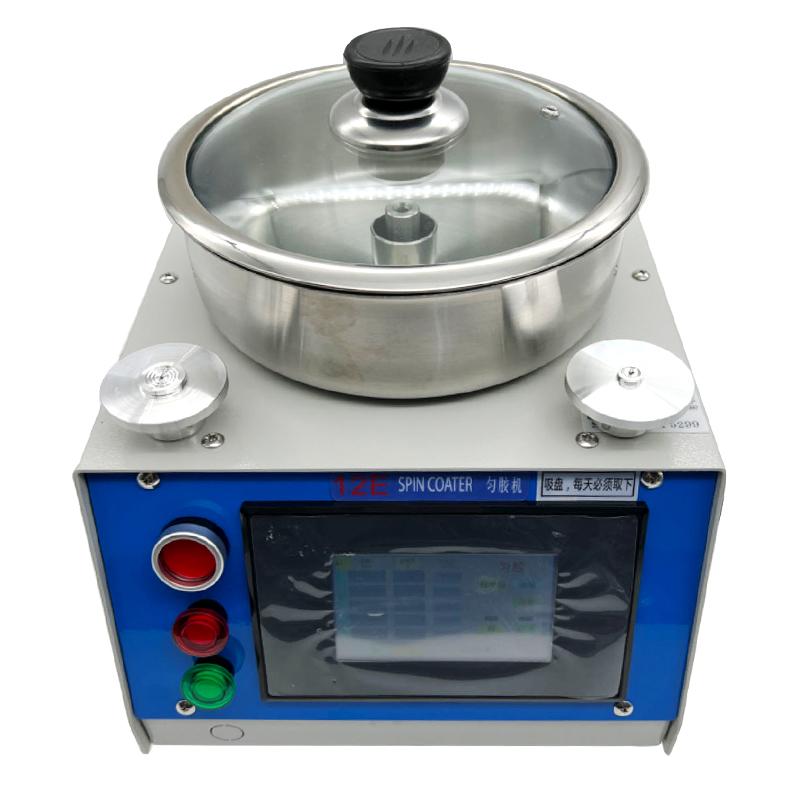
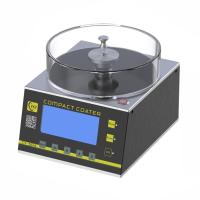
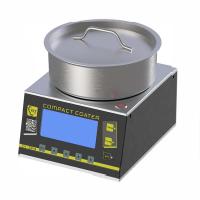
Next, the ITO substrate is coated with BMN sol using a vacuum spin coating method (rotary coater/homogenizer). Before coating, the ITO substrate is first thoroughly cleaned to remove surface contaminants. The cleaning process consists of sequential cleaning with deionized water, absolute ethanol and acetone. After ensuring that the substrate is clean, the BMN sol is applied on the Spin Coater at the set speed. After the film is coated, it is annealed in an electric atmosphere furnace to optimize the crystallinity and dielectric properties of the film. Through multiple coatings and annealing, the required thickness of the BMN film is finally obtained on the ITO substrate.
Results & Discussion
In this study, the fabrication of BMN films successfully achieved precise control and uniformity of chemical composition. The experimental results show that the BMN films prepared by sol-gel method have good crystallinity and dielectric properties. By adjusting the annealing temperature and time, the compactness and electrical characteristics of the film can be effectively improved. In addition, the selection of ITO as the substrate can effectively reduce the dielectric loss of the film and improve the conductivity of the film.
conclusion
In this study, Bi1.5MgNb1.5O7 films were successfully prepared by sol-gel method, and the technical details and precautions of each link in the preparation process were discussed. By rationally selecting the precursor and controlling the reaction conditions, the prepared BMN film not only shows excellent dielectric properties, but also lays a foundation for future applications in electronic devices. Future research will continue to explore the properties of BMN films on different substrates and preparation conditions to further expand its application range.


- 1Spin Coater selection and classification: a one-stop guide
- 2Automatic Film Applicator and spin coating spin coater: Key technologies and applications in industrial production
- 3Spin coatings spin coaters: principles, applications, functions and maintenance
- 4Comparison of advantages and disadvantages of preparing large area perovskite films by doctor blade Spreader method and spin coating method
- 5Two Methods of Preparative Anti-oxidation polymer Encasement Film
- 6Three Methods of Preparative Unsupported Adhesive Film on Plastic Plate
- 7Five different methods of prepative inks
- 8Working principle and application of spin coater
- 9What is spin coating?