Application of Rheometer in Viscosity Test of Tomato Paste
Rheology is a discipline that studies the freezing or deformation of matter under flow and deformation. Rheological testing is particularly important for the food industry to help evaluate the texture, mouthfeel, and processing and storage stability of products. As a highly viscous condiment, the taste and fluidity of tomato sauce directly affect the user experience of consumers, so analyzing the rheological properties of tomato sauce through rheological tests has become the key for manufacturers to optimize product quality. As the main instrument for food rheological testing, the variable meter can effectively measure key parameters such as viscosity, yield shear, and shear thinning behavior of tomato sauce, and further help manufacturers improve product formulation and processing technology. This article will detail the application of rheometer in ketchup viscosity testing and its technical significance in actual production.

1. The importance of ketchup viscosity testing
Tomato sauce is a condiment with tomatoes as the main ingredient and is widely used in a variety of table side dishes. Its typical thickening properties can both maintain good seasoning and ensure a certain fluidity, so it is used. The quality of ketchup is not static, and its rheological properties will vary depending on the recipe, processing method, temperature, storage conditions and other relevant factors. Viscosity is an important parameter of the rheological properties of ketchup, which directly affects the user experience of the product:
Consumer experience – ketchup is too viscous and will not be easy to bump or pour out of the bottle; The viscosity is too low, which loses its adhesion and does not cover the food surface evenly. Therefore, proper viscosity control is the key to production, and businessmen need to consider care when designing products.
Processing technology——During the production of ketchup, viscosity has a significant impact on the performance of production equipment. Excessive viscosity can lead to difficulties in pipeline processes such as stirring, pipes, etc., while increasing viscosity. Through viscosity testing, manufacturers can optimize formulation and process parameters, reduce the refractive index, and increase production efficiency.
Storage and stability——The viscosity of ketchup may change instantaneously with the storage time, which is closely related to the internal interfacial structure changes, intermolecular reactions, and moisture separation. Changes in viscosity have a direct impact on the texture and effectiveness of the product, so it is important to monitor the ketchup slurry during production and storage.
2. The working principle of the rheometer and its application in the viscosity test of ketchup
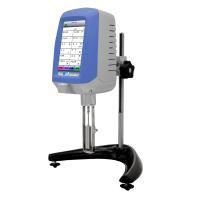
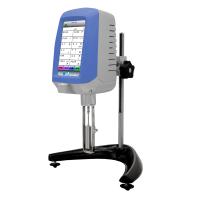
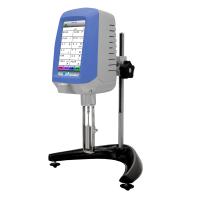
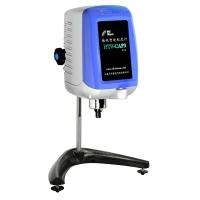
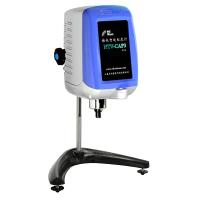
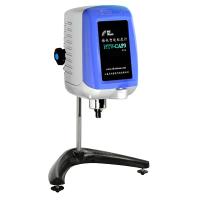
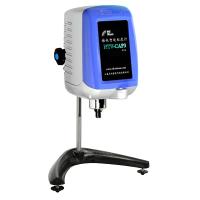
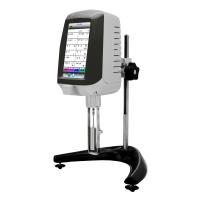
A rheometer is an instrument used to measure the fluidity and deformation of a substance under the application of an external force. The basic principle is to observe the response of the sample by applying different stresses or strains, so as to obtain the rheological behavior of the substance. The instrument can test the rheological behavior of substances under static and dynamic conditions, especially for the study of non-Newtonian fluids. As a typical non-Newtonian fluid, the viscosity of ketchup varies with the shear rate, so the rheometer can fully characterize the rheological properties of ketchup.
In ketchup viscosity testing, a rheometer is usually performed with a rotational rheometer or an oscillatory rheometer. The rotational rheometer measures the shear stress and shear model of the sample by applying a constant or varying shear model, and the viscosity oscillating rheometer measures the storage modulus (G') and loss modulus (G") of the sample by applying a small amplitude vibration, so as to analyze its viscoelastic properties.
3. The specific operation of the rheometer in the viscosity test of ketchup
When testing the viscosity of the sauce in the actual tomato, the following steps are usually required:
Take samples of ketchup from the production line or the market to ensure consistency. Since the monomer structure of ketchup has an important influence on viscosity, it is necessary to ensure that the sample is homogeneous before testing, and there is no obvious layering production or precipitation.
The viscosity of ketchup is very sensitive to temperature, so the test temperature needs to be strictly controlled during the test. In general, the test temperature should be close to the use or storage temperature of ketchup (e.g. in front or at low temperatures). The built-in temperature control device of the transformer can ensure the stability of the temperature during the test.
Rheometers are typically available with several different types of chassis and geometries, such as axle axles, parallel plates, cone plates, etc. Parallel plate geometries are often used when testing ketchup, as they are suitable for measuring highly viscous fluids and provide a uniform shear field.
In order to obtain the shear thinning behavior of ketchup, a shear rate scan is required. As a typical shear-thinning fluid, the viscosity of ketchup gradually decreases as the shear stress increases. By setting different shear rates, the rheometer can poorly produce curves of viscosity with shear rate, which is helpful to study the fluidity of ketchup under different use conditions.
The reentry test refers to the minimum error required for a substance to start flowing. When it comes to ketchup, foldback texture and performance improvement go hand in hand. By performing a foldback test, the rheometer is able to help determine the minimum amount of force required to initiate the flow of ketchup, which can guide the optimization of product packaging design and consumer experience.
After completing the experiment, the rheometer will generate data such as viscosity curves, yield stresses, etc. By analyzing these, important information such as viscosity change data trends, shear thinning behavior, yield stress, etc., can be obtained. Based on this data, manufacturers can adjust their recipes and optimize their processes.

4. Analysis and application of rheometer test results
By testing the viscosity of ketchup with a rheometer, the following key rheological parameters can be obtained:
Viscosity---The apparent viscosity of ketchup decreases with the increase of shear rate, showing typical shear thinning behavior. viscosity behavior, the denser the texture of the product; The lower the viscosity, the better the fluidity of the product. Producers can adjust the recipe of ketchup according to market demand and bring tomato sauce to the appropriate level.
fell---The drop reflects the ability of ketchup to start flowing. The previous drop meant that ketchup needed to increase its strength to flow, which could lead to consumers feeling less sensitive when using it. Therefore, reasonable control of the decline can improve the experience of using the product.
Viscoelasticity---The storage modulus (G') and adsorption modulus (G") of ketchup were obtained by oscillatory rheological tests to evaluate its viscoelastic behavior. The storage modulus reflects the solid properties of ketchup, while the absorption modulus reflects its liquid properties. Viscoelastic test results can help producers determine the stability of ketchup under different storage conditions.
5. Application of rheometer test in the production of tomato sauce
Rheometer testing not only helps producers understand the rheological properties of ketchup, but also provides important guidance for production process and product optimization. With viscometer testing, manufacturers can:
1) Optimize the formula。Based on the test results, adjust the ratio of raw materials, especially the amount of moisture, thickener, sugar and salt in the ketchup, to achieve the right viscosity and texture.
2)Improve the process。Rheometer testing can help optimize the processing of ketchup. For example, by adjusting process parameters such as stirring speed, heating temperature, cooling time, etc., it is possible to increase the production efficiency of ketchup and reduce the number of knives.
3)Product stability assessment. By testing the rheological behavior of ketchup under different storage conditions with a rheometer, producers can predict the storage stability of the product, further adjust the storage conditions or add preservatives to extend the shelf life.
VI. Conclusions
As a precision testing instrument, the rheometer can comprehensively characterize the viscosity and rheological properties of ketchup. Through the rheometer test, manufacturers can optimize the recipe and processing process of tomato paste to ensure that the product is under different storage and use conditions, and the viscosity test also provides an important reference to improve the consumer experience. With the urgent improvement of the food industry's requirements for product quality and taste, the application of rheometer in ketchup and other viscous foods will be more extensive.


- 1Understanding Rheometers in One Article - Principle, Application, Selection & Maintenance
- 2Rheometer polymer rheological performance
- 3Influencing factors of asphalt rheological performance
- 4How to calibrate the Rheometer? With calibrating steps
- 5Difference between Rheo-meter and Rotational Viscometer
- 6How to test rheological properties of colloidal materials
- 7Paint rheology phenomenon: What is the effect of viscosity change after coating?
- 8Influence of Leveling on Rheological Phenomena of Coatings
- 9Wetting, coalescing and hanging of paint rheological phenomena