Overview of Cardboard Piercing Strength Measurement Method
The cardboard puncture strength assay is a key test method used to evaluate the puncture resistance of cardboard materials, and is suitable for many types such as containerboard, corrugated containerboard, etc. The method relies on a specific measuring instrument and uses the pendulum principle for impact testing. During the measurement, the instrument needs to be tightly adjusted and calibrated to ensure its accuracy. The test steps include standard collection of the sample, appropriate temperature and humidity treatment, sample cutting, and application of clamping force to hold the specimen in place, and finally the puncture strength is calculated by reading the instrument scale to ensure the accuracy and consistency of the data.
overview
The concept of cardboard piercing strength
Cardboard piercing strength refers to the amount of work required to penetrate the cardboard with a corner cone of a particular shape, including the total work of puncture and tearing.
Unit of determination
Assay results are usually expressed in kg·cm or joules and accurately reflect the puncture resistance of the cardboard.
Scope of application
The assay is suitable for a wide range of cardboard types, including containerboard and corrugated containerboard, and is widely used in the packaging and transportation industries.
instrument
Tester requirements
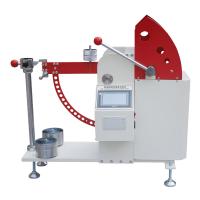
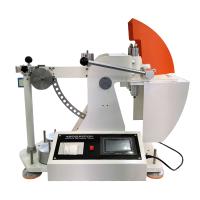
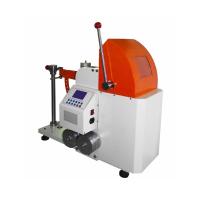
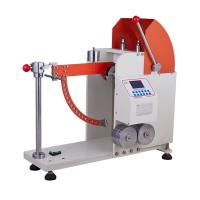
The Beach puncture strength Tester is a special instrument that uses a pendulum impact to determine the puncture strength of cardboard to ensure the accuracy and repeatability of the measurement. The pendulum is equipped with a 90° arc arm with a regular triangular pyramid with a height of 25±0.7 mm and a radius of 1.5 mm to ensure effective penetration of the cardboard.
Splint device
The splint is composed of two horizontal splints, the upper splint is in contact with the specimen, and the lower splint should be at the level of the pendulum shaft or not higher than 5 mm, and the effective area should not be less than 175 mm × 175 mm. The force applied between the plates is a minimum of 250 Newtons, but not more than 1000 Newtons, to ensure that the specimen is fixed and not loose.
Reading pointer and reading dial
The measurement result is indicated by the position of the frictional load pointer on the reading dial. The scale range includes multiple intervals to ensure accurate reading of test results and easy analysis of the puncture strength of the cardboard.
Adjustment and calibration
Adjust the position of the pendulum and corner pyramid to ensure that the tip of the corner tip is within ±5mm of the horizontal axis of rotation of the pendulum.
Zero point adjustment, remove the heavy thallium and the specimen, adjust the pointer to the maximum value, release the pendulum, make sure the pointer points to the zero point, if there is any deviation, it needs to be calibrated by the adjustment screw.
Pointer friction adjustment, put the pointer in the zero position, release the pendulum, if the pointer exceeds the zero point 3mm, lubricate or adjust the pointer elasticity to achieve proper friction.
The calibration of the friction of the pendulum shaft, in the state of no heavy thallium, the pendulum body swings freely to stop, and the number of swings shall not be less than 100 times to ensure the accuracy of measurement.
Calibration of the resistance of the anti-friction ring, after the pointer is adjusted to the zero point, an aluminum plate with a specific triangular hole is applied, and the resistance of the anti-friction ring is checked, the standard should not exceed 0.88 kg · cm.
For the calibration of the total torque of the pendulum, a small shaft is installed at the back end of the weight hole of the pendulum, and the total torque of the pendulum is calculated through the balance balance to ensure its accuracy.
Test procedure and result calculation
Sample preparation, sample collection and temperature and humidity adaptation treatment are carried out in accordance with relevant standard methods to ensure that the sample meets the experimental requirements before testing.
Specimen cutting, 175 mm x 175 mm specimens, at least 8 sheets are prepared to ensure the representativeness and accuracy of the results.
Trial execution
Hold the specimen and apply clamping force – Place the specimen between the clamping plates and apply a minimum clamping force of 250 N to a maximum of 1000 N to ensure that the specimen is clamped in the middle.
Pendulum adjustment and measurement process - adjust the position of the pendulum to ensure that the range of work is between 20%~80%, start the test and record the results.
Result calculation
Data Logging & Processing – Reading test results from the reading pan and making the necessary work compensation to ensure accurate data.
Reporting of maximum and minimum values – Calculate the average value of the longitudinal and transverse specimens, report the maximum and minimum values to an accuracy of 0.1 kg · cm or joules.
Precautions
Regularly inspect and maintain assay equipment to ensure proper operation and accurate measurements.
Pay attention to the influence of the test environment and compensate the data based on the pre-determined friction loss to improve the measurement accuracy.
summary
The cardboard puncture strength determination method provides a standardized detection method for the cardboard industry, which can effectively evaluate the puncture resistance of cardboard, so as to provide a basis for product quality control. Through scientific instrument configuration and systematic experimental procedures, the reliability and reproducibility of measurement results are ensured. The implementation of this method not only helps manufacturers meet industry standards, but also improves the competitiveness of cardboard products in the market. Mastering and applying this assay will help optimize production processes, improve product quality, and provide users with greater safety and reliability in real-world applications.