Application of Rotational Viscometer in cellulose material
Cellulose is one of the most abundant organic compounds on Earth and is widely found in plant cell walls. Due to its good physical and chemical properties, cellulose materials have a wide range of applications in papermaking, textiles, medicine, food and construction. The structure of cellulose itself is complex, and its viscosity characteristics are important indicators that affect its processing, molding and application performance. Viscosity is a physical quantity that measures the resistance of a fluid to flow, and the viscosity determination of cellulose is essential for its application.
Among the viscosity measurement techniques, Rotational Viscometers are widely used in the viscosity determination of cellulose materials due to their simple measurement principle, wide range of applications, and accurate results. This article will discuss the application of Rotational Viscometer in cellulose materials in detail, introduce the working principle of Rotational Viscometer, the importance of viscometer measurement in cellulose materials, the key points of experimental operation, and the influence of different factors on cellulose viscosity measurement.
1. The working principle of Rotational Viscometer
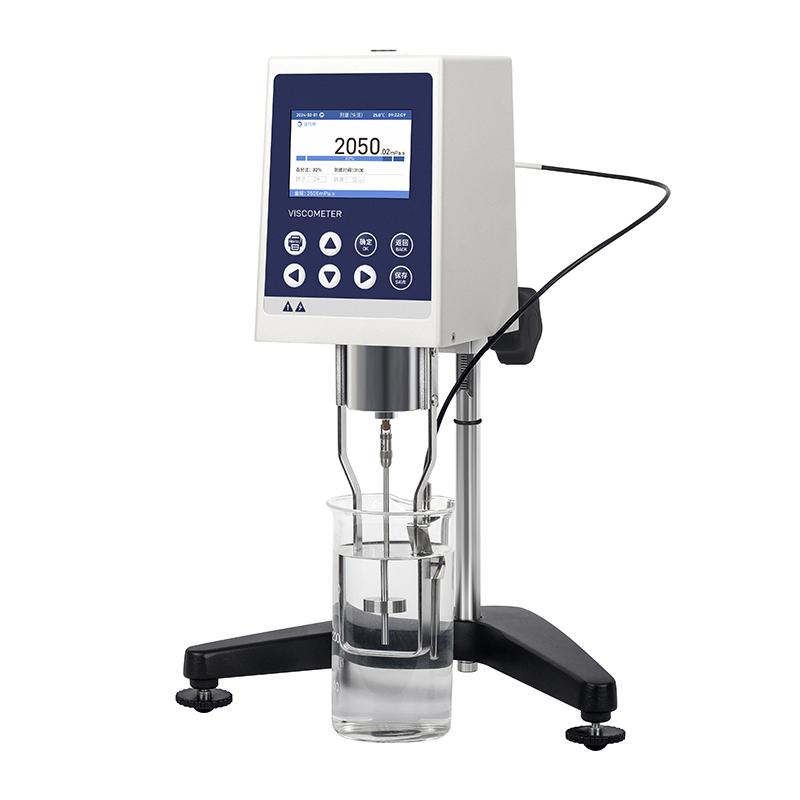
A Rotational Viscometer is an instrument that determines the viscosity of a fluid by rotation, and is commonly used to measure the viscosity of Newtonian and non-Newtonian fluids. It works by immersing a rotor at a certain speed into the liquid to be measured, and the resistance of the liquid to the rotor is proportional to the viscosity of the liquid. When the rotor rotates, the liquid to be measured will produce a certain shear force, and the Rotational Viscometer calculates the viscosity value of the liquid by measuring the magnitude of this shear force.
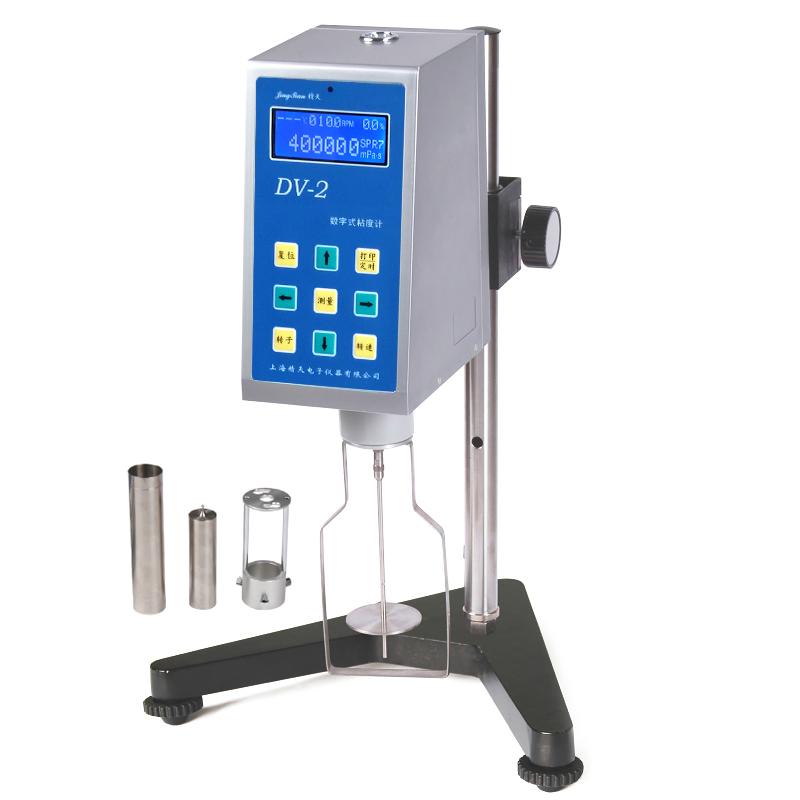
Common constructions of Rotational Viscometers include the following parts:
Drive – Provides rotational force to make the rotor rotate in the liquid at different speeds.
rotor——Usually cylindrical or conical in shape, it is immersed in the liquid to be measured and feels the resistance of the liquid as it rotates.
Torque sensor——It is used to measure the resistance of the liquid felt when the rotor rotates, and the amount of resistance is related to the viscosity of the liquid.
Display system——By calculating the torque and rotational speed, the measured viscosity values are displayed.
By varying the rotational speed of the rotor, the viscosity of the liquid at different shear rates can be obtained, which is especially important for viscosity measurements of non-Newtonian fluids.
Second, the necessity of viscosity determination of cellulose materials
Cellulose is a polymer compound that usually exists in the form of fibers, powders, or solutions. Cellulose is used in a wide range of applications, such as in the manufacture of paper, textiles, chemicals, food additives, etc. In these applications, the viscosity properties of cellulose play an important role in its quality, processability, and the properties of the final product.
1) Paper industry: In the papermaking process, the viscosity of the cellulose solution determines the fluidity and formability of the pulp. Too high viscosity will make it difficult for the pulp to be evenly distributed during processing, affecting the quality of the paper; If the viscosity is too low, the pulp may not form a stable structure. Therefore, precise control of viscosity is the key to ensuring the quality of the paper.
2)Textile industry: Cellulose also plays an important role in the dyeing and processing of textiles. The viscosity of the cellulose solution determines the dyeing uniformity and fastness of the textile material. In the manufacturing process of textile coatings, the determination of viscosity helps to optimize the formulation and guarantee the uniformity and durability of the product.
3)Pharmaceutical and food industry: As a food additive and pharmaceutical excipient, the solubility and viscosity characteristics of cellulose directly affect the stability and taste of products. Especially in the food industry, cellulose is often used as a thickener, and its viscosity properties are related to the appearance and texture of food.
Therefore, accurate measurement of the viscosity of cellulose is an essential step in industrial applications. Due to its high accuracy and sensitivity, Rotational Viscometers are a reliable tool for cellulose viscosity determination.
3. Application of Rotational Viscometer in the determination of cellulose viscosity
Measuring the viscosity of cellulose with a Rotational Viscometer offers a high degree of reliability, especially in applications where an accurate understanding of the rheological properties of cellulose solutions is required.
Viscosity determination of cellulose solutions
Cellulose is often found in solution form in many processes, so it is particularly important to determine the viscosity of cellulose solutions. Rotational viscometers are able to measure the viscosity of cellulose solutions at different shear rates, helping researchers understand the rheological behavior of cellulose under different processing conditions. For Newtonian fluids, such as low-concentration cellulose solutions, where the viscosity value does not change much with the shear rate, a Rotational Viscometer is able to accurately measure its stable viscosity value. For non-Newtonian fluids, such as highly concentrated cellulose solutions, the viscosity of which varies significantly with the shear rate, a Rotational Viscometer can obtain a complete viscosity-shear rate curve by testing at multiple speeds.
Viscosity measurement of cellulose derivatives
The chemical modification of cellulose can generate many derivatives, such as carboxymethyl cellulose (CMC), ethyl cellulose (EC), etc., which are widely used in the food, pharmaceutical, and cosmetics industries. Different types of cellulose derivatives have different solubility properties and rheological properties, and Rotational Viscometers can help researchers evaluate the viscosity properties of these derivatives and provide data to support their application in products.
Effect of temperature on viscosity of cellulose material
The viscosity of the cellulose solution changes significantly with temperature. In the processing of cellulose materials, temperature control is a key factor affecting their viscosity. The Rotational Viscometer can study the change of viscosity of cellulose solution at different temperatures by changing the measurement temperature. This is essential to optimize the processing of cellulose materials and to predict their performance in different use environments.
4. Precautions for the use of Rotational Viscometer
Although Rotational Viscometers are very useful in viscosity measurement of cellulose materials, there are a few key points to be aware of in practice:
1) Choose the right rotor and speed
The rotor shape and size of a Rotational Viscometer can affect the accuracy of viscosity measurements. When measuring cellulose solutions, the appropriate rotor type should be selected based on the concentration and fluidity of the solution. For low concentrations of cellulose solutions, small rotors are usually chosen, while high concentrations of cellulose solutions are suitable for larger rotors. In addition, the choice of rotational speed is also crucial, and the appropriate shear rate should be selected according to the rheological properties of the solution to be measured.
2)Avoid the influence of air bubbles
During the measurement of cellulose solutions, the presence of air bubbles can significantly affect the viscosity measurement results. Therefore, when preparing the sample, it is necessary to stir the sample well and let it sit to eliminate air bubbles. In addition, when the rotor is immersed in liquid, ensure smooth operation to avoid the formation of air bubbles.
3)Temperature control
The viscosity of cellulose materials is temperature sensitive, so it is important to maintain a constant temperature during the measurement process. Many Rotational Viscometers are equipped with a temperature control system that regulates and maintains the temperature of the sample in real time during the test, ensuring the accuracy of the measurement results.
4)Calibration and maintenance
The accuracy of a Rotational Viscometer relies on regular calibration and maintenance of the equipment. In daily use, the instrument should be calibrated regularly according to the manufacturer's recommendations to ensure that it is working properly. At the same time, the rotor should be cleaned after each use to avoid residues affecting the next measurement.
V. Conclusions
As the main instrument for the viscosity determination of cellulose materials, Rotational Viscometer occupies an important position in the industrial processing, application development and quality control of cellulose due to its accuracy and wide applicability. By accurately measuring the viscosity of cellulose and its derivatives, researchers can better understand the rheological behavior of cellulose materials, thereby optimizing their processing and improving product quality.
- 1Rotational viscometer - principle, classification, application and calibrating
- 2Application of NDJ-8S digital Rotational Viscometer in viscosity measurement of cosmetic raw materials
- 3NDJ-5S digital Rotational Viscometer accurate measurement of natural oil viscosity
- 4Application of HBDV-1H swirl/spin High Temperature Viscometer in Viscosity Determination of Plastic Particles
- 5Rotational viscometer selection guide: How to choose the right viscosity equipment for you?
- 6Principle, type and accuracy control of Rotational Viscometer
- 7Which Viscometer to Choose for Licorice Extract Viscosity Testing? How to Test?
- 8Application of Rotational viscometer in Waterborne Polyurethane Adhesive
- 9Application and selection of digital Rotational Viscometer in polyethylene (PE) wax