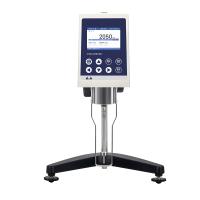
Application of Rotational viscometer in Waterborne Polyurethane Adhesive
With the increasingly stringent environmental regulations, waterborne polyurethane adhesives (WPUA) have attracted widespread attention as an alternative to traditional solvent-based adhesives. Waterborne polyurethane adhesives not only have excellent adhesion performance, but also have the characteristics of environmental protection and low VOC emissions. However, the monitoring and quality control of the performance of WPUA is particularly important during the production and application process, and viscosity is one of the key indicators of adhesive performance. As an important tool for determining the fluidity of liquids, Rotational Viscometers play a vital role in the development and production of waterborne polyurethane adhesives.
1. The basic principle of Rotational Viscometer
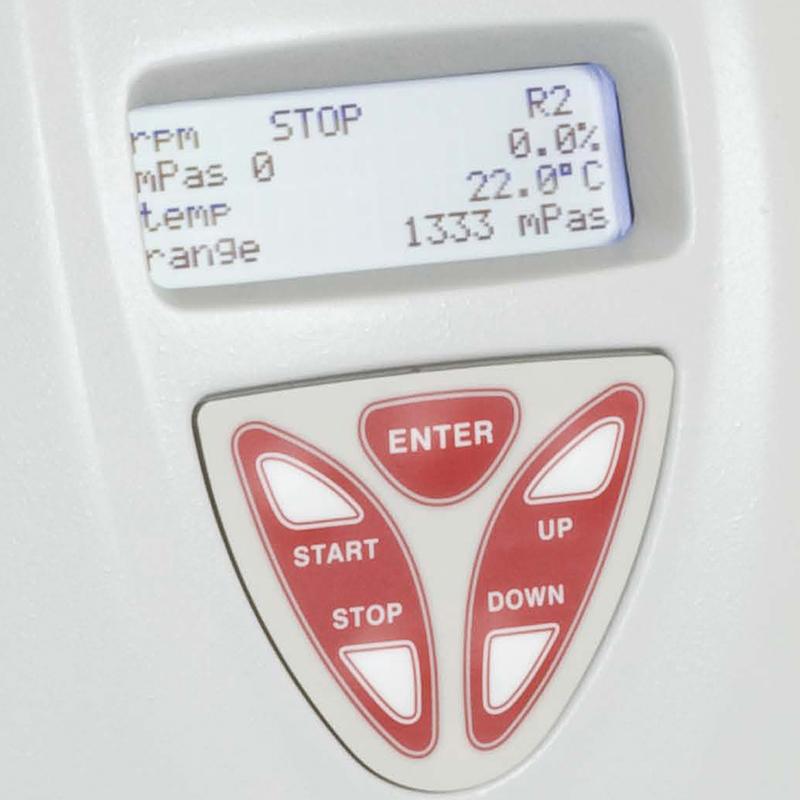
A Rotational Viscometer determines the viscosity of a liquid by measuring the resistance of the liquid to a rotating body (usually a rotor) at a certain rotational speed. Viscosity is a measure of the internal friction of a liquid and reflects its flow properties. For WPUA, the viscosity not only affects the processability of the adhesive, but also its coatability, leveling and final mechanical properties after curing. Therefore, accurately determining and controlling the viscosity of the adhesive can ensure the stability and reliability of the product in practical applications.
2. Application of Rotational Viscometer in WPUA
2.1 Application in adhesive formulation optimization
The viscosity of a waterborne polyurethane adhesive can be affected by a variety of factors, such as solids content, molecular weight distribution, hard-to-soft ratio, and the type and amount of additives. During formulation optimization, Rotational Viscometers enable researchers to quickly evaluate the rheological properties of adhesives under different formulations. For example, by adjusting the ratio of polycarbonate diols (PCDL) and isophorone diisocyanate (IPDI), the hard segment content of WPUA can be affected and thus its viscosity can be changed. Rotational viscometers provide accurate viscosity data to inform formulation adjustments and help researchers optimize product performance.
2.2 Quality control in the production process
In the WPUA manufacturing process, Rotational Viscometers are often used to inspect the viscosity of adhesives in-line to ensure consistent performance under different conditions from batch to batch. The production of waterborne polyurethane adhesives involves complex chemical reactions, and changes in the viscosity of the emulsion can indicate whether the reaction is proceeding properly. For example, if the viscosity increases suddenly during the reaction, it may indicate that some components in the system are over-cross-linked and the reaction rate is too fast. Conversely, if the viscosity decreases, it may indicate insufficient emulsion stability.
2.3 Application in the construction process of adhesive
In practical applications, the viscosity of WPUA directly affects the convenience of construction. If the viscosity is too high, it will be difficult for the adhesive to be evenly coated, which will affect the bonding effect. If the viscosity is too low, it may cause the glue to sag, making it difficult to form a uniform film. Therefore, during the construction of WPUA, the Rotational Viscometer can help the applicator adjust the dilution degree of the adhesive to ensure that it has good application performance.
3. Interpretation of Rotational Viscometer test results
The determination of the viscosity of a waterborne polyurethane adhesive by a Rotational Viscometer is often analyzed in conjunction with factors such as temperature, rotational speed, and sample condition. Since WPUA is a complex heterogeneous system, viscosity can be affected by the particle size, uniformity of dispersion, and molecular chain structure of the emulsion. In general, low viscosity means good flow and coatability, suitable for spray or brush applications; Higher viscosity, on the other hand, may exhibit better film strength and durability for applications that require high mechanical properties.
In addition, the results of the Rotational Viscometer can be combined with other performance test data, such as peel strength, tensile strength, etc., to further reveal the relationship between viscosity and the final performance of the adhesive. For example, in the peel strength test of WPUA, the appropriate viscosity ensures that the adhesive is evenly distributed across the surface of the substrate, resulting in a good bond.
Rotational viscometers play an important role in the development, production and application of waterborne polyurethane adhesives. Through viscosity determination, researchers can better understand the rheological properties of adhesives and optimize their formulations to ensure product consistency and stability in production and application. At the same time, the Rotational Viscometer also provides a basis for the performance control of adhesives in the construction process. In the future, with the continuous development of WPUA technology, the application of Rotational Viscometer in the field of adhesives will be more extensive, helping the industry to develop in a greener and more environmentally friendly direction.
- 1Rotational viscometer - principle, classification, application and calibrating
- 2Application of NDJ-8S digital Rotational Viscometer in viscosity measurement of cosmetic raw materials
- 3NDJ-5S digital Rotational Viscometer accurate measurement of natural oil viscosity
- 4Application of HBDV-1H swirl/spin High Temperature Viscometer in Viscosity Determination of Plastic Particles
- 5Rotational viscometer selection guide: How to choose the right viscosity equipment for you?
- 6Principle, type and accuracy control of Rotational Viscometer
- 7Which Viscometer to Choose for Licorice Extract Viscosity Testing? How to Test?
- 8Application of Rotational Viscometer in cellulose material
- 9Application and selection of digital Rotational Viscometer in polyethylene (PE) wax