Technical analysis of film 180 ° peel strength test
In the application of adhesives, bond strength is one of the core indicators to measure the performance of adhesives. The peel strength test is an important means to evaluate the adhesion performance of adhesives, and the 180° peel strength test is widely used because it simulates the peel behavior in the real use environment. This article will introduce in detail the principle, test method and application of 180° peel strength test of adhesive film in waterborne polyurethane adhesives.
1. 180° peel strength test principle
The 180° peel strength test is an experimental method in which two materials are bonded and a part of the material is peeled off and a force is applied. In the test, one end of the substrate remains fixed and the other end is peeled off from the fixed surface at a 180° angle, and the adhesive properties of the adhesive are evaluated by measuring the force required during the peeling process. This method can reflect the adhesive bonding reliability and durability under actual use conditions.
The formula for calculating the peel strength is as follows:
F=P/L
where F is the peel strength, P is the force applied during the peel process, and L is the width of the film. In this way, the required peel force per unit width can be obtained to evaluate the adhesive's adhesion properties.
2. Test standards and equipment
The 180° peel strength test usually refers to the national standard GB/T 2790-1995 "Test Method for 180° Peel Strength of Adhesives", which specifies the steps and requirements of the test in detail to ensure the accuracy and comparability of the test data. In addition, ASTM D903 is a standard commonly used internationally.
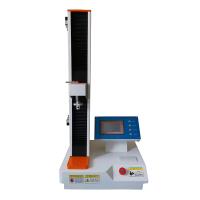
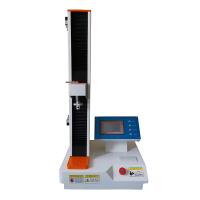
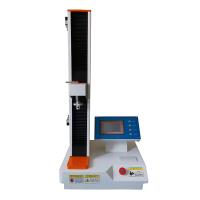
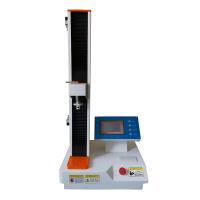
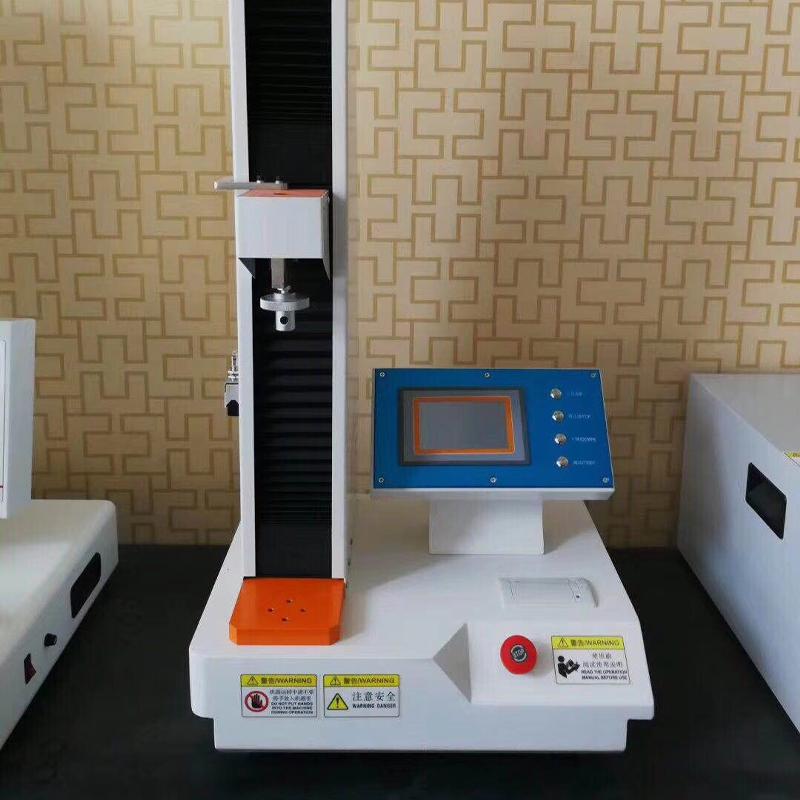
The test equipment is mainly an electronic universal testing machine, which can accurately control the peel rate and record the applied peel force in real time. Commonly used equipment includes the CMT4304 electronic universal testing machine manufactured by Metersi Industrial Systems Co., Ltd. in CHINA, which provides high-precision peel strength measurement with convenient data processing.
3. 180° peel strength test steps
3.1 Preparation of Materials
Before testing, it is necessary to first select the appropriate substrate and adhesive film to be tested. In the test of waterborne polyurethane adhesive (WPUA), PU sheet or non-woven fabric is often used as the substrate. These substrates provide a stable surface to ensure a uniform bond to the adhesive film.
3.2 Spline preparation
According to the test standard, the adhesive film to be tested is cut into 200mm×25mm splines. The substrate needs to undergo appropriate surface treatments, such as cleaning and degreasing, to ensure the accuracy of the test results. A certain amount of WPUA glue is evenly coated on the substrate, dried and solidified to form a glue film.
3.3 Testing Process
The film-coated substrate is placed in the fixture of the testing machine and the other end is fixed with the fixture of the testing machine to form a 180° angle. Stretch at a rate of 100 mm/min, peel off the adhesive film, and record the force applied during the peeling process. In order to ensure the reliability of the data, each set of samples is usually tested in parallel five times and averaged for analysis.
3.4 Data analysis
At the end of the test, the peel strength is calculated according to the formula, and the results can be used to measure the bonding effect of the adhesive. The higher the peel strength, the stronger the adhesive and the better the adaptability. In addition, by observing the state of the adhesive film after peeling, researchers can further analyze the failure modes of the adhesive, such as adhesive failure, substrate failure, or interface failure.
4. Application of 180° peel strength test in waterborne polyurethane adhesive
Waterborne polyurethane adhesives have been widely used in automobiles, construction, electronics and other fields in recent years due to their environmental protection and low VOC emissions. However, compared with traditional solvent-based adhesives, WPUA still lags behind in terms of bond strength. As a result, the 180° peel strength test has become a key indicator of WPUA performance.
By changing the formulation of waterborne polyurethanes, such as adjusting the content of the hard segment and adding epoxy resins or other reinforcements, researchers can optimize the peel strength of the adhesive. For example, in formulation optimization experiments, an increase in the content of the hard segment often increases the peel strength because the stiff segment increases the rigidity of the adhesive film and the strength of the bond interface. The introduction of epoxy resin can improve the durability and anti-aging performance of the adhesive film, and further improve the peel strength.
In addition, the 180° peel strength test can be used to evaluate the water and heat resistance of waterborne polyurethane adhesives. In prolonged exposure to water or high temperatures, the performance of the adhesive may deteriorate. The stability and service life of adhesives can be evaluated by testing the peel strength of adhesive films after water immersion or high temperature treatment.
The 180° peel strength test is an important tool to evaluate the adhesion performance of adhesives, especially in the development and application of waterborne polyurethane adhesives, which can provide a scientific basis for the optimization and improvement of adhesive performance. The test method is simple, reproducible, and suitable for a wide range of substrates and applications. In the future, as WPUA is applied in more industries, 180° peel strength testing will continue to play an important role in driving the advancement of adhesive technology.