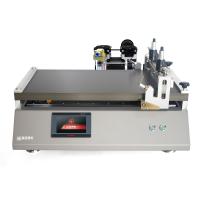
Application of doctor blade coater in electrode and solid electrolysis preparation
In the research of modern solid-state batteries, the preparation method of electrodes and solid-state electrolytes plays a key role. To improve the mechanical strength and stepping properties of solid electrolytes, it is essential to optimize their preparation processes. This experiment is based on lithium iron phosphate. (LiFePO4) is a piezoelectric material, and a solid electrolyte was prepared and tested using scraper coater technology. The preparation method and test of the electrode and solid electrolyte for this experiment will be described in detail below.
1. Preparation method of electrode
The preparation of electrodes is critical to the cycling performance of solid-state batteries. In this experiment, lithium iron phosphate (LiFePO4) was used as the active material of the electrode, polyethylene oxide (PEO) was used as the base agent, conductive carbon black (Super P) was added as the conductive agent, and lithium salt (LiTFSI) was introduced to improve the conductivity. The proportions of each component in the electrode were as follows: LiFePO4 accounted for 60% of the total mass, PEO accounted for 20%, Super P accounted for 12%, and LiTFSI accounted for 8%.
1. Preparation process of electrode slurry
The preparation of the electrode slurry first requires a certain amount of acetonitrile solution to be weighed in proportion to dissolve polyethylene oxide (PEO). In the experiment, the weighed PEO was slowly added to acetonitrile, and the stirring solution was completely dissolved on the stirring table, and the distal LiFePO4 and Super P were added to the stirred PEO electrolyte in turn, and the stirring was continued until uniform.
Due to the water absorption nature of LiTFSI, the subsequent operation of the slurry needs to be carried out in an oxygen-free and anhydrous environment. Therefore, the whole process needs to be completed in the glove box, where LiTFSI is added and stirred thoroughly, and the stirring is continued for 24 hours to ensure the homogeneous mixing of all parts. The resulting electrode slurry is used in the subsequent welding process.
2. Coating process of electrode slurry
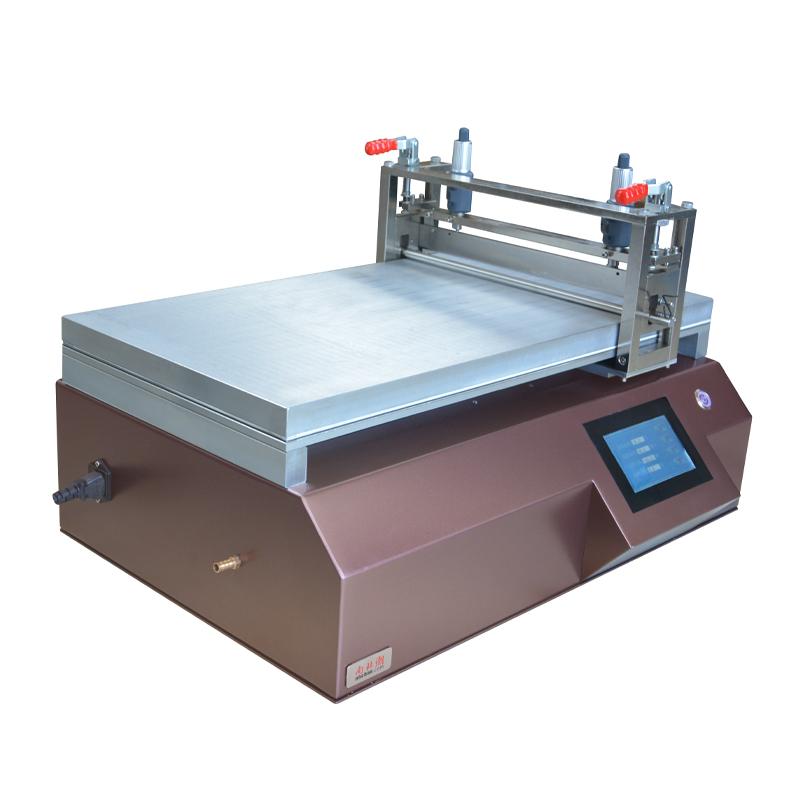
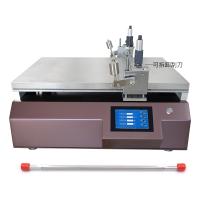
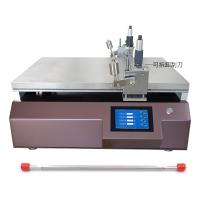
In the coating process of the electrode slurry, the squeegee coater is first adjusted to a horizontal state, and the adsorption capacity of the coater is enhanced with A4 paper. In the experiment, coated carbon aluminum foil was selected as the liquid collection of the electrode. In order to obtain a uniform coating cloth thickness, adjust the height of the squeegee to 400 microns, and then pour the coater slurry evenly over the aluminum foil. The coater moves at a constant speed at a low speed to ensure that the coater slurry is evenly coated on the surface of the aluminum foil. After the coating is completed, the coated electrode is dried in a Drying Oven for 24 hours for later use.
3. Electrode cutting and preservation
After drying, the electrode needs to be further cut. The cutting machine cuts the electrodes into round poles with a radius of 6 mm, and ensures that each pole piece is intact. According to experiments and literature research, the active material loading of the electrode is controlled at about 1.8 mg/cm² to ensure the good performance of the battery.
Due to the water absorption characteristics of LiTFSI, the cut electrodes need to be preserved. In the experiment, the cut electrodes need to be occupied in the glove box or vacuum Drying Oven to ensure an oxygen-free and water-free environment to prevent its water absorption and performance degradation.
2. Preparation method of solid electrolyte
The solid electrolyte in this experiment was mainly PVDF-based Li2W2O7, which was prepared by spraying process. The preparation process of solid electrolytes also requires precise operation and strict environmental control to ensure their stability and good performance.
(1) First, add a certain amount of NMP solution to the empty bottle with a stirrer. Next, weigh the PVDF powder in the set ratio and slowly pour the PVDF powder into it while stirring the solution, so as to prevent the powder from sticking to the inner wall of the bottle.
(2) After the PVDF powder is completely dissolved in the solvent, Li2W2O7 powder is added in the same way. Make sure that there are no visible powder particles in the container, i.e. the Li2W2O7 powder is completely dissolved. Once dissolved is complete, place the entire container in a glove box and prepare it for vacuuming.
(3) Because LiTFSI has the property of absorbing water, this step should be operated in a glove box. Weigh a certain amount of lithium salt, then add it to the previous bottle and stir for 24 hours.
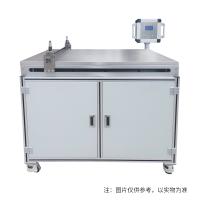
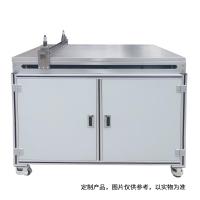
(5) Next, adjust the coating machine to a horizontal position and calibrate it with a spirit level to ensure that it is really level. Then, a clean, flat glass plate is placed on the coater and ready to be coated. When applying, ensure that the thickness of the solid electrolyte is as uniform as possible, generally between 500 microns and 700 microns. After coating, quickly put the glass plate into the vacuum Drying Oven, adjust the pressure in the oven to below 0.03 Mpa, set the temperature of the oven to 60°C, and set the drying time to 24 hours.
(6) Finally, a smooth plastic film is used as the carrier of the solid electrolyte. The plastic film is placed flat on the applicator, the solid electrolyte is removed, the film is quickly applied and the excess air is squeezed out. Then, the solid electrolyte with the film is put into the glove box to ensure that it is in an oxygen-free and anhydrous environment, so as to maintain its stable and excellent performance.
3. Experimental results and discussion
In this experiment, an all-solid-state battery with lithium iron phosphate (LiFePO4) and PVDF-based Li2W2O7 solid-state memory was finally prepared by optimizing the preparation of electrodes and solid-state memory. The test proves that through reasonable formulation design and coating process, the prepared electrodes and oxides show significant improvement in mechanical strength, electrochemical properties and cycling stability. The electrode material has been optimized in terms of conductivity and structural stability, while the ionic conductivity of the oxide medium and the stability of the battery interface have also been significantly improved.
Tips: The content of this article refers to the "Preparation and Performance Research of Polymer Ceramic Composite Electrolytes for Lithium-ion Batteries".》- Yu Yuandong




- 1Kinetic control of silicon carbon cathode Spreader drying: key technology to solve crazing and powder drop
- 2Application and selection of laboratory coater in PDMS thin film prepative
- 3Application case of Bar Coater coating slurry on small workpiece ceramic substrate [Experimental video demonstration]
- 4Laboratory Technology and Application of Polyvinyl Alcohol Film Coating on Ultrafiltration Membrane
- 5Several Common Experimental Spreader Methods and Their Applications
- 6Application of laboratory coater coating aluminum oxide paste on PET film
- 7Experimental test of performance of epoxy resin film coated on metal iron plate by small coater
- 8Method and application of experimental coater coating water-based slurry on aluminum foil
- 9Application of wire rod coater in hydrogen battery separator prepative