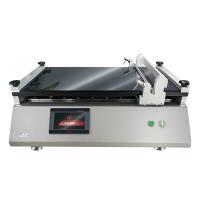
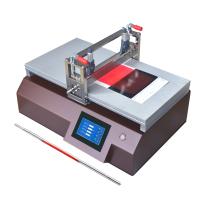
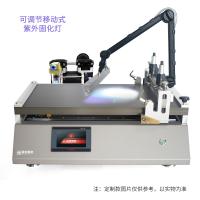
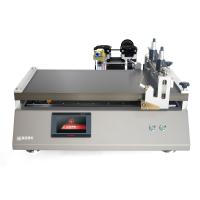
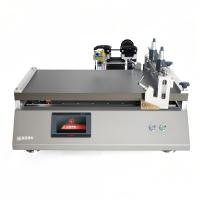
Application of Automatic Film Applicator in preparing fluorescent diaphragm
Abstract:With the wide application of fluorescent materials in display technology, sensors, optoelectronic devices and other fields, the preparation technology of fluorescent films has received more and more attention. As an efficient and accurate coating preparation tool, the automatic film coating machine has important application value in the preparation of fluorescent films. In this paper, the working principle, operation method, technical parameters and application of the automatic film coating machine in the preparation of fluorescent film will be discussed in detail, and the technical problems and solutions that may be encountered in the experimental process will be discussed. Through these contents, some feasible references and guidance are provided for the preparation techniques of fluorescent films.
1. Introduction
As an important optoelectronic material, fluorescent film has been widely used in many fields such as backlights, optical sensors, and display devices. As the application of fluorescent diaphragms continues to expand, so do the requirements for their quality. In particular, the uniformity of the coating, the thickness control and the optical properties directly determine the final application effect. Therefore, how to efficiently and accurately prepare fluorescent films that meet the requirements has become the focus of technical research.
As a modern production equipment, the automatic film coating machine has been widely used in the preparation of fluorescent films with its characteristics of high efficiency, automation and precise control. It can realize the automatic control of the coating process, effectively improve the uniformity of the film layer, reduce the error caused by manual operation, and then improve the production efficiency and quality of the film.
2. The working principle of the automatic film coating machine
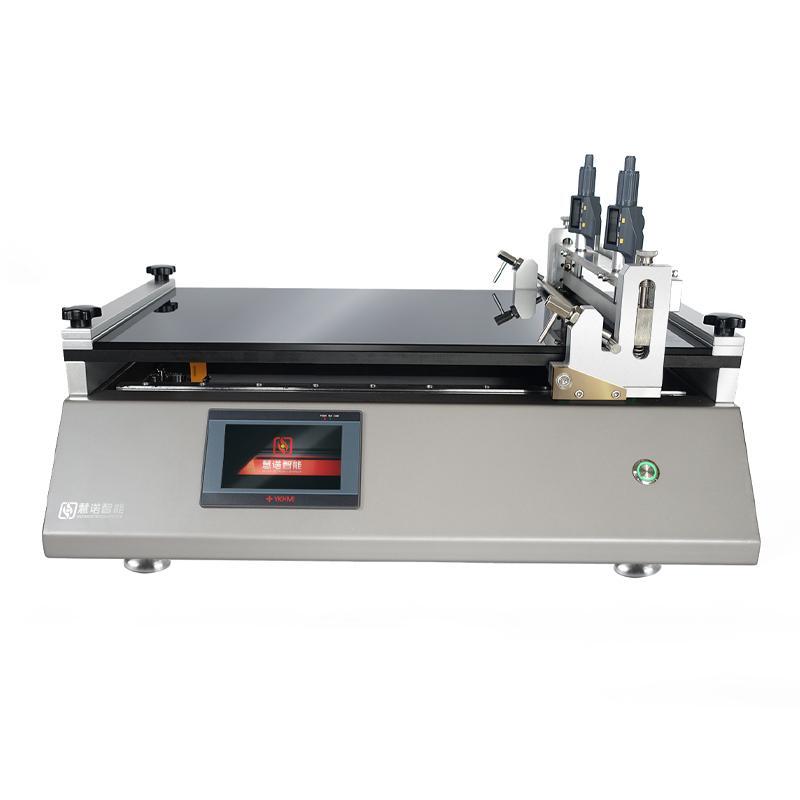
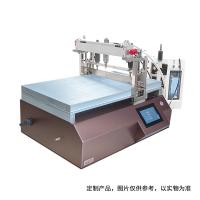
The main function of the automatic Film Applicator is to evenly coat the liquid paint on the surface of the substrate to form a thin film. The working principle of the film coater usually includes the transfer of liquid paint, the coating of the substrate surface, the drying and curing, and the inspection of the film layer.
Automatic Film Applicators are usually equipped with a precise pumping system to convey the formulated fluorescent paint from the storage tank to the applicator head. The viscosity, particle size, and other performance requirements of the coating are controlled by the formulation process of the coating. In addition, after the substrate is fixed on the coater, it is necessary to ensure that its surface is flat to prevent unevenness of the film layer during the coating process.Depending on the coating method, the relative movement between the coating head and the substrate of the automatic film coater is also different. Common coating methods include blade coating, roller coating, spraying, etc. The applicator head evenly applies the liquid paint to the surface of the substrate according to the set speed and pressure.After coating, the coating needs to be dried or cured to remove the solvent and improve the stability of the film. Commonly used drying methods include hot air drying and UV curing, where UV curing technology can greatly increase the drying speed and is suitable for coatings that require fast curing.After coating and curing, it is often necessary to test the film thickness, film uniformity, and optical properties to ensure that the prepared fluorescent film meets the design requirements. Common inspection methods include the use of laser Thickness Gauges, surface profilers, and optical performance testing equipment.
3. Classification and selection of automatic film coating machine
According to different coating methods, automatic film coating machines can be divided into several types, including doctor blade coaters, roller coaters, spraying machines, and Spin Coaters, etc. Each type of Film Applicator has different advantages and disadvantages in different application scenarios.
1) Scraper coater
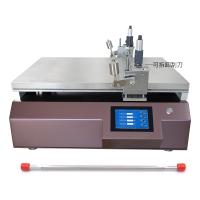
The squeegee coater controls the thickness of the coating through the gap between the squeegee blade and the surface of the substrate, which is suitable for coatings with high viscosity and can obtain a more uniform film layer. This type of equipment is typically used for the preparation of fluorescent diaphragms that require a thicker layer.
2) Roller coater
Roller coaters use the friction between the coating rollers and the substrate to apply liquid paint. It is suitable for coating lower viscosity coatings, with good coating uniformity and high production efficiency, and is suitable for large-scale production.
3) Spraying machine
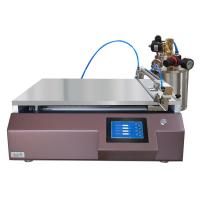
The sprayer atomizes the paint through the nozzle and sprays it onto the surface of the substrate, which is suitable for coating complex shapes of substrates. It has the advantage of being able to achieve high coating accuracy, but it requires high particle size of the paint and is easy to cause paint waste.
4) Spin Coater
The Spin Coater fixes the substrate on a rotating platform and scatters the paint on the surface of the substrate through high-speed rotation, which is suitable for film coating. Spin Coaters are capable of achieving very homogeneous thin film coatings and are often used to prepare fluorescent films with high optical performance requirements.
4. Preparation process of fluorescent film
The preparation process of fluorescent films typically includes steps such as coating formulation, coating process, drying and curing, and layer quality inspection. The fine control of each link directly affects the quality of the final product.
1) The coating of fluorescent film is usually composed of phosphor, resin, solvent and some additives. Phosphors are a key component in determining the optical properties of the film, resins are used as binders, and solvents are used to adjust the viscosity of the coatings. In order to ensure the uniformity of the film and the high-quality optical effect, the formulation process of the coating needs to strictly control the proportion and dispersion of each component.
2)In practice, the coating process is a key factor in the quality of fluorescent films. During the coating process, the viscosity of the coating, the moving speed of the substrate, and the coating pressure will all affect the uniformity and thickness of the film. Typically, the coating process is optimized by adjusting parameters such as the speed and pressure of the coater, as well as the viscosity of the coating, to ensure the quality of the film.
3)The coated film needs to dry quickly to remove the solvent and solidify the film. For diaphragms with solvent-based coatings, hot air drying is common, while for UV-curable coatings, UV curing can provide a faster cure. Different drying methods have a direct impact on the quality, homogeneity and optical properties of the coating.
4)Once the preparation is complete, the fluorescent diaphragm needs to be inspected for quality. The uniformity of film thickness, fluorescence brightness, chromaticity, etc. are all important indicators to evaluate the quality of the film. Common methods for measuring film thickness include laser Thickness Gauges or surface profilers, while optical performance is measured by devices such as fluorescence photometers and Colorimeters.
5. Key points and precautions of experimental technology
In the process of fluorescent film preparation using an automated Film Applicator, the accuracy of the experimental operation is crucial. The following are the technical points that need special attention:
1) Preparation of coatings
In order to ensure the uniformity of the coating, it is necessary to ensure the dispersion of phosphors and other components. A common method is dispersion by ultrasonic or high-speed agitation. In addition, the viscosity and rheology of the coating have a significant impact on the coating quality, and the viscosity of the coating must be adjusted by controlling the solvent ratio.
2) Control of the coating process
During the coating process, the coating speed and pressure need to be precisely controlled. If the coating speed is too fast or too slow, it can lead to uneven film thickness or bubbles. Coating pressure control is also crucial, as too much pressure can lead to too thick a film or loss of paint.
3) Optimization of drying and curing processes
In the drying and curing process, temperature and time control are crucial. Too high a drying temperature may cause shrinkage or cracks of the film, while too low a temperature may cause the solvent to not fully volatilize, affecting the stability of the film.
6. Conclusion
The automatic film coater plays an important role in the preparation of fluorescent films, and can significantly improve the uniformity, stability and optical properties of the film by selecting the coating method reasonably, accurately controlling the coating parameters and optimizing the drying and curing process. In future research and application, further optimization of the performance and process parameters of the automatic film coating machine, combined with the characteristics of new fluorescent materials, will help improve the preparation efficiency and quality of fluorescent films, and promote its wide application in more fields.
- 1How Flat Film Applicators Can Build a New Generation of Functional Materials on Fabrics
- 2NVP anode film FAQ and solution
- 3Application of laboratory coater in LED fluorescent film Spreader
- 4Application Technology of Laboratory Film Applicator in Dielectric Thin Film
- 5Comparison of Advantages and Disadvantages of Three Heating modes for Laboratory Film Applicators
- 6Application and selection of laboratory coater in PDMS thin film prepative
- 7Scraping machine selection case: film substrate large size high accuracy scraping solution
- 8Application of Film Applicator in PEM Research and Preparation
- 9Application of Film Applicator in PVDF-HFP Material Research