Laboratory oven type principle fault problem maintenance
Laboratory oven is one of the common equipment in the laboratory, which is widely used in chemistry, biology, medicine, food, material science and other fields. It is mainly used for heating, drying, curing and other treatments of samples to meet different experimental needs. The oven provides a stable temperature-controlled environment to ensure consistent sample handling conditions during the experiment, resulting in accurate and reliable experimental data.
Laboratory ovens play a vital role in scientific research and industrial production. In the field of scientific research, it helps researchers complete experiments such as drying, sterilization, and heat treatment of substances, and supports the accuracy and reproducibility of experimental data. In industry, ovens are used in mass production to ensure the quality and stability of products. Therefore, laboratory ovens are not only an important tool for scientific research, but also an indispensable equipment in all kinds of production lines.
Types of laboratory ovens
According to the different working principles and functions, laboratory ovens can be mainly divided into three types: ordinary ovens, Forced Air Drying Ovens and vacuum Drying Ovens.
Ordinary ovenIt is the most basic type of oven, which is usually heated by resistance wire and heated by natural convection. It is suitable for experiments that do not require high temperature and have no special requirements for material drying. The structure of ordinary ovens is simple and easy to use, but due to the lack of a circulating system of fans, there may be some unevenness in temperature distribution.
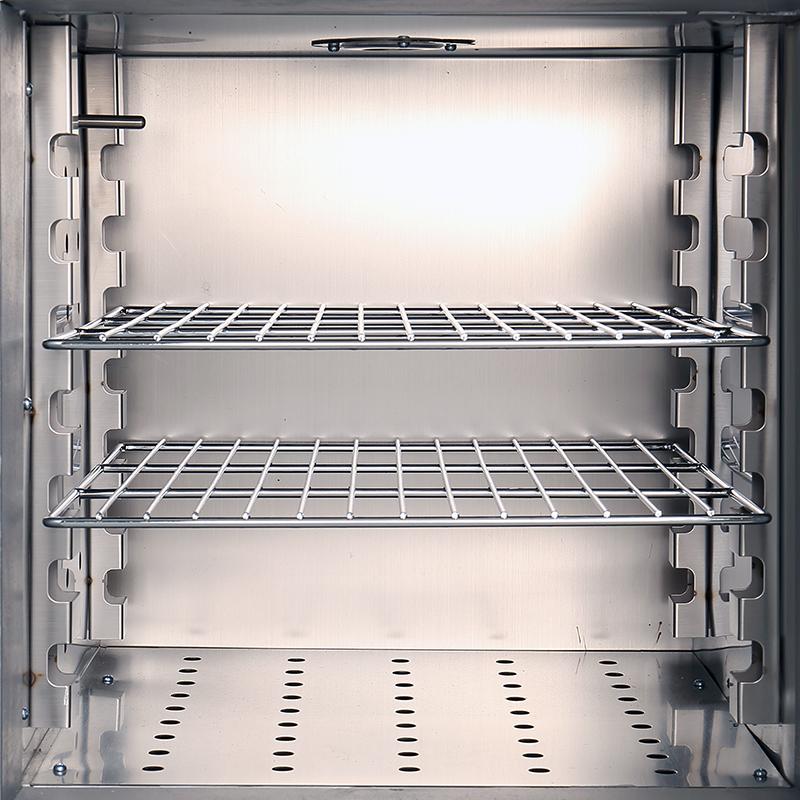
Blower Drying OvenThe built-in fan evenly circulates the hot air in the chamber, resulting in fast drying and temperature uniformity. This kind of oven is suitable for experiments that require higher temperature control accuracy and faster drying speed, and is widely used in chemical analysis, material testing and other fields. Through the action of the fan, the moisture and volatile substances on the surface of the material can be carried away more quickly, thus improving the drying efficiency.
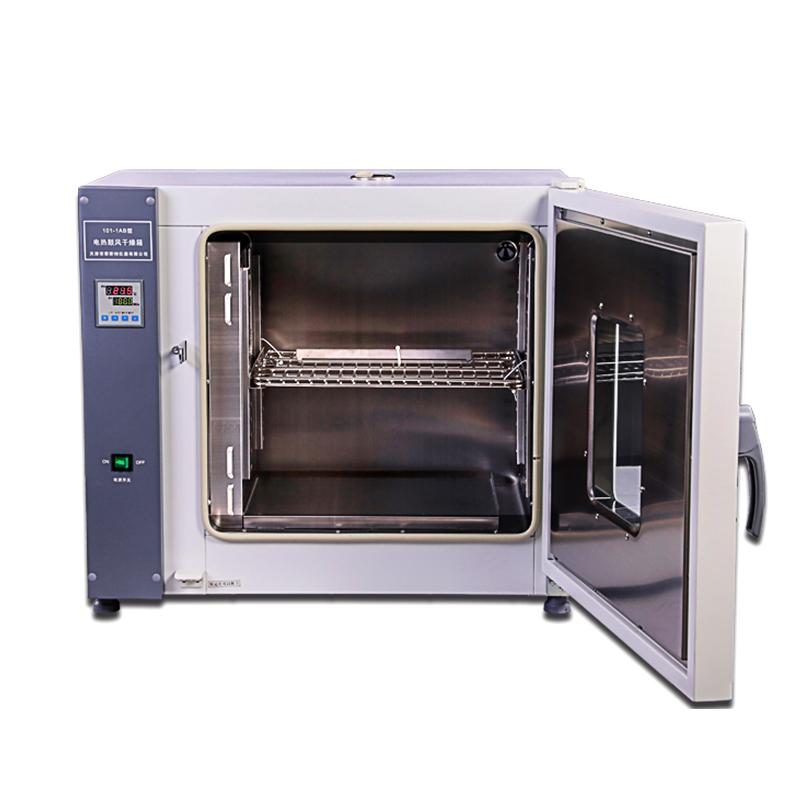
Vacuum Drying OvenThe air in the box is pumped out by the Vacuum Pump, so that the box reaches a low-pressure environment, so as to reduce the boiling point of the moisture and solvent in the material, so that it can be separated from the surface of the material at a lower temperature. Vacuum Drying Ovens are suitable for materials that are sensitive to temperature or are prone to oxidation, and can avoid chemical reactions or physical deformation caused by high temperatures. It is often used in pharmaceutical, food, chemical and other industries, especially for the drying needs of delicate samples.
How the oven works
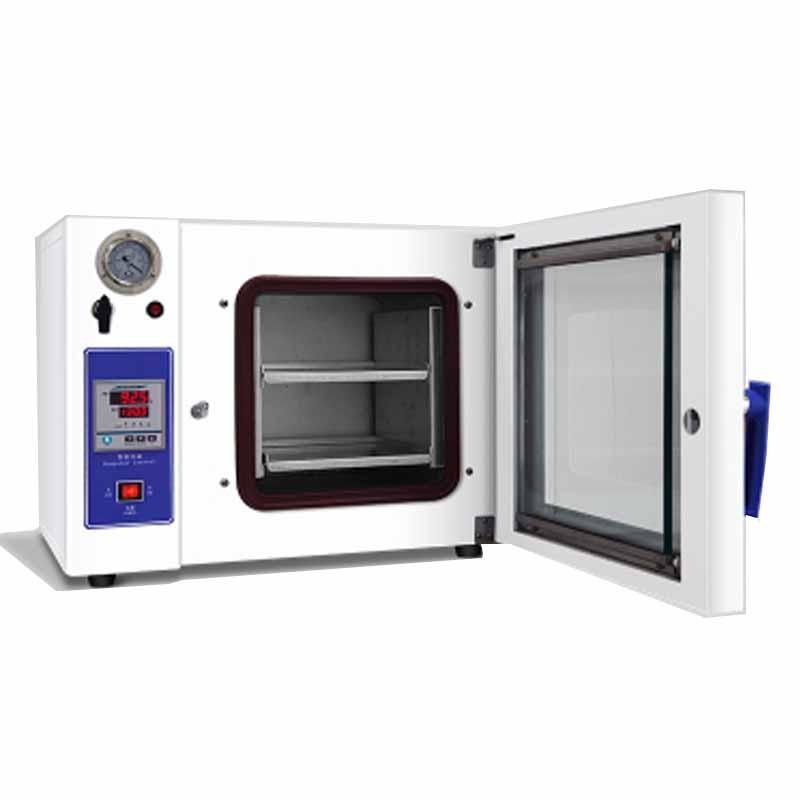
The working principle of the oven mainly relies on the heat energy conversion of the heating elements, as well as the different ways of air circulation to achieve drying. The principle of electric heating is a common way, usually using resistance wires or electric heating tubes to convert electrical energy into heat energy, by conducting the air inside the heating oven. When the air is heated, it transfers heat to the material inside the oven, helping it evaporate the moisture. The temperature of the heating element can usually be adjusted as needed to control the temperature inside the oven.
In some ovens, especially Forced Air Drying Ovens, circulating fans play a vital role. The fan circulates the air forcedly so that the hot air is evenly distributed in the oven. This air circulation avoids temperature inhomogeneity and ensures that all parts of the material are heated evenly. At the same time, the fan also helps to carry away the water vapor evaporated from the surface of the material, thus speeding up the drying process. The use of circulating fans significantly improves the drying efficiency and temperature control accuracy of the oven.
The drying principle in vacuum relies on a low-pressure environment to speed up the drying process of the material. When the air in the oven is pumped away by the Vacuum Pump, the air pressure in the oven drops to below the atmospheric pressure, so that the boiling point of the moisture and solvent in the material is reduced. In this low temperature environment, the moisture of the material can evaporate quickly at a lower temperature, thus avoiding the chemical reactions or physical changes that can occur at high temperatures. Vacuum drying is suitable for the drying of temperature-sensitive or oxidized substances, such as pharmaceuticals, food and precision instruments.
Precautions for use
Placement requirements
Laboratory ovens should be placed in a well-ventilated, dry environment away from moisture or extreme temperatures.
The oven should be placed on a stable table or ground to ensure the stability of the equipment and avoid affecting the normal operation of the oven due to vibration or tilting.
Keep at least 30 cm of space around the oven to ensure air circulation and even heat distribution.
Inspection and maintenance before and after use
Before use, check whether the power cord, plug and socket are in good condition, make sure the grounding wire is normal, and prevent leakage or short circuit.
Regularly check whether the heating elements, temperature control system and fans of the oven are working properly to avoid equipment failure affecting the experimental results.
After use, clean up the residue in the oven in time to avoid the accumulation of dust and debris, which will affect the performance and hygiene of the equipment.
It is forbidden to put flammable and explosive materials
It is strictly forbidden to put flammable, explosive and volatile items into the oven for drying to prevent fire or explosion accidents.
For materials with special chemical properties, the appropriate type of oven (such as vacuum Drying Oven) should be selected and used in strict accordance with the operating procedures.
Common problems and troubleshooting
Common causes and solutions for oven not heating
| Power issues | Check that the socket and power cord are well connected to make sure the power supply is normal. If there is no power to the outlet, try replacing the outlet or checking if the fuse is burned out. |
| Faulty heating tubes | Check whether the resistance value of the electric heating pipe is normal, if the electric heating pipe is damaged, you need to replace it with a new heating pipe. |
| The thermostat is malfunctioning | Check that the thermostat is working properly, if the thermostat is malfunctioning, it may not be able to heat. Replace the thermostat to restore normal function. |
| Fan failure | For Forced Air Drying Ovens, check whether the fan is rotating. Damage to the fan will affect the circulation of hot air, resulting in uneven heating of the oven and the fan needs to be repaired or replaced. |
A treatment method with unstable temperature control
| The thermostat is not set properly | Check that the thermostat set temperature is reasonable to ensure that the thermostat is working properly and set correctly. If the setting is not correct, reset the temperature. |
| The temperature sensor is faulty | Check if the temperature sensor is faulty, damaged or incorrectly positioned can cause inaccurate temperature readings. The temperature sensor needs to be repaired or replaced. |
| The heating element is damaged | If the heating element is partially damaged or works unsteadily, it can cause temperature fluctuations. Damaged heating elements need to be inspected and replaced. |
| Ambient temperature influences | Temperature changes in the environment in which the oven is located may also affect the stability of its internal temperature, ensuring that the oven is placed in a constant temperature and well-ventilated environment. |
Routine maintenance and upkeep
| Maintenance projects | content | Precautions |
| Regular cleaning and inspection | Clean the inside and outside of the oven, especially the heating elements, air ducts and exhaust ports. | Avoid using corrosive cleaners and make sure the power is cut off when cleaning. |
| Regularly inspect key components such as power cords, plugs, temperature controllers, fans, etc., to ensure that they are not damaged or aged. | Regularly inspect and replace damaged cables or connectors to ensure that electrical connections are secure. | |
| Replace consumable parts | Replace aged or damaged heating tubes to ensure heating effectiveness. | Damage to the heating tube may lead to a decrease in heating efficiency and should be checked regularly. |
| Check and replace the fan and other components to ensure that the fan is running normally and that the temperature in the box is uniform. | Regularly inspect the blades and bearings of the wind turbine to prevent dust accumulation from affecting the performance of the fan. | |
| Debugging of temperature uniformity | Use a temperature sensor to measure the temperature at different locations to ensure that the temperature is evenly distributed. | When the temperature difference is too large, check the operating status of the air duct or fan and adjust the working mode. |
| Calibration of temperature uniformity is carried out regularly to ensure that the oven is in optimal working condition. | Temperature calibration should follow the manufacturer's recommended calibration cycle and record the results of each calibration. |
In short, as an indispensable equipment in laboratory and industrial production, the performance and service life of laboratory ovens are closely related to daily maintenance and maintenance. Regular cleaning, inspection, and timely replacement of consumable parts ensure proper operation and temperature uniformity of the equipment, thereby improving the accuracy and efficiency of the experiment. Following the correct use and maintenance methods can not only prolong the service life of the oven, but also reduce the probability of failure and ensure the safety and stability of the experimental process. Regular commissioning and calibration work is also key to ensuring the accuracy and performance of the oven. Therefore, scientific maintenance is not only a necessary means to ensure the performance of equipment, but also an important guarantee to improve the quality of laboratory work.
- 1How to choose the right oven for the laboratory?
- 2Application, use and selection method of laboratory oven
- 3Types and uses of laboratory ovens
- 4Types of hot Air Ovens and their applications in various industries
- 5How to choose the right laboratory oven?
- 6Classification and typical application of laboratory ovens