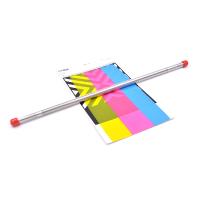
Technology and application of bar prepative template
Wire reel preparation is a critical operation in the study and application of coatings, inks, and other coatings. It is mainly used for product quality control, research and development of new products, and the production of customer acceptance samples. Wound rod coating is particularly suitable for materials with viscosities in the viscosity range of 1 to 1000 mPa.s and retains good flow after coating. By accurately calculating and selecting the appropriate winding rods, it is possible to prepare a coating sample with uniform thickness and in accordance with the standard to meet different testing needs.
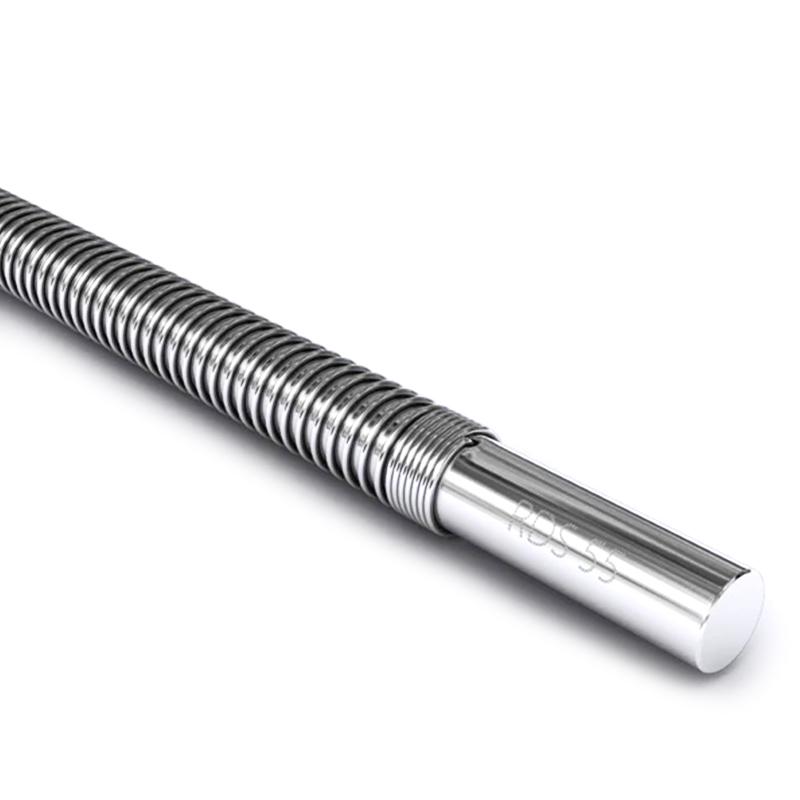
Rationale and calculation method
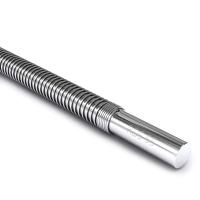
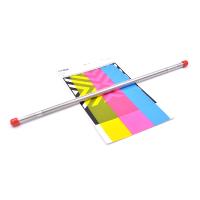
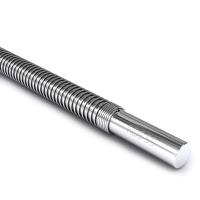
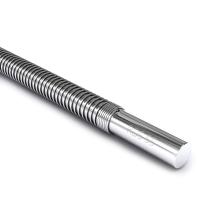
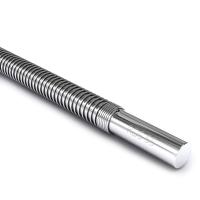
The wire reel is coated with paint through its coil part, and the thickness of the coating can theoretically be calculated based on the wire diameter. The thickness formula of the coating is T = 0.107D, where T represents the thickness of the coating and D is the wire diameter of the winding rod. In practice, the coating thickness is usually lost due to factors such as friction and substrate absorption, so the actual formula is adjusted to T = 0.08D.
For example, if the specific gravity of the paint is 1.05 and the solids content is 40%, the thickness of the coating is about 13.4 μm when using a 0.4 mm wire diameter winding rod. This formula helps to accurately select the right coating and coating tools in practice, ensuring that the coating thickness meets the requirements.
Selection & Use
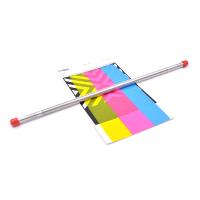
Wire winding rods are available in different wire diameter ranges, typically ranging from 0.05mm to 2.0mm. Choosing the right wire size is critical to controlling the coating thickness. In order to guarantee the reproducibility of the operation, it is recommended to use equipment that can precisely control the speed and pressure of the painting. Especially when testing coating performance, maintaining consistency and reproducibility of coating operations is critical.
In the preparation of the coating sample, the performance of the winding rod should be checked regularly to ensure its stability. If a deviation in the thickness of the coating is detected, the winding rod should be replaced in time and calibrated. In this way, the precision of the coating process and the uniformity of the coating can be guaranteed.
Substrate selection and adaptation of coating equipment
The choice of substrate and the configuration of the coating equipment have a direct impact on the effect of the coating. For example, for different types of paints, the appropriate substrate type should be chosen. For metallic coatings, the magnetic bed can provide a smooth coating environment, while for other special materials, the vacuum bed can ensure the stability of the substrate. The right coating bed and substrate ensure uniformity and improve the adhesion of the coating.
The application of winding rods in production
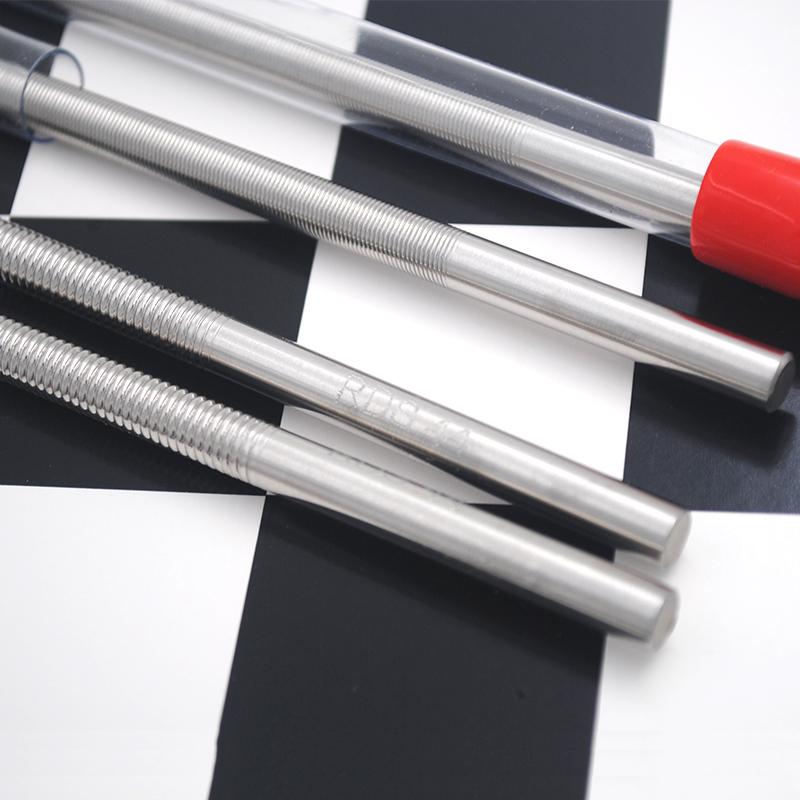
In addition to laboratory research, winding rods are also widely used in industrial production, especially in the manufacture of paints and paper coatings. By changing the number of coils and wire diameter of the winding rod, the weight and thickness of the coating can be precisely controlled to meet different production needs. Winding rods are also commonly used to control the quality of coatings to ensure a consistent quality of the final product.
conclusion
Wire reel preparation is a key technology whose application plays an important role in paint and coating research. Precise coating thickness control and equipment adjustment can produce high-quality samples that meet a wide range of testing requirements. With the development of coating technology, the accuracy and application range of winding rod preparation will continue to expand, providing more support for quality control and product development in the coating industry.