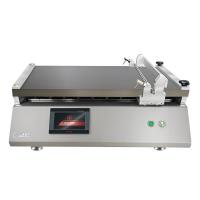
Application of Film Applicator in Cosmetic Base Body
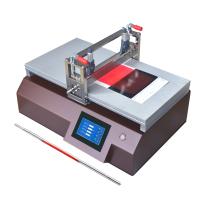
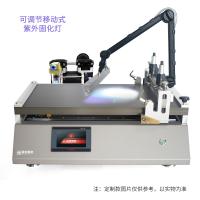
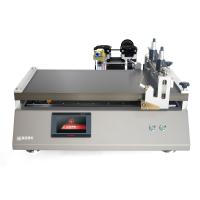
Film applicators play an important role in the application of cosmetic base makeup bodies such as liquid foundation, BB cream, CC cream, etc. It helps researchers and manufacturers scientifically evaluate product performance, optimize formulations, and ensure product quality by evenly applying a makeup base to a specific substrate, such as a skin model or experimental material.
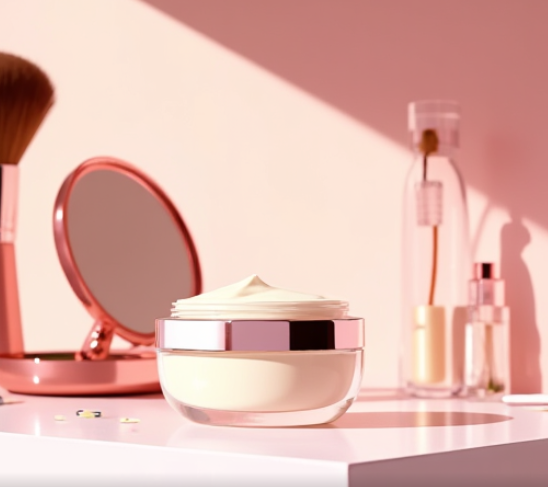
Application of Film Applicator on base makeup
1. Covering power test
The Film Applicator can evenly apply the base makeup product to a substrate that mimics the skin, such as a dark spot model or an experimental material with uneven skin tone, to form a thin, uniform film.The hiding power and uniformity of the product are evaluated by measuring the hiding effect of the film after application (such as the degree of coverage of imperfections such as dark spots and pores).This test can help screen out products that have strong coverage and apply evenly.
2. Durability test
The Film Applicator can evenly apply the base makeup product to the skin model or experimental materials, simulating actual use scenarios (such as prolonged wear, friction, etc.).The durability of the product is assessed by observing how the coating film peels off under different conditions, such as whether it is dull, discolored, or peeling.This testing helps to optimize the formulation and improve the longevity of the base makeup.
3. Waterproof and sweatproof test
The Film Applicator can evenly apply the base makeup product to the skin model, and then simulate the actual use environment by spraying water or adding sweat drops.Observe how the coating film behaves after exposure to moisture and perspiration (e.g., whether it smudges, decolorizes, or loses its hiding power) and evaluates the water and sweat resistance of the product.This testing can help in the development of base makeup products suitable for different climatic conditions.
4. Raw material screening and formula optimization
In the process of base makeup product development, Film Applicators can be used to compare the effects of different raw materials (e.g., powders, adhesives, etc.) on product performance. For example:Compare the effects of powders of different particle sizes on coverage and skin feel.Test the effects of different film formers or thickeners on durability and uniformity.Through the uniform application of the Film Applicator, the advantages and disadvantages of the raw materials or formulations can be more intuitively observed, so as to optimize the performance of the base makeup product.
5. Combination of sensory evaluation and instrumental testing
The Film Applicator can be used in conjunction with other instruments (such as Colorimeters, gloss meters, etc.) to quantify the performance indicators of base makeup products. For example:Use a Colorimeter to measure the color change after coating to assess the hiding power and uniformity.A friction testing machine is used to test the peeling off of the coating film after friction and evaluate the durability.This combination of sensory evaluation and instrumental testing allows for a more comprehensive evaluation of the performance of a base makeup product.
6. Quality control
In the cosmetics production process, the Film Applicator can be used to simulate real-world use scenarios to test the stability, uniformity and consistency of the product. For example:Check how the product behaves under different temperature and humidity conditions.Ensure that the product performance of each batch meets the requirements of the standard.
7. Research and development
In cosmetics R&D labs, Film Applicators can be used to explore the properties of new raw materials or formulations. For example:To investigate the effect of nanomaterials on the coverage and skin feel of base makeup.Develop a base makeup product that is suitable for sensitive skin or oily skin.
Experimental Methods
Base preparation
In experiments, the choice of substrate has an important impact on the test results. Skin models, experimental materials (such as glass sheets or plastic films), or real skin are often used as a base for application. The skin model can simulate the real skin environment and is suitable for evaluating the actual use effect of the product; Experimental materials, on the other hand, facilitate control and reproducible testing, making them suitable for initial screening or formulation optimization phases. Once the appropriate substrate has been selected, ensure that the surface is clean, residue-free, and pre-treated (e.g., moisturizing or exfoliating) according to the needs of the experiment to ensure the accuracy and consistency of the test results.
Uniform application and performance evaluation
Applying the base product evenly to the base through a Film Applicator is a critical step in the experiment. The coater is able to precisely control the thickness and coverage of the application, ensuring consistent operation every experiment, improving the reproducibility of test results. After application, the appropriate test method is selected according to the experimental goal, such as evaluating the hiding power with a Colorimeter, testing durability with a friction testing machine, or measuring water resistance at the water contact angle. At the same time, combined with sensory evaluations (such as observing the appearance, haptics and ductility of the coating film), the comprehensive performance of the product can be more comprehensively analyzed, providing a scientific basis for formulation optimization and quality control.
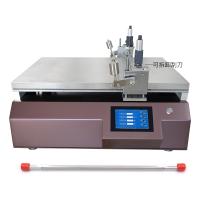
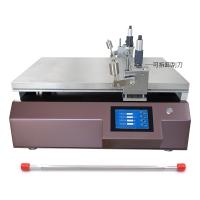
The coater has the characteristics of easy operation and rapid generation of uniform coating film, which can effectively reduce human error and improve the accuracy and repeatability of experimental results. In addition, the test results are intuitive, making it easy to compare the performance differences of different products or formulations; At the same time, it can be used in conjunction with other instruments to achieve a comprehensive evaluation of base makeup products, providing a scientific basis for R&D and quality control.
- 1How Flat Film Applicators Can Build a New Generation of Functional Materials on Fabrics
- 2NVP anode film FAQ and solution
- 3Application Technology of Laboratory Film Applicator in Dielectric Thin Film
- 4Comparison of Advantages and Disadvantages of Three Heating modes for Laboratory Film Applicators
- 5Application and selection of laboratory coater in PDMS thin film prepative
- 6Scraping machine selection case: film substrate large size high accuracy scraping solution
- 7Application of Film Applicator in PEM Research and Preparation
- 8Application of Film Applicator in PVDF-HFP Material Research
- 9Application of Automatic Film Applicator in preparing fluorescent diaphragm