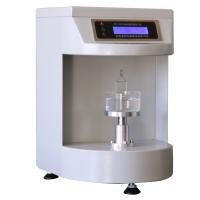
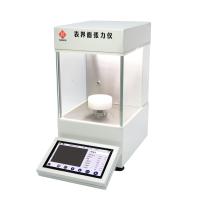
Working principle of mechanical liquid meter interfacial tensIon Meter
In modern industrial production, the surface tension and interfacial tension of liquids are important indicators to measure the physical and chemical properties of fluids. As a professional measuring tool, the mechanical liquid Surface Tensiometer plays an important role in the fields of petroleum extraction, fine chemicals, pharmaceutical research and development, and food processing.
First, the working principle
The mechanical liquid surface tensIon Meter calculates the surface tension value by accurately measuring the deformation of the liquid surface or interface under stress. According to different measurement methods, it can be divided into the following three types:
(1) Platinum ring method
The platinum ring method is one of the most widely used measurements. This method uses a special platinum ring immersed in the liquid to be measured, and the liquid forms a thin film on the ring by slowly lifting the platinum ring. When the film ruptures, a specific torque change occurs, and the surface tension value can be calculated by capturing this instantaneous mechanical change with a high-precision sensor.
(2) Hanging drop method
The hanging drop method uses a unique capillary hanging droplet technology. When the droplet droplets drop down to the end of the capillary, they form a regular droplet shape. By analyzing the radius of curvature and geometric parameters of the droplet surface, combined with the Young-Laplace equation, the interfacial tension value of the surface can be accurately calculated.
(3) Bubble pressing method
The bubble pressing method is based on the principle of bubble expansion. When a gas enters a liquid through a capillary, a bubble is formed. As the bubbles continue to grow, the system produces specific pressure changes. By measuring this pressure difference and combining it with the relevant formula, the interfacial tension value of the table can be accurately obtained.
Second, the basic knowledge
(1) The basic concept of interfacial tension
Surface interfacial tension refers to the interaction force between molecules at the surface of a liquid or at a two-phase interface. This force determines the physical and chemical properties such as wetting properties and adhesion properties of the liquid, which is of great significance in industrial production.
(2) Analysis of influencing factors
The surface interfacial tension of liquids is affected by a number of factors:
Temperature:Normally, an increase in temperature results in a decrease in surface tension.
Pressure:An increase in pressure increases the interfacial tension value.
Soluble concentration:The presence of solutes affects the intermolecular forces, which alter the surface interfacial tension.
Third, the field of application
Petroleum extraction
The instrument can be used to measure the interfacial tension between crude oil and water to help optimize the extraction process and enhance oil recovery. Especially in the process of water injection and oil recovery, the effect of water injection can be effectively evaluated by monitoring the change of interfacial tension, and data support can be provided for technologies such as surfactant flooding.
Chemical production
In the chemical industry, mechanical liquid Surface Tensiometers can be used to monitor the effect of surfactants during reactions. For example, in emulsion polymerization, dispersion system preparation or detergent development, the performance of surfactants can be evaluated by measuring changes in surface tension and production process parameters to improve product quality and consistency.
Pharmaceutical industry
In drug development and manufacturing, the instrument can be used to assess the solubility and stability of drugs. For example, in the research and development of oral liquids, injections and other preparations, the interaction between the drug and the solvent can be analyzed by measuring the surface interfacial tension to ensure uniform dispersion and long-term stability of the drug. furthermoreIt can also be used to test the purity of an active drug substance or to evaluate the performance of a drug delivery system.
Food processing
In the food industry, the instrument can be used to study the influence of liquid surface properties on product quality. For example, in the development of dairy products, beverages or flavorings, by measuring the interfacial tension of the table, it is possible to optimize the taste and stability of the product and ensure its quality over the shelf life.
- 1Comparison of Liquid Surface/Interfacial Tension Testing Methods: Plate vs. Ring Method
- 2Selection guide for Surface Tensiometers
- 3Application principle and precautions of platinum ring Surface Tensiometer
- 4Analyzing interfacial tension: demystifying the nature of liquids
- 5Analysis of the difference between contact angle meter and Surface Tensiometer
- 6The working principle, application and operation steps of surface tensIon Meter
- 7Measurement principle of interfacial tensIon Meter [video demonstration]
- 8Fangrui surface tensIon Meter test data deviation, how to solve?
- 9Comparison of Fangrui's different series of automatic watch interfacial tensIon Meters