Summary of determination methods for hiding power of coatings
I. Introduction
Hiding power is an important indicator to evaluate the performance of coatings, which refers to the ability of coatings to completely cover the base color after evenly covering the surface of the substrate. The results can be expressed in two ways: the minimum amount of paint required per unit area (g/m²) or the minimum wet film thickness (μm). Combined with industry standards and practical applications, this paper systematically analyzes three mainstream measurement methods and usage calculation methods, so as to provide technical reference for the R&D, production and construction of coatings.
2. Quality method per unit area
1. Principle and scope of application
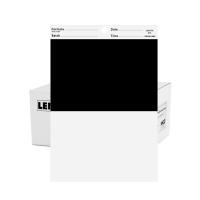
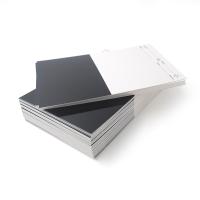
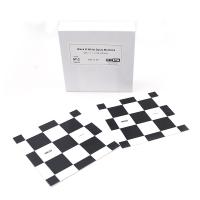
The amount of paint is calculated by applying the black and white grating until the base color disappears. Suitable for accurate laboratory determinations, the results are expressed in wet or dry film quality.
Instruments & Materials:
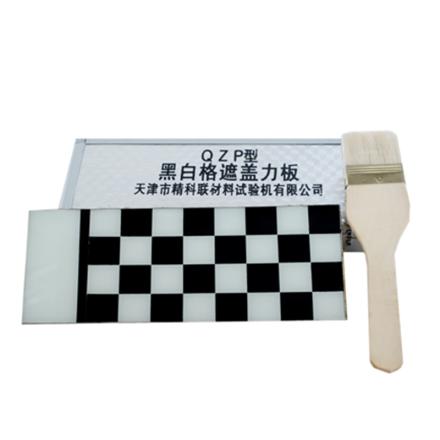
Black and white lattice glass plate (brush method) or wood board (spray method)
Paint brush (25-35mm), Spray Gun (nozzle 0.75-2mm)
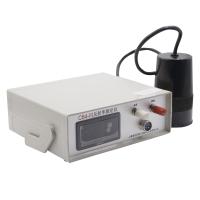
High-precision balance (0.01g/0.001g), thermostatic oven, obscura (built-in fluorescent lamp and frosted glass)
2. Procedure
(1) Brushing method
Adjust to the standard viscosity and weigh the total weight of the paint and brush (W₁);Evenly paint the black and white lattice glass plate, tilt it 30°-45° in the camera obscura, and visually determine the end point of covering;Weigh the total weight of the remaining material and brush (W₂), calculated according to the formula:
Hiding power (g/m²) = [ (W₁ - W₂) / S ] × 10⁴ = 50 × (W₁ - W₂)
Thereinto:
W₁ = Total mass before painting (g)
W₂ = mass of residual material after brushing (g)
S = Coating area (200 cm²)
(2) Spraying method
Spray to 100mm×100mm glass plate, and observe in the dark box until the end of the covering;Drying to constant weight, weighing the poor quality of the glass plate before and after spraying (ΔW):
Hiding power (g/m²) = [ (W₂ - W₁) / S ] × 10⁴ = (W₂ - W₁) × 100
Thereinto:
W₁ = initial mass of the glass plate (g)
W₂ = Spray Dry Mass (g)
S = Spray area (100 cm²)
Key points:
Dark paint needs double light observation, light paint single light;The error of the parallel test is ≤5%, otherwise it needs to be retested.
3. Reflectance comparison method
1. Principles and advantages
The hiding power is characterized by comparing the reflectance ratio (contrast) of the coating film on a black and white substrate, which is suitable for white and light paints with high accuracy and in accordance with international standards.
Instruments & Materials:
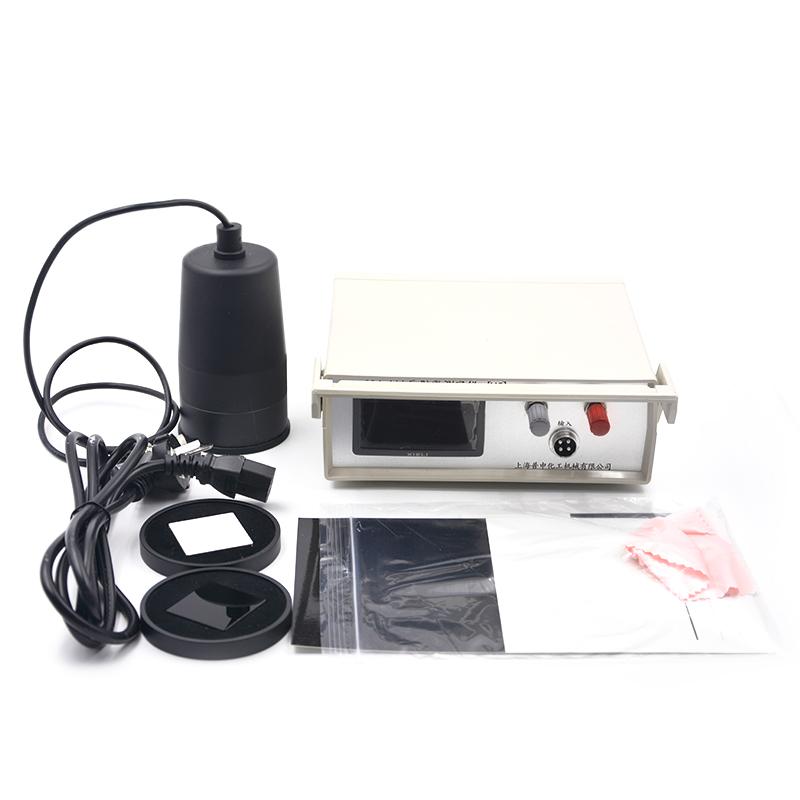
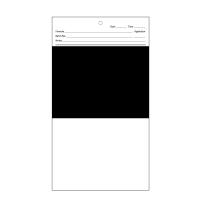
Wire rod applicator (100μm), reflectance meter (accuracy 0.3%), mylar or black and white cardboard
2. Procedure
Coated samples on polyester film or cardboard, cured at constant temperature and humidity for 24h;
The reflectance meter measures the reflectivity of black (R₆) and white (Rv) substrates at multiple points, and calculates the contrast ratio:
Ratio = Rb / Rw
Thereinto:
Rb = Blackboard Average Reflectance (%)
Rw = Average reflectance of whiteboard (%)
Notes:
The instrument is warmed up for 15 minutes, calibrated and used;
The polyester film should be attached to the black and white working board to avoid air bubble interference.
Fourth, the minimum wet film thickness method
1. Principles and Applicable Scenarios
The minimum wet film thickness of the black-white dividing line was determined by using a wedge-shaped masking force meter, and the coating rate (m²/L) was quickly converted. It is suitable for rapid quality control at the production site.
Instrument: Crypto-meter (including black and white bottom plate, scale glass top plate).
2. Procedure
The paint is injected into the wedge-shaped space, and the top plate is translated so that the black and white lines are not visible;
Record the demarcation line reading (L), calculated according to the formula:
WFT (μm) = L × K × 1000
Thereinto:
L = Ruler reading (mm)
K = instrument constant (0.004 or 0.008)
Fifth, the amount of paint used by the determination method
1. Brushing method
Weigh the poor quality of paint and tools before and after brushing, and calculate the amount per unit area.
2. Spraying method
Dilution ratio method: measure the weight of the diluted wet film and reverse the amount of original paint;
X2 = X1 × [ 100 / (100 - Y) ]
Thereinto:
X1 = diluted amount used (g/m²)
Y = Percentage of Solvent Added (%)
Solid content method: combined with the quality and solid content of the paint film after drying:
X (g/m²) = [ (B - A) / (S × D) ] × 10⁴
Thereinto:
A = Painted front plate mass (g)
B = Painted back-panel mass (g)
S = Area (cm²)
D = Solids (%)
The measurement of the hiding power of the coating should strictly refer to the national standards (GB/T 1726, GB/T 9755/9756/9757), and the high-precision unit area mass method or reflectance comparison method is recommended for laboratory scenarios, and the fast and efficient minimum wet film thickness method can be used at the production site; By combining hiding power data with paint usage analysis, it is possible to accurately optimize formulation design, guide application processes, and reduce raw material loss. The scientific measurement and data-driven decision-making system not only significantly improve the masking efficiency and product performance consistency of coatings, but also provide technical support for cost control and efficient use of resources, and help the sustainable development of the industry.
-
![Leneta 2A sealed Opacity Chart]() Leneta 2A sealed Opacity Chart$ 267.00
Leneta 2A sealed Opacity Chart$ 267.00 -
![Leneta Form 2DX Opacity Chart Leneta popular model sealed cardboard Drawdown Sheet]()
-
![Leneta WB sealed film, pure white]() Leneta WB sealed film, pure white$ 298.00
Leneta WB sealed film, pure white$ 298.00 -
![Leneta 5DX sealed Opacity Chart black and white in half, top white and bottom black]()
-
![Chinese film cover rate black and white cardboard Drawdown Sheet 140 * 250mm sealed]()
-
![Leneta Form M12 Opacity Chart 25x25mm]()
-
![Leneta Form 2C Opacity Chart]() Leneta Form 2C Opacity Chart$ 306.00
Leneta Form 2C Opacity Chart$ 306.00 -
![Leneta 5C sealed Opacity Chart black and white in half, top white and bottom black]()
-
![Chinese Black and White Painting Chart Drawdown Sheet 194 * 260mm Nosealed]()
- 1Pigment hiding power
- 2Determination of Coating hiding power
- 3GB/T 23981.2-2023: Paints and varnishes - Determination of hiding power - Part 2: Checkerboard method - Interpretation
- 4Concept, influencing factors and determination method of Coating hiding power
- 5Mayer Rods: The right-hand man for hiding power tests
- 6Coating performance testing: ensuring the efficiency and mass of the painting process
- 7Coating hiding power measurement
- 8Application of paint film Applicator in hiding power test
- 9List of water-based paints testing laboratory equipment