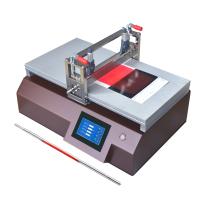
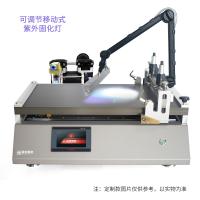
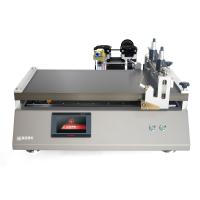
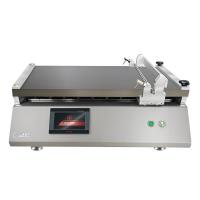
Comparison of Advantages and Disadvantages of Three Heating modes for Laboratory Film Applicators
In the operation of laboratory coating machines, the heating system is very important, and its performance directly affects the quality of the coating film and the efficiency of the experiment. Heating wire heating, mica sheet heating, and graphene heating are common heating methods, each with its own advantages and disadvantages. Here's an in-depth look at how these three heating methods perform in a laboratory coater.
Heating wire heating
principle
Heating wire heating is based on the thermal effect of electric current. When an electric current is passed through a heating wire with a certain resistivity, the electrical energy is converted into thermal energy. According to Joule's law, the amount of heat generated is proportional to the square of the current, the value of the heating wire resistance, and the time it takes to be energized. For example, the common electric furnace wire will turn red and heat up after being electrified, and the electrical energy will be efficiently converted into heat energy.
advantage
1. Low cost——As a mature heating element, the heating wire has mature production technology and low material cost. The heating wire is used in the laboratory coating machine, and the initial equipment acquisition cost is relatively low, which is friendly to laboratories with limited budgets.
2. Good stability——After long-term use and improvement, the stability of heating wire heating technology has been improved. Under normal working conditions, it is not easy to be disturbed by external factors, and can provide heat continuously and stably to ensure the stability of the coating machine.
inferior position
1. Low thermal efficiency -Heating wire heating mainly transfers heat to the heating area of the coater through heat conduction. In this process, a large amount of heat is lost to the surrounding environment, resulting in low thermal efficiency. For example, in some experiments that require a lot of heat, more electrical energy needs to be consumed to maintain the required temperature, resulting in wasted energy.
2. The heating speed is slower——Due to the heat capacity of the heating wire itself and the limitation of the heat transfer method, it takes a long time from power-on to reach the preset temperature. This will reduce the efficiency of the experiment and affect the progress of the work in some experiments that require time.
3. Poor temperature uniformity -During the heating process, the surface temperature distribution of the heating wire may be uneven, resulting in differences in the heat transferred to the heating area of the coater. This affects the quality of the coating film, making the coating film thickness inconsistent and affecting the accuracy of the experimental results.
Mica flakes are heated
principle
The mica sheet heating is to wind the resistance wire on the mica sheet, and after the resistance wire is energized and heated, the heat is conducted out through the mica sheet. The mica sheet has good insulation and certain thermal conductivity, which can transfer the heat generated by the resistance wire to the part that needs to be heated relatively evenly.
advantage
1. The cost is relatively low——The price of mica materials is relatively close to the people, and the cost of processing and making mica sheet heating elements is not high. Compared with some high-end heating technologies, the use of mica sheet heating in the laboratory coating machine can effectively control the cost of equipment and is suitable for large-scale popularization.
2. Good soaking performance——The physical properties of mica itself make it have good soaking properties. Even if there is a certain temperature difference between the resistance wire when it is heated, the conduction and diffusion of the mica sheet can make the heat finally transferred to the heating area relatively uniform, which helps to improve the uniformity and quality of the coating film.
3. High security——The mica sheet has good insulation performance, which can effectively avoid safety accidents caused by leakage of resistance wires. In a laboratory environment, the safety of operators and equipment is paramount, and the fact that mica sheet heating makes it a safer heating option.
inferior position
1. Long heating time——The heat conduction efficiency of the mica sheet is relatively limited, and it takes a certain amount of time for the heat to be transferred from the resistance wire to the mica sheet to the heating area. Compared to some graphene heating methods, it takes longer for mica flakes to be heated to a preset temperature.
2. The applicable temperature range is limited——The performance of mica sheet will be reduced in a high-temperature environment, and it is generally suitable for occasions where the temperature is not too high. In some special coating experiments that require high temperature conditions, the heating of mica sheet may not meet the experimental requirements, limiting its application range.
Graphene heating
principle
Graphene has excellent thermal conductivity and is one of the materials with high known thermal conductivity. Graphene heating takes advantage of its high thermal conductivity, and when an electric current passes through the graphene material, the heat generated can be quickly and evenly conducted, achieving efficient heating.
advantage
1. Excellent thermal conductivity——The extremely high thermal conductivity of graphene allows heat to diffuse rapidly in the heating area, greatly increasing the heating rate. In the laboratory coating machine, the preset temperature can be quickly reached, saving the waiting time of the experiment and improving the work efficiency.
2. Uniform heating effect——Due to the special two-dimensional structure of graphene, the heat can be evenly distributed when transferred in it, so as to ensure a highly uniform temperature in the heating area of the coater. This is essential for the preparation of high-quality, uniformly thick coatings, which can effectively improve the accuracy and reliability of experimental results.
3. Rapid heating——Compared with heating wire heating and mica sheet heating, graphene heating can raise the temperature to the set value in a short time, which can meet the experimental needs of high heating speed requirements, such as some material coating experiments that are sensitive to temperature changes.
inferior position
1. The cost is high——At present, the preparation process of graphene is complex and costly, resulting in the high price of graphene-based heating elements. The use of graphene heating in laboratory coaters can significantly increase the cost of equipment acquisition and limit its use in some laboratories with limited budgets.
2. High technical requirements——Graphene heating technology is relatively new, and it has high requirements for the design, manufacture and control system of equipment in practical applications. It requires a professional technical team for R&D and maintenance, which increases the difficulty and cost of use and maintenance.
3. Limited device compatibility -Due to the special nature of the graphene heating element, compatibility is more difficult when integrating with existing coater equipment in the laboratory. It is necessary to carry out major transformation or even redesign of the equipment, which requires a high technical level of R&D enterprises.
The choice of heating method for laboratory coaters should take into account experimental needs, budget constraints, and long-term costs. Traditional resistance wire heating still has some market space due to its cost advantage, mica sheet heating provides a good balance solution under a medium budget, and graphene heating has a high initial investment, but its good performance and energy-saving characteristics make it a good choice for high-end laboratories.
- 1How Flat Film Applicators Can Build a New Generation of Functional Materials on Fabrics
- 2NVP anode film FAQ and solution
- 3Application Technology of Laboratory Film Applicator in Dielectric Thin Film
- 4Application and selection of laboratory coater in PDMS thin film prepative
- 5Scraping machine selection case: film substrate large size high accuracy scraping solution
- 6Application of Laboratory Automatic Film Applicator in Coating Battery Slurry on Copper Foil and Aluminum Foil
- 7Application of Film Applicator in PEM Research and Preparation
- 8Application of Film Applicator in PVDF-HFP Material Research
- 9Application of Film Applicator in Cosmetic Base Body